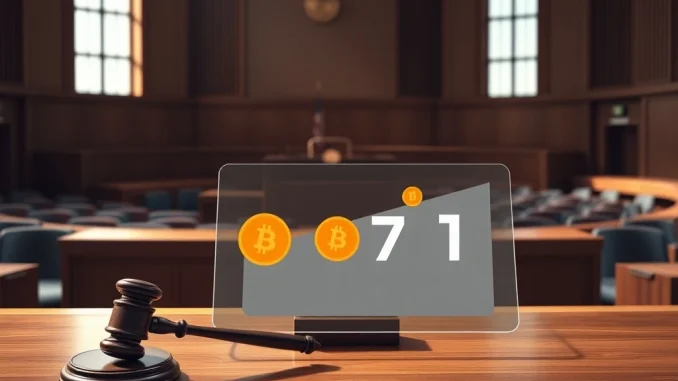
A federal judge in the Southern District of New York has issued a critical temporary restraining order, freezing 70.6 Bitcoin (BTC) valued at approximately $5 million. The order, issued on March 3, 2026, by Judge Mary Kay Vyskocil, targets assets held by the institutional crypto firm BlockFills. This decisive legal action stems from a complaint filed by Dominion Capital, which accuses BlockFills of misappropriating customer crypto assets and unlawfully commingling funds. The judge freezes 71 Bitcoin to prevent potential dissipation of the disputed assets while the court examines allegations of serious financial misconduct.
Court Freezes BlockFills Bitcoin Amid Customer Fund Allegations
Judge Vyskocil’s temporary restraining order (TRO) represents a swift judicial response to Dominion Capital’s urgent filing. According to the February 27 complaint, BlockFills retained millions in customer cryptocurrency and used commingled funds to cover trading losses. Consequently, the judge mandated an immediate accounting of all segregated customer funds held by the Chicago-based platform. The court filing states the TRO was granted without prior notice to BlockFills because Dominion Capital demonstrated a clear risk of “immediate and irreparable injury.” BlockFills now must formally respond to the allegations and the court order by March 17, 2026.
This legal development follows BlockFills’ own announcement on February 11, 2026, halting all customer deposits and withdrawals. The company cited the need to protect clients and restore platform liquidity following a sharp correction in the broader cryptocurrency market, which saw Bitcoin decline toward the $60,000 level. The confluence of a voluntary withdrawal pause and a court-ordered asset freeze creates a complex situation for the firm’s approximately 2,000 institutional clients.
Impact on Institutional Crypto Clients and Market Confidence
The case sends ripples through the professional cryptocurrency trading sector, where BlockFills served hedge funds, asset managers, and professional traders. The firm reported a $60 billion trading volume in 2025, highlighting its significant role in institutional crypto markets. The immediate impact is twofold: direct uncertainty for clients with assets on the platform and a broader erosion of trust in crypto-native financial intermediaries.
- Client Asset Access: Approximately 2,000 institutional clients face frozen withdrawals, compounding the operational halt BlockFills initiated weeks earlier.
- Regulatory Scrutiny Signal: The swift court action may prompt increased regulatory examination of fund segregation practices across other crypto lending and trading platforms.
- Market Liquidity Effect: Removing $5 million in Bitcoin from active circulation, even temporarily, contributes to minor liquidity tightening in institutional trading channels.
Legal and Financial Expert Analysis
Sarah Chen, a partner specializing in digital asset litigation at the law firm Goodwin Procter, provided context on the ruling’s significance. “A TRO of this magnitude, issued ex parte, indicates the court found compelling evidence of potential asset dissipation,” Chen stated. “The requirement for a full accounting of segregated funds is a standard first step in untangling allegations of commingling, but it’s a serious demand that will require transparent ledger access.” Chen’s analysis, shared in a commentary for Law360, underscores the procedural gravity of the judge’s order. Furthermore, data from the Blockchain Transparency Institute shows that legal actions involving fund segregation have risen by 40% year-over-year in the crypto sector, indicating a trend of increased judicial oversight.
Broader Context: Crypto Lending and Custody Under the Microscope
The BlockFills case is not an isolated incident but part of a persistent pattern challenging the crypto industry. Since the high-profile collapses of firms like Celsius Network and FTX, courts and regulators have applied heightened scrutiny to how platforms handle customer assets. The core legal question often revolves around whether customer crypto deposits constitute a bailment, where the platform acts as a custodian, or a loan, where ownership transfers.
| Case/Platform | Primary Allegation | Key Outcome/Status |
|---|---|---|
| BlockFills (2026) | Misappropriation & Commingling of Customer Funds | TRO Freezing 70.6 BTC; Accounting Ordered |
| Celsius Network (2023) | Misleading Investors & Unregistered Securities | Chapter 11 Bankruptcy; Settlement Plan Approved |
| Genesis Global Capital (2024) | Failure to Segregate Customer Assets | SEC Settlement; Wind-down of Lending Operations |
What Happens Next: Legal Process and Client Resolution
The immediate timeline is defined by the March 17, 2026, deadline for BlockFills to respond to the court. Legal experts anticipate the company will likely challenge the scope of the TRO or seek to have it modified. Simultaneously, the ordered accounting of customer funds must proceed, a process that will require forensic analysis of blockchain wallets and internal ledgers. The outcome of this accounting will heavily influence whether the TRO is extended or converted into a preliminary injunction. For clients, the path to recovering assets remains uncertain and is contingent on both the legal findings and BlockFills’ ability to restore platform liquidity as previously promised.
Industry and Client Reactions to the Freeze
Reaction from the institutional crypto community has been one of cautious concern. A portfolio manager at a mid-sized hedge fund, who spoke on condition of anonymity due to ongoing business relationships, noted, “This underscores the non-negotiable need for third-party, audited custody solutions. Relying on a trading platform’s internal segregation is an unacceptable risk.” Meanwhile, public statements from other crypto platforms have emphasized their own robust custody arrangements, a clear attempt to distance themselves from the allegations facing BlockFills. The case has renewed calls from industry groups like the Chamber of Digital Commerce for clearer federal custody rules to standardize practices and protect consumers.
Conclusion
The decision by a federal judge to freeze 71 Bitcoin in the BlockFills case marks a critical juncture for customer protection in cryptocurrency markets. It demonstrates the judiciary’s willingness to act decisively when presented with evidence of potential fund misuse. The key takeaways are the immediate asset protection for claimants, the serious nature of commingling allegations, and the ongoing vulnerability of customer assets on some trading platforms. Observers should watch the March 17 response from BlockFills and the subsequent findings from the court-ordered fund accounting. This proceeding will not only determine the fate of the $5 million in frozen Bitcoin but also contribute to the evolving legal framework defining custody and segregation in the digital asset economy.
Frequently Asked Questions
Q1: Why did the judge freeze the Bitcoin in the BlockFills case?
The judge issued a temporary restraining order to freeze 70.6 Bitcoin after Dominion Capital alleged BlockFills misappropriated customer funds and commingled assets. The order aims to prevent the potential dissipation of these specific assets while the court investigates the claims.
Q2: How much are the frozen Bitcoin assets worth?
At the time of the court order, the 70.6 Bitcoin (BTC) were valued at approximately $5 million. The exact dollar value fluctuates with the market price of Bitcoin.
Q3: What is the next key date in this legal case?
BlockFills must file its formal response to the complaint and the temporary restraining order with the court by March 17, 2026. This response will shape the next phase of the litigation.
Q4: Can BlockFills clients access their funds now?
No. Client withdrawals were already halted by BlockFills on February 11, 2026. The court-ordered freeze on specific Bitcoin assets adds a legal layer to the existing operational pause, further restricting access.
Q5: How does this case relate to other crypto company failures?
It continues a pattern of legal scrutiny over how crypto platforms handle customer funds, following cases like Celsius and FTX. The central issue often involves whether customer assets were properly segregated from company funds.
Q6: What does this mean for other cryptocurrency trading platforms?
The case highlights the legal and regulatory risks for platforms that custody client assets. It will likely accelerate the adoption of independently audited, third-party custody solutions by other firms to mitigate similar risks and reassure clients.