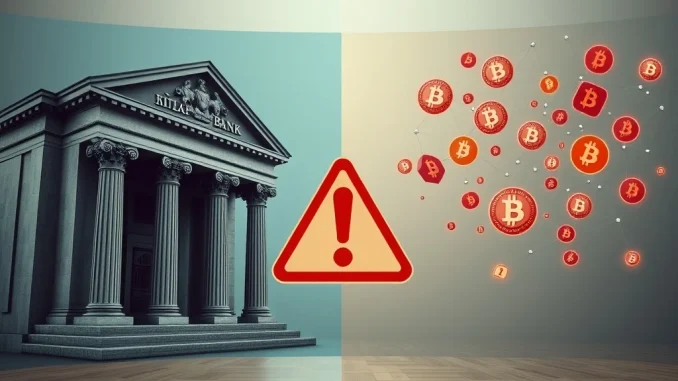
NEW YORK, April 2025 – A stark warning from one of Wall Street’s most influential financial chiefs has ignited a crucial debate about the future of digital assets. JPMorgan Chase Chief Financial Officer Jeremy Barnum has declared the common practice of paying interest on stablecoins as “clearly dangerous and undesirable,” highlighting a critical regulatory void that exposes millions of investors to unforeseen risks. This statement arrives precisely as U.S. lawmakers draft legislation aiming to define the rules for the next generation of financial technology.
Stablecoin Interest Risks Exposed by Banking Giant
During a recent quarterly earnings call, Jeremy Barnum presented a detailed comparison that resonates across both traditional finance and the crypto ecosystem. He explained that paying yield on stablecoin holdings mirrors the economic function of a bank deposit. Consequently, customers receive a return for parking their capital. However, Barnum emphasized a fundamental and perilous distinction. While banks operate under stringent federal oversight—including capital requirements, liquidity rules, and deposit insurance through the FDIC—most entities offering stablecoin interest do not.
This regulatory asymmetry creates significant systemic vulnerabilities. For instance, a bank must maintain a capital cushion to absorb losses and participate in regular stress tests. Conversely, a crypto platform offering high yields on USD Coin (USDC) or Tether (USDT) may engage in risky lending or investment activities with those pooled funds without equivalent safeguards. Barnum’s analysis suggests that consumers perceive similar safety but face radically different levels of protection, a situation he categorically labeled as risky.
The Legislative Context: A New Crypto Market Structure
Barnum’s comments are not made in a regulatory vacuum. They directly respond to evolving legislative efforts in Washington, D.C. The U.S. Senate Banking Committee recently circulated a draft bill focused on crypto market structure. This proposed legislation seeks to draw clear lines around permissible activities, particularly concerning stablecoin rewards.
The draft bill introduces a pivotal concept: substantive utility. It proposes that interest or rewards on stablecoins should only be permitted when tied to specific, value-adding actions within a protocol or platform. Lawmakers provided clear examples of such actions:
- Opening an Account: A one-time bonus for new user onboarding.
- Trading: Fee discounts or rebates for providing market liquidity.
- Staking: Rewards for participating in a blockchain’s consensus mechanism.
- Providing Liquidity: Yield generated from supplying assets to a decentralized finance (DeFi) pool.
This framework aims to discourage the model of passive, deposit-like yield that Barnum criticized. The intent is to align crypto rewards with actual economic activity rather than mimicking unregulated banking.
Expert Analysis: Why This Warning Matters Now
Financial regulation experts point to historical precedents that underscore Barnum’s warning. The 2008 financial crisis, for example, demonstrated the catastrophic consequences of shadow banking—financial activities occurring outside the regulated banking system. Similarly, the collapses of crypto lending platforms like Celsius and Voyager Digital in 2022 were precipitated by unsustainable yield promises and risky off-chain lending practices.
Dr. Sarah Chen, a fintech law professor at Georgetown University, contextualizes the issue: “The JPMorgan CFO is highlighting a core principle of financial stability: similar risks require similar regulation. When you promise a return for holding an asset pegged to the dollar, you are engaging in maturity transformation and credit intermediation—the very heart of banking. Doing so without a banking charter or insurance is what regulators term ‘regulatory arbitrage,’ and history shows it often ends poorly for consumers.”
The timing is also critical for market evolution. Stablecoin adoption has surged, with their aggregate market value consistently exceeding $150 billion. They serve as the primary on-ramp and off-ramp for crypto trading and are increasingly used for payments and remittances. How they are regulated—and whether they can pay interest—will fundamentally shape their role in the global financial system of 2025 and beyond.
Comparative Analysis: Bank Deposits vs. Stablecoin Yield
To understand the risk disparity, a direct comparison of the two models is essential.
| Feature | Regulated Bank Deposit | Stablecoin Interest Account |
|---|---|---|
| Regulatory Oversight | Federal Reserve, FDIC, OCC | Varies; often state money transmitter licenses |
| Deposit Insurance | Up to $250,000 per account via FDIC | Typically none; some private insurance pools |
| Capital Requirements | Strict Basel III frameworks | None mandated; discretionary reserves |
| Liquidity Requirements | Liquidity Coverage Ratio (LCR) enforced | Platform-dependent, often opaque |
| Use of Funds | Primarily loans, mortgages, Treasuries | Often DeFi protocols, crypto lending, speculative ventures |
| Yield Source | Net interest margin from traditional lending | Returns from higher-risk crypto-native activities |
This table illustrates the foundational differences Barnum referenced. The bank’s activities are constrained and backstopped, while the crypto platform’s are not, even though the consumer product appears functionally identical—a digital dollar earning a return.
Potential Impacts on the 2025 Crypto Landscape
The convergence of high-level warnings and pending legislation will likely trigger several immediate effects. First, established crypto exchanges and DeFi protocols may proactively restructure their reward programs to emphasize the “substantive activities” outlined in the draft bill. We may see a shift from generic “earn” programs to rewards specifically for liquidity provision in certain trading pairs or for participating in governance.
Second, the discourse accelerates the push for federally chartered “crypto banks” or special-purpose depository institutions. Entities seeking to offer combined custody and yield services may pursue these charters to operate within a recognized regulatory perimeter, legitimizing their activities but also subjecting them to stricter oversight.
Finally, for the average investor, this serves as a critical education moment. It underscores the necessity of understanding the underlying source of yield. A return of 5% on a stablecoin is not inherently safe because it is labeled “APY”; its safety is dictated by the transparency and risk-management of the platform generating that yield.
Conclusion
Jeremy Barnum’s warning about the risks of paying interest on stablecoins cuts to the core of the cryptocurrency industry’s integration with traditional finance. It highlights a dangerous regulatory gap where products mimic bank deposits but lack equivalent consumer protections. As the U.S. Senate Banking Committee’s draft market structure bill moves through the legislative process, the principle of linking rewards to substantive utility may become law, reshaping how stablecoins function. For the ecosystem to mature sustainably in 2025, aligning economic function with appropriate regulatory oversight is not just advisable—it is imperative for consumer protection and systemic stability. The stablecoin interest warning from JPMorgan is a clarion call for that alignment.
FAQs
Q1: What exactly did the JPMorgan CFO say about stablecoin interest?
JPMorgan CFO Jeremy Barnum stated that paying interest on stablecoins has the same characteristics and risks as bank deposits but operates without the appropriate banking regulations. He described this situation as “clearly dangerous and undesirable.”
Q2: How does the proposed Senate bill address stablecoin rewards?
The draft crypto market structure bill proposes that interest or rewards on stablecoins should only be permitted when tied to substantive activities like trading, staking, or providing liquidity, rather than for simply holding the asset passively.
Q3: Why is paying interest on a stablecoin considered risky compared to a bank account?
Bank deposits are protected by federal insurance (FDIC) and banks are subject to strict capital and liquidity rules. Most platforms offering stablecoin yield lack this insurance and regulatory oversight, meaning customer funds are not similarly protected if the platform fails.
Q4: What are examples of “substantive activities” that could legally earn stablecoin rewards?
According to the legislative draft, permissible activities include opening an account, executing trades, staking tokens to secure a blockchain network, or providing liquidity to a decentralized exchange pool.
Q5: What should a consumer consider before putting stablecoins in an interest-earning account?
Consumers should scrutinize the platform’s regulatory status, understand the actual source of the yield (how their funds are being used), check if any private insurance exists, and recognize that these accounts are not FDIC-insured like a bank savings account.
This article was produced with AI assistance and reviewed by our editorial team for accuracy and quality.