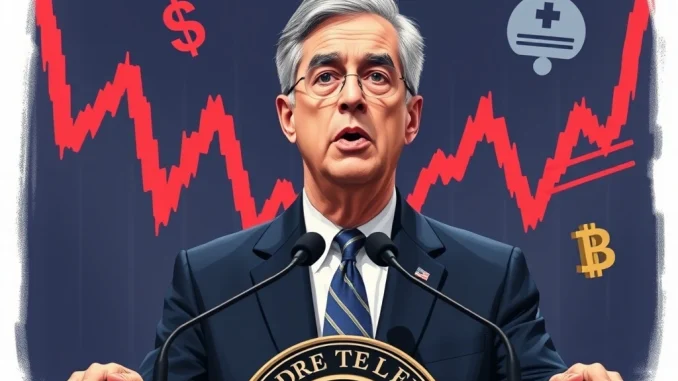
Federal Reserve Chair Jerome Powell has issued a stark warning: tariffs are driving inflation higher and complicating the Fed’s ability to maintain economic stability. For cryptocurrency investors, this creates both risks and opportunities as markets react to shifting monetary policy.
How Tariffs Are Driving Inflation
Powell highlighted three key ways tariffs impact prices:
- Increased costs for imported raw materials like steel and agricultural products
- Higher production costs being passed to consumers
- Supply chain disruptions creating additional price pressures
The Fed’s preferred inflation gauge, the PCE index, is now projected to rise 2.7% year-over-year – well above the 2% target.
The Fed Policy Dilemma
Rising inflation creates a challenging situation for the Federal Reserve:
| Option | Potential Impact |
|---|---|
| Raise interest rates | Could slow economic growth |
| Maintain current policy | Risk of inflation becoming entrenched |
| Adjust balance sheet | Market volatility concerns |
Powell emphasized the Fed must carefully balance these competing concerns.
Cryptocurrency as an Inflation Hedge?
With traditional assets facing inflationary pressures, some investors are turning to cryptocurrencies:
- Bitcoin’s fixed supply makes it theoretically inflation-resistant
- Decentralized nature avoids government monetary policy impacts
- However, extreme volatility remains a significant concern
The debate continues about whether crypto can effectively hedge against tariff-driven inflation.
Actionable Strategies for Investors
To navigate this challenging environment consider:
- Diversifying across asset classes including potential inflation hedges
- Monitoring Fed statements for policy direction clues
- Assessing company exposure to tariff impacts
- Maintaining liquidity to adapt to changing conditions
FAQs
Q: How exactly do tariffs cause inflation?
A: Tariffs increase costs for imported goods, which businesses often pass to consumers through higher prices, creating broad inflationary pressure.
Q: What inflation indicators does the Fed watch most closely?
A: The Federal Reserve primarily monitors the Personal Consumption Expenditures (PCE) index, especially core PCE which excludes food and energy.
Q: Could tariffs actually help domestic producers?
A: While tariffs may benefit some domestic industries in the short term, most economists believe the overall economic impact is negative due to higher consumer prices and reduced trade.
Q: How might cryptocurrency markets react to Fed rate hikes?
A: Crypto markets often move inversely to traditional assets when rates rise, but the relationship remains complex and unpredictable.