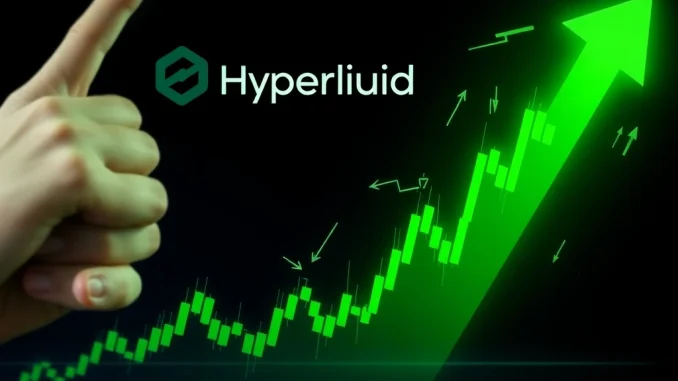
The cryptocurrency market often delivers unexpected and dramatic events. Recently, a significant incident unfolded on Hyperliquid, a prominent decentralized exchange. This platform witnessed an unprecedented **Hyperliquid short squeeze**, sending both XPL and WLFI tokens soaring by over 200% in minutes. This remarkable event has captured the attention of traders and analysts worldwide.
A single, well-placed **crypto whale trade** ignited this market frenzy. This large investor exploited a thin order book, opening a multi-million dollar long position. The resulting price movement triggered a cascade of liquidations. Consequently, many short sellers faced substantial losses. This incident highlights the volatile nature of **decentralized perpetuals** and the power of concentrated capital.
Understanding the Mechanics of a Short Squeeze
A short squeeze occurs when a cryptocurrency’s price suddenly rises. This forces traders who bet against the asset (short sellers) to buy it back. They do this to limit potential losses. Short sellers borrow and sell an asset, hoping to buy it back cheaper later. If the price instead increases, their losses grow rapidly. To avoid further losses, they must cover their positions. This means buying the asset at higher prices. This buying pressure further pushes the price up, creating a self-reinforcing cycle. In effect, it ‘squeezes’ the short sellers out of their positions.
This phenomenon is common in highly volatile markets like crypto. It often targets assets with high short interest. Thin order books exacerbate the effect. This means fewer buy and sell orders are available. Therefore, a large order can significantly move the price. This makes such assets particularly vulnerable to sudden price spikes. The recent **Hyperliquid short squeeze** exemplifies this dynamic perfectly. It demonstrated how quickly market sentiment and prices can shift.
The Unprecedented Hyperliquid Event: XPL and WLFI’s Meteoric Rise
The core of this story lies with a specific whale address on Hyperliquid. This address initiated a massive long position. This move immediately put immense pressure on short sellers of **XPL crypto**. The market reacted swiftly. Within a mere two minutes, the price of XPL surged by over 200%. This was an astonishing display of market power. The rapid increase forced many liquidations.
Furthermore, a similar scenario unfolded with WLFI. Around the same time, WLFI also experienced a significant **WLFI price surge**. This parallel event suggests a coordinated or opportunistic strategy. Both incidents underscore the vulnerabilities present in certain market conditions. The whale’s actions were deliberate and highly effective. They capitalized on the platform’s structure and existing market positions. This created an explosive profit opportunity. Observers called it one of the most extreme liquidation incidents ever seen on Hyperliquid.
The Role of the Crypto Whale Trade and Thin Order Books
The success of this particular **crypto whale trade** hinged on several factors. First, the sheer size of the whale’s capital was crucial. They could deploy multi-million dollar positions. Second, Hyperliquid’s order book for XPL and WLFI was notably thin. A thin order book lacks sufficient liquidity. This means large buy orders can easily absorb all available sell orders at lower prices. Consequently, the price jumps significantly with minimal resistance.
The whale strategically placed a large buy order. This absorbed the limited sell liquidity. It then triggered stop-losses and margin calls for short positions. As shorts were liquidated, the system automatically bought back XPL and WLFI tokens. This created further upward price pressure. The whale then began to partially close their position. This action realized an astounding $16 million profit. This substantial gain highlights the potential rewards, and risks, in such volatile market conditions. The event served as a stark reminder of the power held by large individual traders.
Implications for Decentralized Perpetuals and Market Integrity
This **Hyperliquid short squeeze** carries significant implications for the broader landscape of **decentralized perpetuals**. These platforms aim to offer transparent and permissionless trading. However, events like this raise questions about market stability. They also highlight the need for robust risk management. While Hyperliquid functioned as designed, the extreme outcome was unexpected. It demonstrated how even advanced DeFi platforms can experience unusual volatility.
Market makers play a vital role in providing liquidity. This incident might prompt them to reassess their strategies. They might also adjust their exposure to assets with thin order books. Furthermore, it could lead to discussions about circuit breakers or other mechanisms. These tools could potentially mitigate such rapid price swings. The integrity of these markets relies on a balance between efficiency and protection. This event serves as a case study for future improvements in decentralized trading environments.
Navigating Volatility: Lessons from the Hyperliquid Short Squeeze
The recent **Hyperliquid short squeeze** offers valuable lessons for all participants. For traders, it underscores the importance of understanding market depth. Always assess the liquidity of an asset before taking large positions. Short selling in illiquid markets carries extreme risks. Unexpected buying pressure can quickly lead to substantial losses. Diversification and strict risk management protocols become paramount in such environments.
For platforms offering **decentralized perpetuals**, this event provides critical data. It can inform improvements in order book design. It might also lead to better liquidation mechanisms. Enhancing transparency regarding order book depth could also benefit users. Ultimately, maintaining a fair and stable trading environment is crucial for user trust. The **XPL crypto** and **WLFI price surge** on Hyperliquid will undoubtedly be analyzed for months to come. It serves as a powerful reminder of the dynamic and sometimes unpredictable nature of the crypto market.
In conclusion, the **Hyperliquid short squeeze** of XPL and WLFI stands as a landmark event. It showcased the immense power of a single **crypto whale trade** on a thinly traded asset. The resulting multi-million dollar profit and rapid price surges captivated the crypto world. This incident provides crucial insights into market mechanics. It also emphasizes the ongoing evolution of **decentralized perpetuals** and their inherent risks. As the DeFi space matures, continuous adaptation and learning from such events will be essential for its long-term health and stability.
Frequently Asked Questions (FAQs)
What caused the XPL and WLFI price surge on Hyperliquid?
The surge was primarily caused by a massive **Hyperliquid short squeeze**. A large investor, often called a crypto whale, opened a multi-million dollar long position. This exploited the thin order books for **XPL crypto** and WLFI. This action forced short sellers to cover their positions, driving prices up dramatically.
What is a short squeeze in cryptocurrency trading?
A short squeeze occurs when an asset’s price rapidly increases. This forces traders who have ‘shorted’ the asset (betting its price will fall) to buy it back. They do this to limit their losses. This sudden buying pressure further pushes the price higher, creating a cycle of forced buying and increasing prices.
What role did the ‘crypto whale trade’ play in this event?
A single **crypto whale trade** was the catalyst. This whale strategically opened a very large long position. This overwhelmed the limited sell orders on Hyperliquid’s thin order book. Their actions triggered the short squeeze and led to a reported $16 million profit.
What are decentralized perpetuals, and how do they relate to this incident?
**Decentralized perpetuals** are a type of derivative trading product offered on decentralized exchanges (DEXs) like Hyperliquid. They allow traders to speculate on asset prices without an expiration date. This incident highlights the volatility and potential for extreme price movements that can occur on these platforms, especially with illiquid assets.
What are the key takeaways for traders from the Hyperliquid short squeeze?
Traders should always be aware of market liquidity and order book depth. Short selling in thin markets carries significant risk. It is crucial to employ strict risk management. Understand that large **crypto whale trade** activities can dramatically impact prices, especially on **decentralized perpetuals** platforms.
How can platforms prevent such extreme liquidation events?
Platforms can explore several measures. These include implementing circuit breakers to halt trading during extreme volatility. They could also improve transparency regarding order book depth. Encouraging more market makers to provide liquidity could also help. These steps aim to reduce the impact of single large trades and enhance market stability.