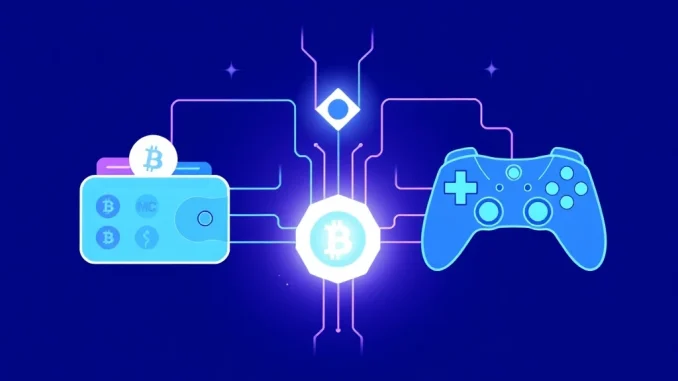
Global, March 2025: The blockchain ecosystem witnesses a significant development as HPX announces its strategic partnership with AetheriumX, marking a pivotal moment for cross-chain DeFi and GameFi accessibility. This collaboration represents a deliberate effort to bridge two critical components of the Web3 landscape: sophisticated multi-crypto wallet infrastructure and interactive blockchain environments. The partnership aims to address persistent interoperability challenges that have historically limited user movement between different blockchain networks and decentralized applications.
HPX AetheriumX Partnership: Technical Architecture and Implementation
The technical foundation of this partnership rests on integrating HPX’s multi-crypto wallet mechanism with AetheriumX’s interactive blockchain environment. HPX has developed a wallet solution that supports over 200 different cryptocurrencies and tokens across multiple blockchain networks. This technology enables users to manage diverse digital assets through a single interface while maintaining security protocols that meet enterprise-grade standards. The wallet employs advanced encryption methods and multi-signature authentication to protect user assets.
AetheriumX contributes its interactive blockchain environment, which serves as a development platform for decentralized applications, particularly in the gaming and finance sectors. This environment features smart contract capabilities, decentralized storage solutions, and real-time transaction processing. The integration process involves creating standardized application programming interfaces (APIs) that allow HPX wallet users to interact directly with AetheriumX-based applications without requiring separate accounts or complex bridging procedures.
Cross-Chain DeFi Accessibility: Breaking Down Barriers
Cross-chain functionality represents one of the most significant challenges in decentralized finance. Traditional DeFi platforms typically operate within single blockchain ecosystems, creating fragmentation that limits liquidity and user options. The HPX-AetheriumX partnership addresses this limitation through several technical innovations:
- Atomic Swap Integration: Implementation of trustless cross-chain atomic swaps that enable direct token exchanges between different blockchain networks without centralized intermediaries
- Unified Liquidity Pools: Creation of aggregated liquidity pools that draw from multiple blockchain sources, increasing available capital for lending, borrowing, and trading activities
- Standardized Oracles: Deployment of cross-chain oracle networks that provide consistent price feeds and external data across participating blockchain environments
- Gas Optimization: Development of transaction batching and gas sponsorship mechanisms that reduce user costs when interacting with multiple chains
These technical solutions aim to create a seamless DeFi experience where users can access financial services regardless of which blockchain hosts their preferred applications or holds their assets. The partnership follows industry trends toward greater interoperability, as evidenced by similar initiatives from other blockchain projects over the past three years.
GameFi Integration: Transforming Blockchain Gaming
The gaming component of this partnership addresses specific challenges in the blockchain gaming sector. GameFi, which combines gaming mechanics with decentralized finance elements, has experienced rapid growth but faces usability hurdles. AetheriumX’s interactive environment provides the foundation for gaming applications, while HPX’s wallet integration solves several practical problems for players:
- Unified Asset Management: Players can manage in-game assets, cryptocurrencies, and non-fungible tokens (NFTs) through a single wallet interface
- Cross-Game Economies: Development of standards that allow assets from one AetheriumX-based game to have utility in other compatible games
- Reduced Friction: Elimination of complex token bridging processes when moving assets between gaming platforms and DeFi applications
- Enhanced Security: Implementation of gaming-specific security features, including time-locked transactions and multi-factor authentication for high-value in-game transactions
The technical implementation includes specialized smart contracts that handle gaming-specific operations like item minting, character progression tracking, and tournament prize distribution. These contracts integrate directly with the HPX wallet interface, creating a cohesive experience for users who participate in both gaming and financial applications on the blockchain.
Industry Context and Historical Development
This partnership emerges within a broader industry movement toward blockchain interoperability. Since 2020, multiple projects have attempted to solve cross-chain communication challenges through various technical approaches. Early solutions focused primarily on token bridges, which often introduced security vulnerabilities and centralization risks. More recent developments have emphasized trust-minimized approaches using cryptographic proofs and decentralized validator networks.
The HPX-AetheriumX collaboration represents a user-centric approach that prioritizes accessibility and simplicity. Rather than requiring users to understand complex technical processes, the partnership aims to abstract away the underlying complexity of cross-chain interactions. This philosophy aligns with broader industry efforts to make blockchain technology more accessible to mainstream users who may not possess deep technical knowledge.
Historical data from blockchain analytics platforms indicates growing user demand for cross-chain solutions. Transaction volume involving cross-chain bridges increased by approximately 300% between 2023 and 2024, according to industry reports. User surveys consistently identify fragmented experiences as a primary barrier to broader blockchain adoption, particularly in gaming and decentralized finance applications.
Security Considerations and Implementation Timeline
Security represents a critical consideration in any cross-chain implementation. The partnership addresses security through multiple layers of protection:
| Security Layer | Implementation | Purpose |
|---|---|---|
| Cryptographic Verification | Zero-knowledge proofs for cross-chain state validation | Ensures transaction validity without revealing sensitive data |
| Decentralized Validation | Multi-party computation across independent nodes | Prevents single points of failure in cross-chain operations |
| Smart Contract Audits | Third-party security reviews before deployment | Identifies and mitigates potential vulnerabilities |
| User Protection | Transaction simulation and warning systems | Alerts users to potentially risky operations |
The implementation follows a phased rollout schedule designed to ensure stability and security. Initial integration focuses on establishing basic cross-chain functionality between the two platforms, with subsequent phases introducing more advanced features like cross-chain smart contract execution and decentralized identity management. The development team has published a public roadmap outlining specific milestones and target completion dates for various components of the integration.
Market Implications and Future Developments
This partnership has several potential implications for the broader blockchain market. By lowering barriers to cross-chain interaction, the collaboration could increase overall activity in both DeFi and GameFi sectors. Users who previously limited their activities to single blockchain ecosystems may expand their participation to include applications on connected networks. This increased activity could drive greater liquidity and innovation across the interconnected platforms.
The technical architecture developed through this partnership may also influence industry standards for cross-chain communication. As more projects seek interoperability solutions, successful implementations often become reference models for subsequent developments. The partnership’s emphasis on user experience could shift industry focus toward more accessible designs rather than purely technical solutions that prioritize capability over usability.
Future developments may include expansion to additional blockchain networks beyond the initial integration. The technical documentation suggests the architecture supports modular additions that could incorporate other major blockchain ecosystems. Such expansion would further increase the utility of both platforms by connecting them to broader networks of users and applications.
Conclusion
The partnership between HPX and AetheriumX represents a significant step toward solving cross-chain accessibility challenges in DeFi and GameFi applications. By combining sophisticated wallet technology with interactive blockchain environments, the collaboration addresses practical usability issues that have limited broader adoption of decentralized applications. The technical implementation emphasizes security, user experience, and scalability while building upon established industry practices for cross-chain communication. As blockchain technology continues evolving toward greater interoperability, partnerships like this one demonstrate practical approaches to connecting disparate ecosystems while maintaining the decentralized principles that define the technology. The success of this integration may influence how future projects approach the challenge of creating seamless experiences across multiple blockchain networks.
FAQs
Q1: What specific problem does the HPX-AetheriumX partnership solve?
The partnership addresses cross-chain accessibility challenges that prevent users from easily moving assets and interacting with applications across different blockchain networks. It creates a unified experience for managing digital assets and accessing decentralized applications.
Q2: How does this partnership benefit DeFi users?
DeFi users gain access to aggregated liquidity pools, reduced transaction costs through gas optimization, and the ability to interact with financial applications across multiple blockchain ecosystems without managing separate accounts or complex bridging procedures.
Q3: What advantages does this integration offer GameFi participants?
GameFi participants can manage in-game assets alongside other digital holdings through a single interface, enjoy reduced friction when moving assets between games and financial applications, and benefit from gaming-specific security features designed to protect valuable in-game items.
Q4: What security measures protect users in this cross-chain environment?
The implementation includes multiple security layers: cryptographic verification using zero-knowledge proofs, decentralized validation through independent nodes, third-party smart contract audits, and user protection systems that simulate transactions and provide warnings about potentially risky operations.
Q5: How does this partnership fit into broader blockchain industry trends?
The collaboration aligns with industry movements toward greater interoperability and improved user experience. It addresses growing demand for seamless cross-chain functionality while emphasizing accessibility for users who may not possess deep technical knowledge of blockchain systems.