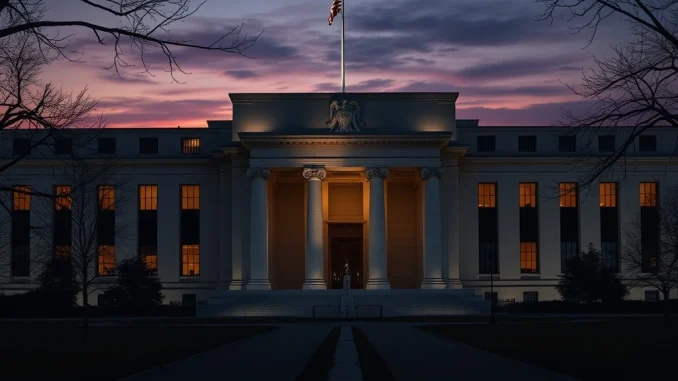
WASHINGTON, D.C. — January 2025 — The race for Federal Reserve leadership entered a critical phase this week as Kevin Hassett formally withdrew from consideration for chair, following direct signals from President Donald Trump that he should remain in his current White House role. This development narrows the field of potential successors to Jerome Powell and introduces fresh uncertainty about the central bank’s direction during a period of economic transition. The withdrawal comes amid escalating political pressure and a criminal investigation into the current Fed leadership, creating one of the most complex central bank transitions in recent history.
Kevin Hassett Withdraws from Federal Reserve Chair Consideration
Kevin Hassett confirmed his withdrawal during a television interview this week, ending months of speculation about his potential nomination. The former Council of Economic Advisers chairman described ongoing discussions with President Trump about the position but acknowledged the president’s clear preference for him to remain in the White House. “Several strong candidates remain,” Hassett stated, echoing Trump’s view that his continued presence in the West Wing serves the administration’s economic agenda more effectively.
Trump’s public remarks at a White House event last week effectively settled the matter. The president told Hassett directly that he wanted him to stay in his current advisory role, a message that political observers interpreted as both a vote of confidence and a strategic decision. This development reduces the pool of viable candidates to four primary contenders, according to people familiar with the selection process.
Political Dynamics Reshape Fed Leadership Selection
The narrowing field reflects several significant shifts in the selection criteria for Federal Reserve leadership. Political viability and Senate confirmation prospects now outweigh traditional considerations of policy alignment and economic expertise. This represents a marked departure from historical Fed chair selections, which typically prioritized technical competence and monetary policy experience above political considerations.
Several factors are driving this transformation:
- Increased Senate scrutiny: Confirmation battles have grown more contentious in recent years
- Political durability: Candidates must demonstrate ability to withstand partisan pressure
- Reduced candidate pool: Fewer economists are willing to enter the political arena
- Heightened governance scrutiny: Fed operations face unprecedented examination
Rick Rieder has emerged as a leading candidate, according to sources close to the discussions. His appeal stems primarily from political practicality rather than ideological alignment. Rieder’s background in asset management and perceived ability to navigate Senate confirmation with fewer obstacles make him particularly attractive to an administration focused on achievable nominations.
Legal Pressure Intensifies Leadership Transition
The leadership transition occurs against a backdrop of escalating legal challenges. A criminal investigation into current chair Jerome Powell has introduced additional complexity to the process. The inquiry focuses on cost overruns related to renovations at the Fed’s Washington headquarters, but has taken on broader political significance. Powell has suggested the investigation connects to longstanding disagreements over interest-rate policy, particularly his resistance to calls for lower rates from the White House.
In a video posted on the Fed’s website, Powell stated that the threat of legal action stems from decisions made independently of presidential preferences. The subpoena tied to the investigation was approved by a U.S. attorney and relates to Powell’s testimony before Congress regarding project costs. While President Trump has publicly denied directing the investigation, his past statements reflect persistent frustration with Powell’s leadership and monetary policy decisions.
Senate Resistance and Legal Constraints Complicate Transition
The situation has significantly complicated Senate dynamics surrounding Federal Reserve appointments. A senior Republican member of the Senate Banking Committee has warned that any Fed nominee advanced by the Trump administration will face aggressive scrutiny. This resistance could delay or potentially prevent the installation of a new chair before Powell’s term ends on May 15, 2025.
Legal constraints further limit the administration’s options for reshaping the Federal Reserve Board:
| Constraint | Impact |
|---|---|
| 14-year governor terms | Board members serve fixed terms under federal law |
| “For cause” removal standard | Loosely defined standard makes removal difficult |
| Powell’s board term | Current chair may remain on board until 2028 |
| Court challenges | Legal disputes could delay board composition changes |
The administration is pursuing the removal of another governor, who has denied allegations of mortgage fraud and called them baseless. That dispute is expected to play out in court, adding uncertainty to the Fed’s internal balance of power. Three of the seven current governors already favor lower interest rates, aligning with the president’s position. Replacing additional members could further shift the board toward more accommodative monetary policy.
Market Implications and Economic Consequences
Financial markets are closely monitoring the Federal Reserve leadership transition for signals about future monetary policy direction. The uncertainty surrounding the chair selection has introduced volatility into interest rate expectations and could affect investment decisions across multiple sectors. Market participants are particularly concerned about potential shifts in the Fed’s approach to inflation targeting and financial stability oversight.
Historical precedent suggests that leadership transitions at independent central banks can affect market stability. The 2018 transition from Janet Yellen to Jerome Powell proceeded smoothly, but current political tensions create different conditions. Analysts note that prolonged uncertainty could affect the Fed’s credibility and its ability to manage economic expectations effectively.
Historical Context of Fed Leadership Transitions
The current situation represents a departure from historical norms in Federal Reserve leadership changes. Traditionally, sitting chairs have been reappointed or succeeded by vice chairs or other board members with deep institutional knowledge. The increasing politicization of the selection process reflects broader trends in the relationship between central banks and elected governments worldwide.
Several factors distinguish the current transition:
- Unprecedented political pressure on monetary policy decisions
- Criminal investigation of a sitting chair during transition
- Reduced candidate pool due to political considerations
- Simultaneous challenges to multiple board members
The Treasury Secretary now leads the search for a new chair, having previously removed himself from consideration. This adds another layer of complexity, as the Treasury’s relationship with the Federal Reserve has been historically delicate, particularly regarding independence boundaries.
Conclusion
Kevin Hassett’s withdrawal from Federal Reserve chair consideration marks a significant turning point in the leadership transition process. President Trump’s intervention to keep Hassett at the White House reflects the administration’s strategic priorities and reshapes the competitive landscape for the position. The narrowing field, combined with legal challenges and Senate resistance, creates unprecedented complexity for the Federal Reserve’s leadership future. As the May 15 deadline approaches, markets and policymakers alike will monitor developments closely, recognizing that the outcome will influence monetary policy, financial stability, and the central bank’s independence for years to come. The Federal Reserve chair race now enters its most critical phase, with political considerations increasingly overshadowing traditional selection criteria.
FAQs
Q1: Why did Kevin Hassett withdraw from consideration for Federal Reserve chair?
Kevin Hassett withdrew after President Trump signaled clear preference for him to remain in his White House role. During a public event, Trump told Hassett directly that he wanted him to stay in the West Wing, effectively ending his candidacy for Fed chair.
Q2: How many candidates remain in contention for Federal Reserve chair?
According to people familiar with the selection process, the field has narrowed to four primary candidates following Hassett’s withdrawal. Rick Rieder has emerged as a leading contender due to his perceived political viability.
Q3: What is the status of the investigation into Jerome Powell?
A criminal investigation focuses on cost overruns related to renovations at the Fed’s Washington headquarters. Powell has suggested the inquiry connects to policy disagreements, particularly regarding interest rates. The investigation adds legal pressure to the leadership transition.
Q4: When does Jerome Powell’s term as Federal Reserve chair end?
Powell’s term as chair ends on May 15, 2025. However, he may remain on the Federal Reserve Board until 2028, as board members serve fixed 14-year terms that are separate from the chair position.
Q5: How might Senate resistance affect the Federal Reserve leadership transition?
Senior Senate Banking Committee members have warned of aggressive scrutiny for any Trump administration nominee. This resistance could delay or potentially prevent confirmation of a new chair before Powell’s term ends, creating prolonged uncertainty about Fed leadership.
Updated insights and analysis added for better clarity.
This article was produced with AI assistance and reviewed by our editorial team for accuracy and quality.