HONG KONG, March 15, 2026 — HashKey Chain, the regulated blockchain infrastructure provider, has officially powered the launch of Hong Kong’s first-ever tokenized real estate real-world asset (RWA). This landmark transaction, executed this week, represents a critical step in the city’s ambition to become a global hub for compliant Web3 finance and institutional-grade digital asset adoption. The move directly supports Hong Kong’s strategic push to integrate blockchain technology with traditional finance, creating a new paradigm for property investment and ownership.
HashKey Chain Powers a Historic Real Estate Tokenization
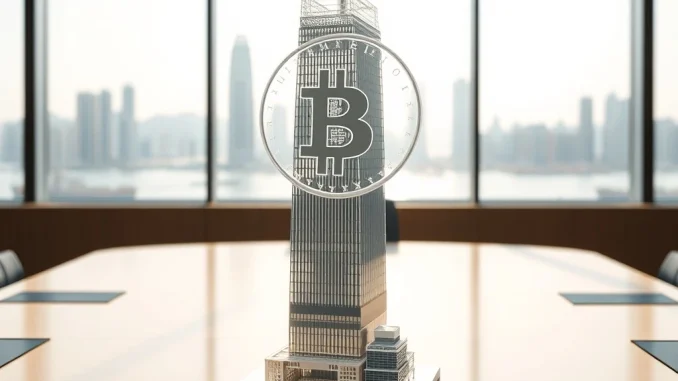
The inaugural asset is a prime commercial property located in Hong Kong’s Central district. HashKey Chain provided the foundational blockchain layer, ensuring the entire process—from issuance to custody—adhered to the Hong Kong Securities and Futures Commission’s (SFC) regulatory framework for virtual asset service providers. Consequently, the property’s ownership rights were digitally fragmented into security tokens, each representing a fractional share. This process, known as real-world asset (RWA) tokenization, unlocks liquidity for a traditionally illiquid asset class. The transaction was structured in collaboration with a licensed Hong Kong brokerage and a top-tier international law firm, ensuring full legal compliance.
Industry analysts point to the 2023 SFC regulatory guidelines for virtual asset trading platforms as the crucial precursor. These rules established a clear pathway for licensed entities to offer security tokens. Since then, Hong Kong’s financial regulators have actively encouraged innovation within this sandbox. “This isn’t a proof-of-concept; it’s a live, compliant financial product,” stated a source familiar with the deal. The tokenization platform built on HashKey Chain enables features like automated dividend distributions and transparent, on-chain record-keeping of all transactions.
Immediate Impacts on Hong Kong’s Financial Landscape
The successful launch triggers immediate and tangible consequences for multiple market participants. Primarily, it demonstrates a working model for other asset managers and property developers. Furthermore, it provides a regulated alternative for investors seeking exposure to Hong Kong real estate without the capital outlay for an entire property.
- For Institutional Investors: Access to fractionalized, high-value assets with enhanced transparency and potential for secondary market trading on regulated platforms.
- For Property Developers: A novel capital-raising tool that can attract a broader, global investor base and improve portfolio liquidity.
- For Hong Kong’s Fintech Ecosystem: A powerful validation of its regulatory framework, likely accelerating further investment and project launches in the RWA sector.
Expert Analysis on Regulatory Compliance and Market Signal
Dr. Lena Wong, a fintech policy fellow at the University of Hong Kong and former SFC advisor, emphasized the regulatory significance. “HashKey Chain’s licensed status was non-negotiable,” Wong explained. “This launch sends a definitive signal that Hong Kong is open for business in structured digital finance, but strictly on its own terms—within a regulated perimeter.” She contrasted this with more permissionless environments, noting the trade-off between innovation speed and investor protection. The transaction also references the Hong Kong Monetary Authority’s (HKMA) Project Ensemble sandbox findings, which laid technical groundwork for tokenized asset settlements.
Broader Context: Hong Kong in the Global RWA Race
This development places Hong Kong in direct competition with financial centers like Singapore, Abu Dhabi, and Switzerland, all actively developing their own RWA frameworks. However, Hong Kong’s unique position as a gateway to Mainland China and its deep, mature capital markets provide distinct advantages. The move is part of a broader, government-backed strategy to revitalize the city’s financial sector through technological innovation.
| Financial Hub | Key RWA Regulatory Approach | Notable Recent Development |
|---|---|---|
| Hong Kong | Licensed VASP framework under SFC | HashKey Chain’s first tokenized real estate (March 2026) |
| Singapore | MAS-regulated stablecoins & fund tokenization | Launch of a tokenized Asian bond fund (Late 2025) |
| Switzerland | DLT-based trading venue licenses (FINMA) | Digital bond issuance on SIX Digital Exchange (2024) |
The Road Ahead: Scaling and New Asset Classes
The immediate next step involves scaling the model. Sources indicate that the consortium behind this first deal is already evaluating a pipeline of additional commercial and luxury residential properties for tokenization in Q2 and Q3 of 2026. The success of this real estate pilot is expected to pave the way for tokenizing other asset classes prevalent in Hong Kong’s market, such as trade finance invoices, private credit, and infrastructure funds. The HKMA has scheduled a industry consultation on the interoperability of tokenized deposit systems for mid-2026, which could further streamline settlement for future RWA transactions.
Initial Market and Industry Reactions
Reaction from traditional finance has been cautiously optimistic. Major Hong Kong-based banks have reportedly established internal task forces to study the implications for custody and wealth management services. Meanwhile, the local Web3 community views it as a legitimizing moment. “This bridges the gap between crypto natives and institutional portfolios,” commented the founder of a Hong Kong digital asset fund. Some property sector veterans express caution regarding valuation models and liquidity depth in secondary markets, highlighting areas for ongoing development.
Conclusion
The launch of Hong Kong’s first tokenized real estate RWA on HashKey Chain is a watershed event. It validates the city’s regulated approach to Web3, provides a blueprint for future asset tokenization, and intensifies its competition in global digital finance. The key takeaways are the paramount role of regulatory compliance, the unlocking of real estate liquidity, and Hong Kong’s strategic positioning. Observers should monitor secondary trading volume for this initial token, announcements of follow-on property tokenizations, and regulatory updates from the SFC and HKMA as the most reliable indicators of this trend’s momentum.
Frequently Asked Questions
Q1: What exactly was tokenized in this HashKey Chain deal?
A prime commercial office building in Hong Kong’s Central district had its ownership rights converted into digital security tokens, allowing for fractional investment.
Q2: How does this benefit the average investor?
It provides access to high-value real estate with a lower capital requirement and offers potential liquidity through trading on regulated platforms, unlike direct property ownership.
Q3: What is the regulatory status of these real estate tokens?
They are classified as security tokens, falling under the existing securities laws of Hong Kong and regulated by the Securities and Futures Commission (SFC).
Q4: Can anyone buy these tokenized real estate shares?
Access is likely initially limited to professional and institutional investors as defined by the SFC, in line with current regulations for complex financial products.
Q5: How does HashKey Chain’s role differ from a traditional stock exchange?
HashKey Chain provides the underlying blockchain infrastructure for issuance and record-keeping, while a licensed broker-dealer facilitates the transaction. It is a foundational layer, not a trading venue itself.
Q6: What does this mean for the future of real estate investment in Asia?
It signals a shift towards more digital, accessible, and liquid markets. If successful, the model could be replicated for residential properties, warehouses, and other real estate assets across the region.
Updated insights and analysis added for better clarity.
This article was produced with AI assistance and reviewed by our editorial team for accuracy and quality.