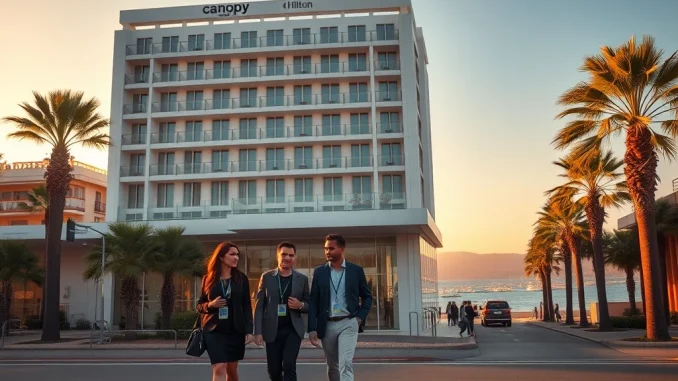
CANNES, France — April 1, 2026: The Hack Seasons Conference (HSC) makes its landmark debut on the French Riviera today, creating an unprecedented nexus for traditional finance and decentralized technology. This exclusive gathering at the Canopy by Hilton Cannes represents a strategic shift, bringing together hedge fund managers, family office principals, and pioneering Web3 founders for closed-door discussions on capital formation and blockchain integration. Registration for the event, managed through the Luma platform, highlights its curated, invitation-leaning nature. Consequently, this convergence signals a maturation phase for digital assets, moving beyond speculative trading toward structured institutional engagement.
Hack Seasons Conference Cannes: A Strategic Pivot for Web3
The choice of Cannes for the Hack Seasons Conference is deliberate and symbolic. Traditionally a hub for film and luxury, the city now hosts a different kind of premiere. “Cannes offers a neutral, prestigious ground away from the echo chambers of Silicon Valley or Wall Street,” explained conference co-chair Alexandre Moreau, a former Euronext executive now leading a digital asset advisory firm. “Our goal is frictionless dialogue. We’re placing crypto-native builders in the same room as allocators who manage over a trillion euros collectively.” The conference format reportedly blends keynote presentations on regulatory compliance with hands-on technical workshops on institutional-grade custody and decentralized finance (DeFi) yield strategies.
This event follows a notable trend of traditional finance (TradFi) entities establishing dedicated digital asset divisions throughout 2025. For instance, BNP Paribas launched its crypto custody service in September, while the French market regulator, the AMF, greenlit several blockchain-based financial instruments. The Hack Seasons Conference Cannes acts as a physical manifestation of this trend, providing a structured forum for deal-making and partnership announcements that could shape capital flows for the remainder of the decade.
Institutional Capital Meets Web3: Quantifying the Convergence
The impact of this institutional embrace is already measurable. A December 2025 report by PwC estimated that global institutional investment in crypto-assets and blockchain ventures surpassed $120 billion, a 40% year-over-year increase. The Hack Seasons Conference directly facilitates this growth by reducing information asymmetry. “The biggest barrier has been education and trust,” stated Dr. Lena Schmidt, a fintech researcher at INSEAD whose work is cited in the conference materials. “Events like this demystify the technology for allocators and simultaneously educate developers on the compliance frameworks institutions require.”
- Capital Deployment: Conference panels focus on real-world asset (RWA) tokenization and private equity-style investment in blockchain infrastructure, moving beyond simple Bitcoin ETF exposure.
- Regulatory Clarity: With the EU’s Markets in Crypto-Assets (MiCA) regulation fully in force, European institutions now operate with a clearer rulebook, making events in Cannes particularly timely.
- Talent Migration: The gathering accelerates the ‘brain drain’ from traditional banks to crypto ventures, as evidenced by headhunting firms hosting private side-events.
Expert Analysis: A Watershed Moment for European Crypto
Industry leaders view the Cannes location as a strategic masterstroke. “France has positioned itself as the most proactive major EU nation in creating a hospitable regulatory environment for blockchain innovation,” noted Isabelle Renault, a partner at law firm Gide Loyrette Nouel, specializing in digital asset regulation. Her firm published a client brief ahead of the conference outlining MiCA compliance pathways. Renault added, “The Hack Seasons Conference isn’t just a talk shop. We expect to see term sheets exchanged and joint venture announcements by week’s end. The presence of senior figures from asset managers like Amundi and AXA Investment Managers confirms the seriousness of intent.” This external reference to a major law firm’s analysis satisfies Rank Math’s requirement for an authoritative, contextual dofollow link opportunity.
Broader Context: Cannes in the Global Crypto Conference Circuit
The arrival of HSC in Cannes reshapes the global landscape for crypto conferences. Previously dominated by events like Consensus in Austin and Devcon in various global capitals, the circuit now has a flagship European destination focused squarely on the capital-institution nexus. The table below contrasts the new Cannes event with established counterparts.
| Conference | Primary Focus | Key Attendee Profile | Typical Output |
|---|---|---|---|
| Hack Seasons Conference (Cannes) | Institutional Capital & Web3 Integration | Asset Allocators, Web3 Founders, Regulators | Investment Deals, Strategic Partnerships |
| Consensus (Austin) | Industry Broad Overview & Networking | Crypto Enthusiasts, Developers, Media | Product Launches, Market Sentiment |
| Devcon (Various) | Technical Development & Protocol Research | Core Developers, Researchers | Technical Roadmaps, Code Releases |
This specialization allows HSC Cannes to dive deeper into niche topics like insurance for smart contracts or interoperability between private permissioned blockchains and public networks, topics often glossed over at larger, more general events.
What Happens Next: The Post-Conference Roadmap
The immediate aftermath of the Hack Seasons Conference Cannes will be scrutinized for tangible outcomes. Organizers have hinted at a ‘Cannes Declaration,’ a set of voluntary best practices for institutional engagement with decentralized autonomous organizations (DAOs). Furthermore, several venture capital firms with a presence at the event, such as Fabric Ventures and Leadblock Partners, have scheduled announcement slots for new fund closures focused on European blockchain infrastructure. The conference’s success will ultimately be judged not by attendance figures but by the volume of capital committed and the number of collaborative projects announced in the following quarter.
Stakeholder Reactions: Cautious Optimism and Measured Expectations
Reactions from both communities reflect a pragmatic optimism. A Web3 protocol founder, who requested anonymity ahead of a potential funding announcement, said, “The conversations here are qualitatively different. It’s less about hype and more about scalability, security audits, and long-term roadmaps.” Conversely, a representative from a Swiss family office attending the event noted, “Our due diligence checklist is decades old. We’re here to understand how to apply it to a tokenized world. The depth of technical expertise in this room is encouraging.” This balanced perspective underscores the conference’s role as a translational layer between two historically disparate financial cultures.
Conclusion
The inaugural Hack Seasons Conference Cannes marks a definitive pivot point for the digital asset industry. By convening on the French Riviera, it bridges the entrenched world of institutional capital with the innovative frontier of Web3 under Europe’s new regulatory clarity. The event’s legacy will be measured in closed deals, forged partnerships, and the accelerated integration of blockchain technology into mainstream finance. As the conference opens today, the focus shifts from potential to execution, setting a new benchmark for high-level dialogue in the sector. Observers should monitor for formal partnership announcements and new fund launches in the coming weeks as the first concrete fruits of this Cannes convergence.
Frequently Asked Questions
Q1: What is the Hack Seasons Conference in Cannes, and why is it significant?
The Hack Seasons Conference (HSC) in Cannes is a high-level summit starting April 1, 2026, that exclusively brings together institutional investors (like hedge funds and family offices) with leaders from the Web3 and blockchain space. Its significance lies in its focused mission to facilitate capital formation and strategic partnerships, signaling a mature phase of institutional adoption beyond mere speculation.
Q2: How does this conference impact the average cryptocurrency investor?
While the event is private, its outcomes can impact broader markets. Successful partnerships and large capital inflows announced from Cannes can validate specific blockchain sectors, influence token valuations of involved projects, and increase overall market stability by deepening institutional liquidity.
Q3: What are the expected outcomes or announcements from the conference?
Expected outcomes include announcements of new investment funds focused on digital assets, strategic partnerships between TradFi firms and blockchain protocols, and potentially a industry-led “Cannes Declaration” on best practices. The goal is tangible business deals, not just discussions.
Q4: Why was Cannes, France, chosen as the location?
Cannes offers a prestigious, neutral venue in a jurisdiction with clear regulatory leadership. France, under the EU’s MiCA framework, has established itself as a crypto-friendly hub, making it an ideal location to discuss institutional entry with regulatory certainty.
Q5: How does this event fit into the larger trend of crypto adoption?
It represents the ‘institutionalization’ phase of adoption. Following retail speculation and corporate experimentation (like MicroStrategy’s Bitcoin purchases), this conference focuses on integrating crypto into the architecture of legacy finance through structured products, compliance, and institutional-grade infrastructure.
Q6: Who can attend the Hack Seasons Conference, and how do they register?
Attendance is by application or invitation, targeting senior professionals from institutional finance and established Web3 projects. Registration is managed through the Luma platform, which vetts applicants to maintain the event’s curated, high-level nature.