Global, May 2025: The Graph Foundation has unveiled a comprehensive technical roadmap extending through 2026, outlining a strategic evolution to establish what it describes as Web3’s fundamental data backbone. This ambitious plan centers on a modular, multi-service architecture powered by its “Horizon” vision, fundamentally shifting how decentralized applications query and consume blockchain data. The roadmap details significant technical milestones including the expansion of Substreams, the development of the Tycho indexing system, and the integration of AI-powered gateways, representing a multi-year commitment to solving blockchain data accessibility at scale.
The Graph’s 2026 Technical Roadmap: A Strategic Foundation
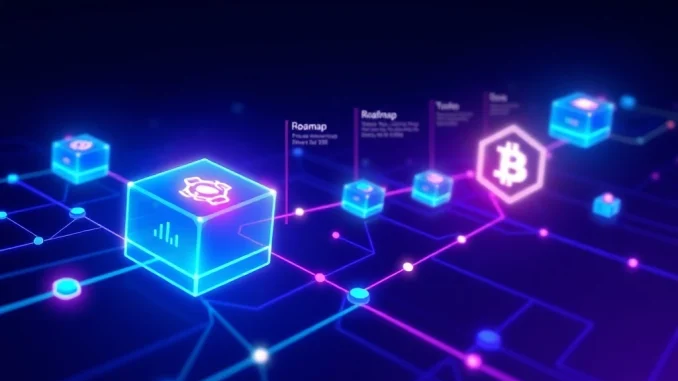
The newly published document, titled “Horizon: The Path to a Modular Data Layer,” serves as a detailed technical blueprint rather than a simple feature list. It responds directly to the growing and complex demands of the Web3 ecosystem, where thousands of decentralized applications require reliable, fast, and granular access to on-chain information. The core thesis is that a single, monolithic indexing solution cannot serve the diverse needs of developers building everything from decentralized finance protocols to gaming worlds and social networks. Consequently, the 2026 roadmap proposes a fundamental architectural shift towards a modular stack where different components—data ingestion, processing, querying, and delivery—can evolve independently and be composed as needed.
This modular approach draws parallels to evolution in traditional cloud computing and Web2 infrastructure. Just as Amazon Web Services and Google Cloud Platform decomposed their services into microservices, The Graph aims to apply similar principles to decentralized data. The goal is to provide developers with a “data buffet” where they can select precisely the tools and services required for their specific use case, whether that involves real-time event streaming, historical analysis, or aggregated financial metrics. The roadmap explicitly ties each technical initiative to solving tangible developer pain points identified through years of operating the network’s current mainnet, which has served over 3.5 million monthly queries for more than 40 different blockchain networks.
Core Technical Pillars: Substreams, Tycho, and AI Gateways
The roadmap is structured around several interdependent technical pillars, each with its own development timeline and success metrics. The first major pillar is the maturation and expansion of Substreams. Introduced as a high-performance data streaming framework, Substreams allow developers to define data extraction modules in Rust that can process blockchain data orders of magnitude faster than traditional methods. The 2026 plan calls for enhancing Substreams with new sink types, enabling the streaming of processed data directly to databases, data lakes, and other external systems. This transforms The Graph from a query endpoint into a real-time data pipeline, a critical capability for high-frequency trading applications and real-time dashboards.
The second pillar is the development of Tycho, a next-generation indexing system named after the pioneering astronomer Tycho Brahe, known for his precise astronomical data. Tycho is designed as a massively parallel, cloud-native indexing engine that can horizontally scale to handle the data volume of hundreds of blockchain networks simultaneously. Its architecture separates the state management, computation, and storage layers, allowing each to be optimized independently. The roadmap outlines a phased rollout for Tycho, beginning with internal testnets in late 2025 and targeting a production-ready release for core blockchain networks like Ethereum and Arbitrum by mid-2026.
- Substreams Evolution: Focus on developer tooling, additional blockchain support, and enterprise-grade reliability features.
- Tycho Development: Emphasis on scalability, determinism in indexing, and reduced operational costs for node operators.
- AI Gateway Integration: Implementation of machine learning models to optimize query routing, cache predictions, and provide natural language interfaces for data exploration.
The third, and perhaps most forward-looking, pillar involves the integration of AI and machine learning gateways. These are not standalone products but intelligence layers woven into the query service. The roadmap describes AI models that can predict which indexers have the fastest response for a given query pattern, dynamically optimize caching strategies, and even translate natural language questions into GraphQL queries. This aims to dramatically lower the barrier to entry for developers unfamiliar with The Graph’s query language while improving efficiency and cost for experienced users.
The “Horizon” Vision: From Indexer to Data Economy
The overarching “Horizon” vision framing the roadmap represents a significant conceptual expansion of The Graph’s role. The project began primarily as a protocol for incentivizing the indexing of Ethereum smart contract data. The 2026 roadmap reframes it as a foundational layer for a broader decentralized data economy. In this model, various participants—data publishers, curators, indexers, and query consumers—interact in a marketplace not just for indexed data, but for raw data streams, validated data sets, and computational results.
This shift has important implications for network participants. For indexers, it means diversifying service offerings beyond running a monolithic graph node. They might specialize in providing ultra-low-latency Substreams for specific applications, offer archival Tycho indexes for historical research, or operate AI gateways. The roadmap includes economic upgrades to the protocol’s tokenomics to support this multi-service model, ensuring that rewards are aligned with the value and complexity of the service provided, not just the volume of queries served. This evolution mirrors the internet’s own development, where infrastructure providers gradually offered more specialized and value-added services on top of basic connectivity.
Industry Context and Competitive Landscape
The release of this detailed roadmap occurs within a specific and competitive sector of Web3 infrastructure. The problem of organizing and querying blockchain data has attracted numerous solutions, ranging from centralized API providers like Alchemy and Infura to other decentralized protocols. The Graph’s strategy, as articulated in the roadmap, is to compete on decentralization, verifiability, and long-term cost structure rather than just immediate developer convenience. By committing to a modular, open-source architecture, it bets that developers will increasingly prioritize data sovereignty and censorship resistance as their applications mature and gain users.
Furthermore, the roadmap’s timing is strategic. The Web3 industry is emerging from a period of intense focus on financial speculation and is entering a phase demanding robust, scalable infrastructure to support mainstream applications. The technical challenges outlined—handling the data load from layer-2 rollups, app-chains, and new virtual machines—are immediate concerns for builders. By publicly charting a course to 2026, The Graph Foundation provides assurance to developers making multi-year platform decisions. It also serves as a recruitment tool for engineering talent, clearly signaling the complex distributed systems problems the team intends to solve.
| Timeline | Initiative | Primary Goal |
|---|---|---|
| Q4 2025 | Substreams Sinks General Availability | Enable streaming data to external systems (SQL DBs, Warehouses). |
| Q1 2026 | Tycho Testnet Phase 1 | Launch internal testnet for core indexing engine scalability tests. |
| Q2 2026 | AI Gateway Prototypes | Release experimental endpoints with query optimization and NLQ. |
| Q3 2026 | Multi-Service Economics Upgrade | Implement protocol changes to reward diverse service offerings. |
| Q4 2026 | Tycho Mainnet for Ethereum | Production deployment for Ethereum mainnet indexing. |
Conclusion
The Graph’s 2026 technical roadmap represents a pivotal and ambitious plan to transition from a successful decentralized indexing protocol into the foundational data backbone for the broader Web3 ecosystem. By embracing a modular, multi-service architecture through Substreams, Tycho, and AI integrations, the project addresses the scalability and flexibility demands of next-generation decentralized applications. This detailed blueprint provides clarity for developers, indexers, and the community, framing the next two years as a critical build phase for essential infrastructure. The successful execution of this 2026 technical roadmap could significantly lower the barriers to building complex on-chain applications, ultimately contributing to the usability and adoption of decentralized technologies. The focus remains on execution, as the vision outlined will require sustained technical effort and community coordination to become reality.
FAQs
Q1: What is the main goal of The Graph’s 2026 roadmap?
The primary goal is to evolve The Graph from a decentralized indexing protocol into a modular, multi-service data layer that serves as the scalable and flexible data backbone for the entire Web3 ecosystem.
Q2: What are Substreams in the context of this roadmap?
Substreams are a high-performance data streaming framework that allows for the real-time processing and piping of blockchain data. The roadmap focuses on enhancing them to stream data directly to external databases and systems.
Q3: How does the new Tycho system differ from The Graph’s current indexing?
Tycho is designed as a next-generation, cloud-native, and massively parallel indexing engine. It separates state, computation, and storage for better scalability and efficiency, aiming to handle data from hundreds of chains simultaneously.
Q4: What role will AI play according to the roadmap?
AI and machine learning will be integrated as intelligent gateways to optimize query routing, predict caching needs, and potentially allow for natural language queries, making the system more efficient and accessible.
Q5: How does this roadmap affect current users and indexers on The Graph network?
The roadmap promises more tools, services, and potential revenue streams for indexers, while offering developers faster, more flexible, and more diverse ways to query data. It involves a gradual evolution, with backward compatibility being a key concern during the transition.