New York, April 2025: The cryptocurrency market navigates a complex web of macroeconomic and political forces. In a recent analysis, Matt Hougan, Chief Investment Officer of Bitwise Asset Management, identified two critical variables exerting outsized influence: the unprecedented surge in gold prices and persistent regulatory confusion in the United States. These factors, Hougan argues, are not isolated phenomena but interconnected drivers that will define the trajectory of digital assets in the coming years. His insights provide a crucial framework for understanding the current volatility and future potential of the crypto ecosystem.
Gold’s Meteoric Rise as a Macroeconomic Signal
Gold has served as a store of value and medium of exchange for over two thousand years. Its recent price action, however, is historically anomalous. Hougan notes that approximately half of gold’s total market value has been generated in just the last 20 months. This explosive growth transcends typical commodity cycles. Analysts point to a confluence of global factors driving this rally, which in turn influences investor behavior toward alternative assets like cryptocurrency.
The primary drivers for gold’s surge include accumulated excess liquidity from years of expansive monetary policy, soaring global debt levels, and concerns over currency devaluation. When central banks engage in quantitative easing or governments run significant deficits, traditional fiat currencies can lose purchasing power. Investors historically turn to gold as a hedge. The scale and speed of the current move suggest a deep-seated anxiety about the stability of the traditional financial system. This environment creates a fertile ground for cryptocurrencies, which many proponents also view as hedges against inflation and systemic risk. The performance of gold often sets a psychological and capital-allocation precedent for other non-yielding, scarcity-based assets.
The Tangled Web of US Crypto Regulation
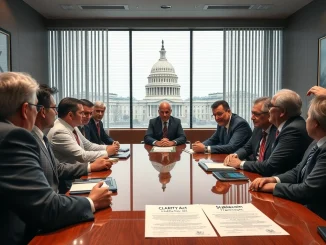
While gold provides a macroeconomic backdrop, the regulatory landscape in the United States presents a more immediate and palpable variable. Hougan specifically highlighted the proposed crypto market structure legislation, colloquially referred to by advocates as the “Clarity Act.” This bill aims to delineate clear jurisdictional boundaries between the Securities and Exchange Commission (SEC) and the Commodity Futures Trading Commission (CFTC) regarding digital assets. For years, the industry has operated under a cloud of uncertainty, with regulatory actions often appearing reactive and enforcement-driven rather than guided by clear, forward-looking rules.
The path of this legislation has been volatile. Earlier this month, prediction markets assigned an 80% probability of the bill’s passage, reflecting optimism from bipartisan discussions. This optimism has since sharply declined. The turning point came when major industry player Coinbase publicly criticized the current draft, labeling it as ineffective and potentially creating more complexity than clarity. This pushback from a leading US-based exchange underscores the deep divisions within the crypto industry itself regarding the optimal regulatory framework. The fluctuating odds of the Clarity Act exemplify the high-stakes, unpredictable nature of crypto policy-making in Washington.
The High-Stakes Consequences of Legislative Failure
Hougan outlined a consequential timeline should the Clarity Act ultimately fail to become law. He projects the market could enter a challenging three-year period where it must “directly prove its value” without the guardrails and legitimacy that clear regulation provides. In this scenario, the onus would fall entirely on real-world utility and adoption to shift the political and regulatory narrative. The primary catalysts for change would no longer be legislative lobbying but tangible use cases demonstrating efficiency, accessibility, and economic benefit.
Two use cases stand out as potential game-changers in this context:
- Stablecoins: These digital assets pegged to stable reserves like the US dollar have demonstrated utility in cross-border payments and settlements. Their adoption by traditional finance and use in everyday transactions could force regulatory hands by demonstrating clear public demand and systemic importance.
- Tokenized Real-World Assets (RWAs): The representation of traditional securities like stocks, bonds, or real estate on blockchain networks promises increased liquidity, fractional ownership, and reduced settlement times. Success in this domain would directly bridge the crypto and TradFi worlds, creating powerful institutional stakeholders in favor of sensible regulation.
Hougan issued a stark warning, however. If the Clarity Act fails and the adoption of these critical use cases stalls, the crypto market would face a dual threat. Policy changes in a vacuum of demonstrable utility could become actively hostile, driven by perceived risk without countervailing evidence of benefit. This underscores why the current period is a pivotal inflection point for the entire industry.
Historical Context and Parallels in Financial Innovation
The tension between innovation and regulation is not unique to cryptocurrency. Historical parallels exist, such as the early days of the internet or the evolution of electronic trading. These innovations also faced periods of skepticism, regulatory hesitation, and a need to prove tangible value beyond speculation. The internet, for instance, transitioned from a niche academic tool to a global commercial platform only after protocols were standardized and use cases like email and the world wide web gained mass adoption. This process took years and required iterative engagement with policymakers.
The current regulatory confusion mirrors the “Wild West” phase of many transformative technologies. The key difference with crypto assets is their inherent intersection with finance, a heavily regulated domain from the outset. This forces a faster and more intense confrontation with established legal frameworks. The outcome of this confrontation—whether through legislation like the Clarity Act or through organic market evolution—will set a precedent for how democratic societies govern decentralized digital infrastructure.
Conclusion: Navigating a Market Defined by Dual Variables
The analysis from Bitwise CIO Matt Hougan crystallizes a complex moment for cryptocurrency. The market is simultaneously pulled by the profound macroeconomic forces reflected in gold’s price and pushed by the unpredictable political process of US regulation. These are the critical crypto variables for 2025. Investors and builders must account for both: the gold price as a barometer of systemic distrust that benefits alternative assets, and the regulatory journey as a determinant of operational legitimacy and growth potential. The path forward likely requires patience, a focus on building verifiable utility, and engagement with the policy process. The next three years may indeed be a proving ground, determining whether cryptocurrency evolves from a speculative asset class into a foundational component of the future financial system.
FAQs
Q1: Why does the price of gold matter for cryptocurrency?
Gold is a traditional safe-haven asset. Its rapid price increase signals broad investor concern about inflation, debt, and currency devaluation. This same sentiment often drives interest in cryptocurrencies like Bitcoin, which some investors also view as a hedge against traditional financial systems, creating a correlative psychological link.
Q2: What is the “Clarity Act” for crypto regulation?
It is a nickname for proposed US legislation that aims to clearly define whether a digital asset is a security (regulated by the SEC) or a commodity (regulated by the CFTC). Its goal is to provide legal certainty for crypto companies operating in the United States, which currently face overlapping and sometimes conflicting regulatory guidance.
Q3: What did Coinbase criticize about the current draft of the bill?
Coinbase argued that the draft legislation, as written, would be ineffective. Their criticism centered on the belief that the proposed framework would not actually resolve core regulatory ambiguities and could inadvertently create more complexity and compliance burdens for the industry without delivering the promised clarity.
Q4: What are “real-world use cases” for crypto that could change regulation?
These are practical applications of blockchain technology that solve existing problems. Key examples include stablecoins for faster, cheaper payments and remittances, and the tokenization of assets like stocks or real estate to improve market efficiency and accessibility. Widespread adoption of these uses would demonstrate concrete economic value to policymakers.
Q5: What is the biggest risk if the crypto regulation bill fails?
According to Hougan’s analysis, the biggest risk is a prolonged period of uncertainty—potentially three years—where the industry lacks clear rules. During this time, if adoption of beneficial use cases stalls, regulators could enact policies based solely on perceived risks rather than a balanced view of risks and benefits, potentially stifling innovation and growth in the US market.