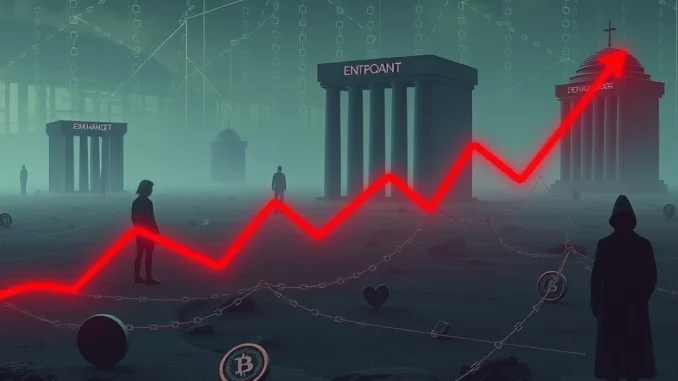
The cryptocurrency market is no stranger to dramatic price swings, but the recent performance of the FUN token has sent shockwaves through the community. On July 27, 2025, FUN experienced a staggering decline, losing over 632% of its value in just 24 hours. This precipitous fall has ignited widespread concern among investors and analysts alike, pointing to a confluence of critical factors that threaten the token’s long-term viability. For anyone tracking the volatile world of digital assets, this abrupt downturn serves as a stark reminder of the inherent risks and the importance of due diligence.
The Unraveling: Why FUN Token Plunged
The immediate trigger for the FUN token‘s dramatic slide was a series of significant crypto delisting announcements from major exchanges. Bybit and OKX, two prominent platforms in the digital asset space, ceased support for FUN. This move effectively cut off vital trading avenues for the token, leading to an instant and severe reduction in liquidity.
- Reduced Liquidity: When a token is delisted from major exchanges, the pool of available buyers and sellers shrinks dramatically. This makes it harder for holders to sell their tokens at a fair price, often forcing them to accept significantly lower bids.
- Decreased Market Depth: With fewer trading pairs and platforms, the ‘depth’ of the market diminishes. This means large orders can disproportionately impact the price, leading to sharper price movements.
- Erosion of Trust: Delistings are often perceived as a vote of no confidence from exchanges, signaling potential issues with the project’s fundamentals, regulatory compliance, or long-term prospects. This perception can trigger panic selling among investors.
The absence of these major trading venues has left the FUN token in a precarious position, struggling to maintain any semblance of market stability. The immediate consequence was a sharp reduction in trading volume, exacerbating the downward pressure on its price.
Silence Speaks Volumes: Developer Inactivity Concerns
Beyond the immediate impact of delistings, a deeper, more systemic issue has plagued the FUN project: a conspicuous lack of developer activity. A thriving blockchain project status is typically characterized by continuous development, regular updates, and clear communication from its core team. However, public repositories for the FUN project, such as GitHub, show minimal recent updates. Key milestones that were once outlined in prior roadmaps have reportedly not been met.
The importance of active development in the rapidly evolving blockchain and cryptocurrency landscape cannot be overstated. Without consistent innovation, bug fixes, and feature additions, projects risk becoming obsolete. The absence of public updates from the developers and project leaders has fueled speculation and uncertainty within the community, raising fundamental questions about the project’s future direction and its commitment to remaining relevant in the competitive gaming and blockchain sector.
This developer silence suggests potential stagnation, which is a significant red flag for any decentralized project relying on continuous improvement and community trust.
Ripple Effect: Community and Ecosystem Response to Altcoin Crash
The severe price depreciation and underlying concerns about development have had a profound ripple effect across the FUN token‘s community and ecosystem. An altcoin crash of this magnitude inevitably leads to a significant decline in engagement:
- Community Disengagement: Social media activity surrounding FUN has visibly slowed, and discussions in official Discord and Telegram channels have become sparse. This indicates a potential loss of interest and, more critically, confidence among core supporters and investors who once championed the project.
- Partner Hesitation: Several ecosystem partners, who might have once been enthusiastic about collaborations, have reportedly paused their initiatives or delayed announcements. Their stated reasons often cite the growing uncertainty around the project’s roadmap and its financial sustainability. This lack of external validation further isolates the project and hinders its potential for growth.
A vibrant community and strong partnerships are crucial for the health and growth of any crypto project. The current decline in both areas suggests a significant challenge for FUN to regain momentum and rebuild its foundational support.
Navigating the Volatility: What FUN Token’s Past Tells Us
While the recent 632.33% drop in 24 hours and a 2229.02% decline over the past seven days paint a grim picture, it’s crucial to acknowledge the FUN token‘s history of extreme price swings. Surprisingly, despite these recent setbacks, FUN has recorded a 2958.37% increase in the last month and an astonishing 17432.2% rise over the past year. This contradictory data highlights the highly speculative nature of the token’s market and the broader crypto market volatility.
Such a history of rapid pumps and dumps often suggests that the token’s performance has been driven more by speculative trading and hype cycles rather than by fundamental improvements in the project’s utility or adoption. For investors, this pattern underscores the immense risks involved. Without renewed development efforts, a clear strategy to re-engage the community, and tangible progress on its roadmap, analysts suggest that FUN may struggle to sustain any upward momentum in the coming months, potentially reverting to its previous patterns of extreme fluctuation driven by short-term speculation rather than long-term value.
Analyst Insights: Structural Weaknesses and Future Outlook
Analysts are increasingly vocal about the structural weaknesses inherent in the FUN project. They project that the FUN token‘s volatility and declining market sentiment are likely to persist, or even worsen, unless significant, proactive measures are taken by the development team and project leadership. The current trajectory suggests that the token’s long-term performance has been heavily influenced by speculative trading rather than by any fundamental improvements or tangible advancements within the project itself.
With major exchange delistings restricting accessibility and developer inactivity eroding confidence, the token faces formidable downward pressure. The outlook for FUN in the near term is undoubtedly challenging. Without a compelling resurgence in development, a transparent roadmap, and effective strategies to re-engage its disillusioned community, FUN may find it exceedingly difficult to regain investor trust and carve out a sustainable niche in the competitive blockchain landscape. Investors are advised to exercise extreme caution and conduct thorough research before considering any involvement with the token.
The dramatic fall of the FUN token serves as a potent cautionary tale in the unpredictable world of cryptocurrencies. A combination of significant crypto delisting events and a glaring lack of developer activity has crippled the project’s liquidity and shattered community confidence. While its past performance shows extreme volatility, the current blockchain project status points to severe challenges. For the FUN token to even hope for a recovery, a monumental shift in strategy, renewed development, and transparent communication from its leadership will be absolutely essential. Without these crucial interventions, the token may struggle to ever regain its footing amidst the prevailing crypto market volatility.
Frequently Asked Questions (FAQs)
Q1: What caused the recent sharp decline in the FUN token’s price?
The primary causes were the delisting of the FUN token from several major cryptocurrency exchanges, including Bybit and OKX, coupled with a significant lack of developer activity and updates on the project’s public repositories like GitHub.
Q2: How do exchange delistings impact a cryptocurrency’s value?
Exchange delistings severely impact a cryptocurrency’s value by reducing its liquidity, market depth, and trading volume. It also erodes investor confidence, as delistings are often perceived as a negative signal about the project’s viability or regulatory compliance, leading to panic selling.
Q3: Why is developer activity crucial for a blockchain project?
Developer activity is crucial because it indicates ongoing innovation, security updates, bug fixes, and progress towards a project’s roadmap. A lack of activity suggests stagnation, a potential abandonment of the project, and a failure to adapt to the evolving blockchain landscape, all of which deter new investors and disengage existing ones.
Q4: Despite the recent drop, why did FUN token show significant gains over longer periods?
The FUN token’s history shows extreme price volatility, with significant gains over longer periods (e.g., month, year) despite recent sharp drops. This often indicates that its past performance was driven more by speculative trading and market hype rather than sustained fundamental growth or project utility. It highlights the high-risk, speculative nature of the asset.
Q5: What is the outlook for the FUN token’s future?
Analysts suggest a challenging outlook for the FUN token. Its future performance is heavily dependent on significant action from the development team, including renewed development efforts, a clear and updated roadmap, and transparent communication. Without such interventions, the token is likely to face continued volatility and struggle to regain momentum or investor trust.