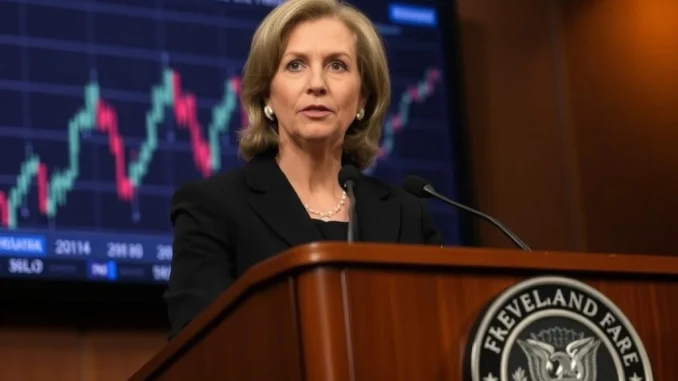
The cryptocurrency market often reacts sharply to macroeconomic shifts. Therefore, statements from key financial figures like Cleveland Fed President Beth Hammack carry significant weight. Her recent warning about the Federal Reserve’s approach to interest rates has implications for all investors. Understanding this perspective is crucial for navigating potential market volatility.
Federal Reserve’s Caution: The Peril of Premature Rate Cuts
Cleveland Federal Reserve Bank President Beth Hammack recently voiced a significant concern. She cautioned against the Federal Reserve cutting interest rates too rapidly. Her primary worry centers on the potential for the economy to overheat once more. This scenario could undo progress made against inflation.
Hammack’s statement highlights a delicate balancing act. Central banks aim to control inflation without stifling economic growth. Cutting rates typically stimulates economic activity. However, doing so prematurely can reignite price pressures. This makes the timing of future rate cuts extremely critical.
Policymakers carefully monitor various economic indicators. These include inflation data, employment figures, and consumer spending. Each piece of data informs their crucial decisions on monetary policy. Consequently, a cautious approach is often preferred.
Understanding Why an Economy Overheat Poses Risks
An economy overheat occurs when demand consistently outstrips supply. This situation typically leads to rapid price increases, or inflation. The Fed has worked hard to bring inflation down. They implemented aggressive interest rate hikes over the past two years. This period saw rates reach multi-decade highs.
If the economy becomes too robust too quickly, inflation could accelerate again. This would force the Federal Reserve to reverse its policy course. Such a reversal might involve further rate increases. This “stop-and-go” policy can create significant instability. Businesses and consumers generally prefer predictable economic conditions for planning.
Beth Hammack’s caution reflects this desire for stability. She emphasizes a patient approach. This ensures sustainable economic growth. Furthermore, it protects against a resurgence of inflationary pressures. Her view prioritizes long-term economic health.
Beth Hammack’s Stance on Federal Reserve Monetary Policy
Beth Hammack brings a wealth of experience to her important role. Her insights significantly shape the ongoing monetary policy debate. She advocates for data-dependent decision-making. This means policy adjustments should primarily rely on current economic facts and trends.
Her perspective aligns with a cautious, evidence-based approach. Many central bankers share this prudent view. They want to see clear evidence of inflation returning to target levels. Only then should significant adjustments to interest rates occur. This strategy aims to solidify price stability for the long term.
The Fed’s dual mandate includes maximum employment and stable prices. Navigating these goals requires careful consideration. Hammack’s comments underscore the inherent complexity involved in achieving both effectively. Therefore, vigilance remains paramount.
The Broader Economic Outlook and Potential Rate Cuts
The prospect of rate cuts remains a major discussion point. Financial markets eagerly anticipate lower borrowing costs. However, the Federal Reserve must weigh these expectations against current economic realities. They seek to avoid an economy overheat at all costs.
Many analysts watch for clear signs of economic deceleration. Such signs could indeed justify easing monetary policy. Yet, current economic data often shows surprising resilience. Strong job growth and consistent consumer spending persist across various sectors.
This ongoing resilience makes the Fed’s job harder. They must determine if the economy can truly handle lower rates. They must also ensure inflation stays firmly on its downward path. Beth Hammack’s warning serves as a timely reminder of these critical challenges.
Implications for Investors Amidst Federal Reserve Decisions
Investors, including those in the cryptocurrency space, pay close attention to Fed policy. Higher interest rates can make riskier assets less attractive. Conversely, lower rates typically boost investor confidence in growth assets. This dynamic directly impacts market sentiment.
Beth Hammack’s cautionary stance suggests a potentially slower pace for rate cuts. This could mean interest rates remain elevated for longer than some expect. Such an environment might influence various investment strategies. It could favor more conservative approaches in the short to medium term.
Ultimately, the Federal Reserve will make its decisions based on evolving economic data. Their overarching goal is to foster a healthy, stable economy. Hammack’s warning contributes significantly to this critical dialogue. It stresses prudence and patience in all monetary policy adjustments.
Conclusion: A Balanced Approach to Economic Stability
Cleveland Fed President Beth Hammack’s warning underscores the complexities of modern monetary policy. Rushing into rate cuts could jeopardize hard-won gains against inflation. It risks causing the economy overheat again. The Federal Reserve faces a delicate balance. They must support growth while maintaining price stability. This patient, data-driven approach is vital for long-term economic health. Investors should monitor Fed communications closely. These signals offer crucial insights into future market conditions.
Frequently Asked Questions (FAQs)
Q1: What is the main concern expressed by Cleveland Fed President Beth Hammack?
A1: Beth Hammack’s primary concern is that if the Federal Reserve cuts interest rates too quickly, it could cause the economy to overheat again. This would risk a resurgence of inflation.
Q2: What does it mean for an economy to “overheat”?
A2: An economy “overheats” when demand for goods and services significantly outpaces the available supply. This imbalance typically leads to rapid price increases, also known as high inflation.
Q3: Why is the Federal Reserve cautious about cutting interest rates?
A3: The Federal Reserve is cautious because premature rate cuts could stimulate the economy too much. This might undo progress made in bringing down inflation and force the Fed to raise rates again later, creating economic instability.
Q4: How do Federal Reserve interest rate decisions affect investors?
A4: Federal Reserve interest rate decisions directly impact investment markets. Higher rates can make riskier assets (like some cryptocurrencies) less attractive, while lower rates can boost confidence in growth assets. A cautious approach to rate cuts might mean rates stay elevated longer.
Q5: What is the Federal Reserve’s dual mandate?
A5: The Federal Reserve operates under a dual mandate. Its two primary goals are to achieve maximum sustainable employment and to maintain stable prices (control inflation).
Q6: What factors influence the Federal Reserve’s decisions on interest rates?
A6: The Federal Reserve’s decisions are data-dependent. They closely monitor a range of economic indicators, including inflation rates, employment figures, consumer spending, and overall economic growth.