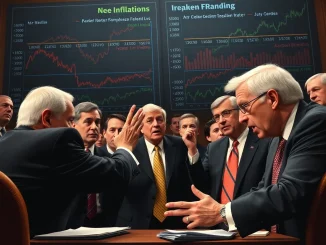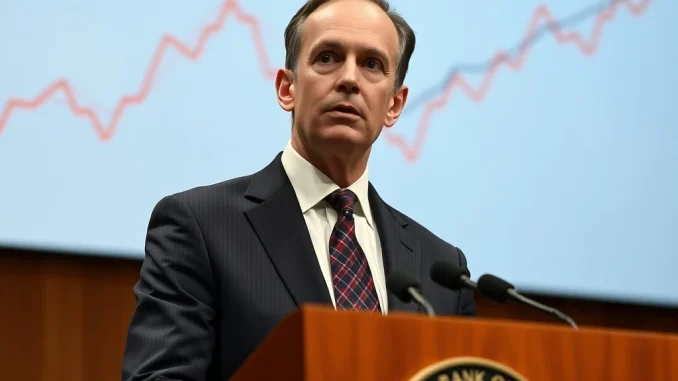
The financial world constantly monitors signals from central banks. Their decisions ripple through global markets. This includes the volatile cryptocurrency sector. Understanding these signals is crucial for investors. Recently, a significant voice from the **Federal Reserve** shared a cautious perspective. This perspective could shape future economic policy and impact asset prices, including digital currencies.
Austan Goolsbee’s Stance on Preemptive Rate Cuts
Austan Goolsbee, the respected President of the Federal Reserve Bank of Chicago, has expressed unease. He worries about the prospect of **preemptive rate cuts**. His comments highlight a careful approach within the central bank. The Federal Reserve seeks to achieve price stability and maximum employment. Therefore, every decision regarding **interest rates** undergoes intense scrutiny.
Goolsbee emphasized his caution. He noted that moving too quickly could undo progress against rising prices. Financial markets often anticipate Fed actions. However, Goolsbee’s remarks suggest a preference for patience. The economy needs clear signals before any significant shift. This stance reflects a broader debate within economic circles.
The Concern Over Inflation Data
A primary driver behind Goolsbee’s caution is persistent **inflation data**. He stated that inflation remains a significant concern. Current economic indicators suggest that while inflation has eased from its peak, it has not yet reached the Fed’s target of 2%. Consequently, policymakers must remain vigilant. They analyze a wide range of economic reports. These reports include consumer price index (CPI) and personal consumption expenditures (PCE) data.
Furthermore, Goolsbee believes that **interest rates** should decline in conjunction with falling inflation. This approach links monetary policy directly to economic realities. It avoids speculative actions. The Fed’s goal is to bring inflation down sustainably. Only then can it consider easing monetary conditions. This strategy aims for a soft landing, avoiding a recession while taming price increases.
Understanding the Federal Reserve’s Role
The **Federal Reserve** acts as the central bank of the United States. Its mandate involves maintaining stable prices and maximizing employment. It uses monetary policy tools to achieve these goals. Adjusting the federal funds rate is its primary tool. This rate influences borrowing costs across the entire economy. Thus, it affects everything from mortgages to business loans.
The Fed’s decisions are not made lightly. They involve extensive research and debate among its governors and regional bank presidents. **Austan Goolsbee**, as a voting member of the Federal Open Market Committee (FOMC) in certain years, provides valuable regional insights. His current non-voting status does not diminish the influence of his public statements. These statements often reflect ongoing discussions within the Fed.
Why Interest Rates Matter for Markets
Changes in **interest rates** profoundly affect financial markets. Higher rates generally make borrowing more expensive. This can slow economic activity. Conversely, lower rates stimulate borrowing and spending. For cryptocurrency markets, this impact is often indirect but significant. When traditional investments offer higher returns due to rising interest rates, riskier assets like crypto may become less attractive. This is because investors might shift capital towards safer, yielding options.
Therefore, Goolsbee’s reluctance concerning **preemptive rate cuts** signals a potential continuation of tighter monetary conditions for longer. This scenario could influence capital flows. It impacts investor sentiment towards growth assets. Many crypto investors closely monitor these macroeconomic indicators. They understand their potential to drive market movements.
The Risks of Preemptive Rate Cuts
Cutting rates too early carries distinct risks. One major risk is the potential re-acceleration of inflation. If the Fed reduces **interest rates** before inflation is truly under control, price pressures could reignite. This would force the central bank to reverse course. Such policy reversals can create uncertainty and erode public trust. They also make economic planning difficult for businesses and consumers.
Goolsbee’s concerns about **inflation data** underscore this point. He prioritizes clear evidence of sustained disinflation. Premature easing could send the wrong signal to markets. It might suggest the Fed is less committed to its inflation target. This could lead to a ‘stop-go’ monetary policy. Historically, such policies have proven detrimental to long-term economic stability.
Moreover, the labor market remains robust. This provides less urgency for immediate rate cuts. A strong job market suggests the economy can withstand current interest rate levels. The **Federal Reserve** monitors employment metrics closely. It balances inflation control with maintaining a healthy job market. This dual mandate guides its cautious approach.
Navigating Future Economic Signals
The path forward for the **Federal Reserve** involves careful observation. Policymakers will continue to scrutinize incoming **inflation data**. They will also assess labor market conditions. Consumer spending patterns and global economic developments also factor into their decisions. **Austan Goolsbee** and his colleagues seek compelling evidence. They want to see that inflation is on a firm path back to 2%.
Investors should pay close attention to upcoming economic reports. These include monthly CPI and PCE releases. Speeches from other Fed officials will also provide clues. The market will look for consensus regarding the timing of the first rate cut. This will directly affect expectations for future **interest rates** and, by extension, asset valuations.
The debate around **preemptive rate cuts** highlights the complexities of monetary policy. It shows the fine line central banks must walk. They aim to cool inflation without triggering a severe economic downturn. Goolsbee’s stance offers a valuable perspective. It champions a data-driven, patient approach to navigating these challenging economic waters. This careful strategy ultimately aims to foster long-term economic health.
Ultimately, the Federal Reserve’s decisions will profoundly shape the economic landscape. Understanding the nuances of these discussions is key. It helps investors make informed choices. This includes those operating within the dynamic world of cryptocurrencies. Goolsbee’s caution is a reminder of the ongoing fight against inflation. It also emphasizes the importance of patience in monetary policy.
Frequently Asked Questions (FAQs)
Q1: What does Austan Goolsbee mean by “preemptive rate cuts”?
Austan Goolsbee refers to cutting interest rates before there is clear, sustained evidence that inflation is firmly under control and heading towards the Federal Reserve’s 2% target. He believes such early action carries significant risks.
Q2: Why is the Federal Reserve concerned about inflation data?
The Federal Reserve’s primary mandate includes maintaining price stability. High inflation erodes purchasing power and creates economic uncertainty. Therefore, the Fed closely monitors inflation data to ensure it aligns with its long-term goals.
Q3: How do interest rates impact the cryptocurrency market?
While not directly tied, interest rates influence broader financial market sentiment. Higher interest rates make traditional, safer investments more attractive. This can divert capital from riskier assets like cryptocurrencies, potentially affecting their prices and liquidity.
Q4: What is the Federal Reserve’s dual mandate?
The Federal Reserve operates under a dual mandate: to achieve maximum sustainable employment and maintain price stability (low and stable inflation). Its monetary policy decisions aim to balance these two objectives.
Q5: What economic indicators does the Fed watch for inflation?
The Fed primarily watches the Personal Consumption Expenditures (PCE) price index, especially the core PCE (excluding volatile food and energy prices). It also monitors the Consumer Price Index (CPI), wage growth, and inflation expectations from surveys.