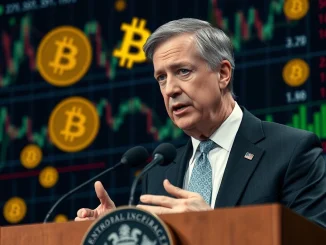
In a bold move, the Federal Reserve has decided to maintain current interest rates, resisting pressure from President Trump and market expectations. With inflation at 2.7% and unemployment stable at 4.1%, the Fed’s decision highlights its commitment to data-driven policy over political influence.
Why the Fed is Holding Firm on Interest Rates
The Federal Open Market Committee (FOMC) meeting concluded with no change to benchmark rates, despite public demands from President Trump for reductions. Key factors influencing this decision include:
- Inflation remains at 2.7%, above the Fed’s 2% target but not alarmingly high
- Unemployment holds steady at 4.1%, indicating labor market stability
- Concerns about the impact of Trump’s fiscal policies, including expansive tariffs
The Political Battle Over Monetary Policy
Chairman Jerome Powell faces unprecedented pressure from the White House to cut rates. Analysts suggest Trump may be using Powell as a potential scapegoat for future economic challenges. The Fed’s independence is being tested as:
| Pro-Rate Cut | Anti-Rate Cut |
|---|---|
| Governor Christopher Waller | Majority of FOMC |
| Political pressure | Economic data |
| Short-term growth | Long-term stability |
What’s Next for Inflation and Unemployment?
Macquarie economists predict no rate cuts until December 2025, with possible further reductions in early 2026. Key indicators to watch:
- August’s Jackson Hole Symposium for policy signals
- Next two rounds of inflation and employment data
- Impact of Trump’s “One Big, Beautiful Bill Act” on fiscal dominance
Market Reactions to Fed’s Monetary Policy
Investors are closely analyzing Powell’s statements for subtle clues about future policy direction. The Fed’s cautious approach reflects:
- Concerns about tariff impacts on economic growth
- Balancing inflation control with employment goals
- Maintaining credibility amid political pressures
The Fed’s decision demonstrates its commitment to economic stability over short-term political appeasement. While the path to eventual rate cuts is clear, the timing will depend on evolving data and the broader fiscal landscape.
Frequently Asked Questions
Why didn’t the Fed cut interest rates?
The Fed maintained rates due to stable economic indicators (2.7% inflation, 4.1% unemployment) and concerns about political interference in monetary policy.
How is Trump trying to influence Fed policy?
President Trump has publicly pressured the Fed to cut rates, potentially to boost short-term economic growth ahead of elections.
When might we see rate cuts?
Analysts predict possible cuts in December 2025 or early 2026, depending on inflation and employment data.
What is fiscal dominance?
Fiscal dominance occurs when government debt and deficits undermine a central bank’s ability to control inflation through monetary policy.
How rare are dissenting votes at the Fed?
Dissent is uncommon – there have been few dissenting votes since 1993, making any current disagreements particularly noteworthy.