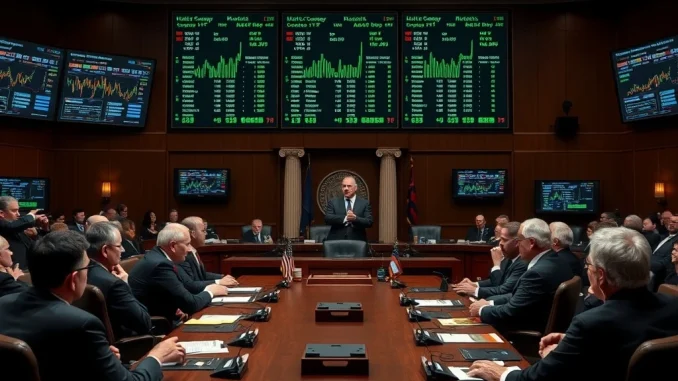
In a historic move, the Federal Reserve held interest rates steady despite mounting pressure from former President Donald Trump and a rare dissent from two governors. This decision marks a pivotal moment in monetary policy, with far-reaching implications for the economy and financial markets. Let’s dive into the details.
Why Did the Fed Hold Rates Steady Amid Trump Pressure?
The Federal Reserve’s July 2025 meeting resulted in a 9-2 vote to maintain the federal funds rate at 4.25%-4.50%. This decision came despite:
- Public criticism from Trump, who labeled Fed Chair Jerome Powell a “numbskull” and demanded rate cuts.
- Growing concerns about slowing economic momentum, as highlighted by dissenting governors Michelle Bowman and Christopher Waller.
- Inflation remaining “somewhat elevated,” though showing signs of easing.
What Led to the Rare Fed Dissent?
The dissent by Bowman and Waller marked the first dual opposition in nearly 30 years. Their arguments centered on:
| Governor | Key Argument |
|---|---|
| Christopher Waller | Highlighted a “significant slowdown in economic momentum” warranting a rate cut. |
| Michelle Bowman | Downplayed inflation risks tied to Trump’s proposed tariffs, emphasizing growth support. |
How Did Markets React to the Fed’s Decision?
Investors responded with mixed signals:
- Stocks initially rose but turned volatile as uncertainty lingered.
- Attention shifted to the September meeting for potential rate cuts.
- Analysts noted the Fed’s delicate balance between political pressure and economic stability.
What’s Next for the Fed and Interest Rates?
The Fed’s path forward hinges on:
- Inflation trends: Further easing could prompt a rate cut.
- Labor market strength: Sustained job growth may justify holding rates.
- Political dynamics: Trump’s influence remains a wildcard.
Conclusion: The Fed’s decision to hold rates steady amid Trump pressure and internal dissent underscores its commitment to independence. With economic uncertainty looming, all eyes are on the September meeting for clues about future policy shifts.
Frequently Asked Questions (FAQs)
- Why did two Fed governors dissent?
Bowman and Waller believed economic slowing justified a rate cut to support growth. - How often does the Fed face such dissent?
Dual dissents are rare, with the last occurrence in 1993. - What was Trump’s reaction to the decision?
He criticized Powell and hinted at replacing him, calling for immediate rate cuts. - What factors will influence the Fed’s next move?
Inflation data, labor market trends, and political pressure will be key.