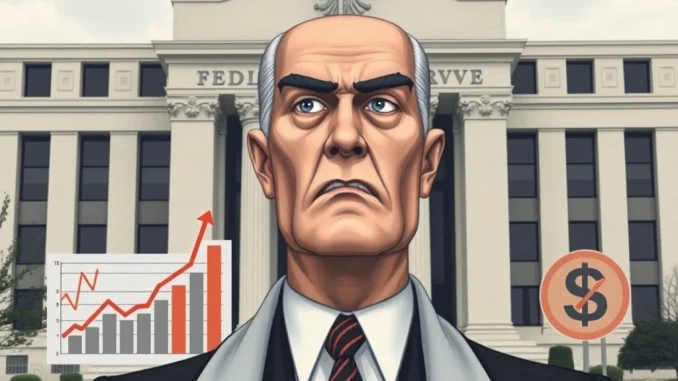
For cryptocurrency investors, understanding the Federal Reserve’s monetary policy is paramount. Decisions on interest rates directly influence market liquidity and risk appetite, often dictating crypto price movements. Recently, St. Louis Federal Reserve Bank President Alberto Musalem issued a significant warning regarding future Fed rate cuts, urging caution amidst growing economic complexities.
St. Louis Fed President’s Stance on Fed Rate Cuts
President Alberto Musalem has articulated a clear stance against premature reductions in interest rates. He believes the Federal Reserve should exercise considerable caution before implementing additional Fed rate cuts. Musalem’s comments underscore a prudent approach to monetary policy, prioritizing long-term stability over immediate adjustments. This perspective highlights the complex economic environment currently facing the United States. He emphasized that various factors contribute to an uncertain economic landscape, requiring careful observation.
Specifically, Musalem pointed to two key areas demanding attention. Firstly, he noted persistent inflation concerns. Although inflation has shown signs of moderating, its trajectory remains unpredictable. Secondly, he highlighted the growing influence of tariffs on domestic prices. Their full effect, according to Musalem, has not yet fully materialized. Therefore, acting too quickly could exacerbate inflationary pressures, undermining the Fed’s efforts to achieve price stability.
Unpacking Inflation Concerns and Tariffs Impact
The issue of inflation concerns remains central to the Federal Reserve’s decision-making process. Inflation erodes purchasing power, affecting households and businesses alike. While the Fed has made progress in bringing inflation down from its peaks, reaching the target 2% rate consistently proves challenging. Musalem’s warning suggests that underlying inflationary pressures might be more stubborn than some believe.
Moreover, the tariffs impact adds another layer of complexity. Tariffs are taxes imposed on imported goods and services. When these duties increase, import costs rise for domestic businesses. Consequently, companies often pass these higher costs onto consumers in the form of increased prices. This mechanism directly contributes to inflation. Musalem’s concern stems from the delayed and cumulative nature of this impact. The full effect of recently imposed or existing tariffs may not yet be reflected in current price indices. Thus, a significant inflationary wave could still be on the horizon, warranting a cautious approach to interest rate policy.
Here are some key points regarding tariffs and inflation:
- Increased Input Costs: Tariffs raise the cost of raw materials and components for manufacturers.
- Reduced Competition: They can limit foreign competition, allowing domestic producers to raise prices.
- Supply Chain Disruptions: Tariffs can force companies to seek alternative, potentially more expensive, suppliers.
- Consumer Price Hikes: Ultimately, these increased costs are often absorbed by consumers through higher retail prices.
The Broader Economic Outlook and Federal Reserve Policy
Musalem’s cautionary remarks are deeply embedded in the broader economic outlook. The U.S. economy currently presents a mixed picture. The labor market, for instance, remains relatively strong, with low unemployment rates. However, other indicators, such as manufacturing output and consumer spending patterns, show varying degrees of resilience or contraction. This divergence creates a challenging environment for policymakers.
The Federal Reserve operates under a dual mandate: achieving maximum employment and maintaining stable prices. These two goals sometimes present trade-offs. For example, aggressive rate cuts might stimulate employment but could reignite inflation. Conversely, holding rates higher for too long could cool inflation but potentially slow job growth. Therefore, the delicate balance required for effective Federal Reserve policy is evident in Musalem’s statement. He emphasizes the need for patience and a data-dependent approach, ensuring that any policy shifts align with concrete economic realities.
Navigating Market Reactions to Interest Rate Decisions
Statements from prominent Fed officials like President Musalem significantly influence financial markets. Investors, including those in the volatile cryptocurrency sector, meticulously analyze these pronouncements. The prospect of fewer or delayed Fed rate cuts often leads to a strengthening U.S. dollar. A stronger dollar can make dollar-denominated assets, like many cryptocurrencies, less attractive to international investors, potentially impacting their valuations.
Conversely, a more dovish stance, indicating a greater willingness to cut rates, typically encourages risk-on sentiment. This scenario can boost demand for assets perceived as higher risk, including cryptocurrencies. Therefore, the cautious tone adopted by Musalem signals a potentially tighter monetary environment for longer. This could mean continued pressure on risk assets, as investors seek safer havens or higher returns from traditional fixed-income instruments. Understanding these dynamics is crucial for anyone navigating today’s financial landscape.
The Path Forward: What to Expect from Federal Reserve Policy
The future direction of Federal Reserve policy remains subject to ongoing economic developments. Musalem’s comments suggest that the path to lower interest rates may not be as straightforward or as rapid as some market participants anticipate. The Fed will continue to monitor a wide array of economic data, including:
- Inflation Data: Consumer Price Index (CPI), Personal Consumption Expenditures (PCE) index.
- Employment Figures: Non-farm payrolls, unemployment rate, wage growth.
- Economic Growth: Gross Domestic Product (GDP) reports.
- Global Economic Conditions: International trade, geopolitical events.
The cautious approach advocated by Musalem implies a greater emphasis on ensuring sustained disinflation before easing monetary conditions. This patient strategy aims to avoid a resurgence of inflation, which could necessitate even more aggressive measures later. The economic outlook, therefore, hinges on how these various factors evolve in the coming months. Investors and consumers alike should prepare for a period where interest rates may remain elevated for longer than previously expected, reflecting the Fed’s commitment to its price stability mandate.
In conclusion, St. Louis Fed President Alberto Musalem’s call for caution on further interest rate cuts is a critical signal for the markets. His emphasis on persistent inflation concerns and the unquantified tariffs impact highlights the complexities facing the Federal Reserve. As the Fed navigates these challenges, its data-driven approach will dictate future monetary policy. Consequently, market participants should remain vigilant, adapting their strategies to an evolving economic landscape influenced by these crucial decisions.
Frequently Asked Questions (FAQs)
1. What is the Federal Reserve’s primary role?
The Federal Reserve, often called the Fed, serves as the central bank of the United States. Its primary roles include conducting monetary policy to foster maximum employment and price stability, supervising and regulating banks, and maintaining the stability of the financial system.
2. How do interest rate cuts affect the economy?
Interest rate cuts typically stimulate economic activity. Lower rates make borrowing cheaper for consumers and businesses, encouraging spending and investment. This can lead to job creation and economic growth. However, if cut too aggressively, they can also fuel inflation.
3. What are tariffs, and how do they cause inflation?
Tariffs are taxes imposed by a government on imported goods or services. They increase the cost of these imports, which businesses often pass on to consumers through higher prices. This directly contributes to inflation by making goods more expensive domestically.
4. Why is the St. Louis Fed President urging caution on Fed rate cuts now?
President Musalem urges caution due to persistent inflation concerns and the unquantified impact of tariffs. He believes that the full inflationary effects of tariffs have not yet been seen, and cutting rates too soon could lead to a resurgence of price increases, undermining the Fed’s stability goals.
5. How do Fed decisions impact cryptocurrency markets?
Fed decisions, especially on interest rates, significantly impact cryptocurrency markets. Higher rates can strengthen the U.S. dollar and reduce liquidity, making riskier assets like crypto less attractive. Conversely, lower rates can increase risk appetite and potentially boost crypto valuations, as investors seek higher returns.
6. What is the Federal Reserve’s dual mandate?
The Federal Reserve’s dual mandate involves two key objectives: achieving maximum sustainable employment and maintaining stable prices (controlling inflation). The Fed aims to balance these two goals through its monetary policy decisions.