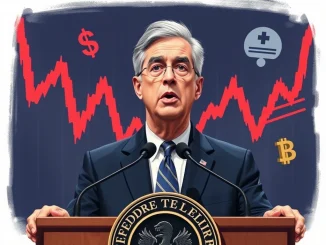
Understanding central bank decisions is crucial for financial markets, including the dynamic world of cryptocurrencies. Recent statements from a key Federal Reserve official offer significant insights. Specifically, the discussion around potential Fed rate cuts continues to dominate economic discourse, directly influencing market sentiment and investor behavior across all asset classes.
Cleveland Fed President’s Stance on Interest Rate Policy
Cleveland Federal Reserve President Loretta Mester Hammack recently expressed a cautious view regarding future monetary adjustments. She highlighted the importance of a measured approach to any changes in the current interest rate policy. Walter Bloomberg reported her comments on X, drawing immediate attention from market participants.
President Hammack stated that the Federal Reserve should proceed with prudence before considering any reduction in rates. Her remarks underscore a broader theme within the Fed: a commitment to data-driven decisions. This cautious stance reflects ongoing vigilance over economic conditions. Furthermore, it suggests that the path to lower borrowing costs might be longer than some investors anticipate.
The Rationale Behind Caution on Fed Rate Cuts
The primary mandate of the Federal Reserve includes maintaining price stability and maximizing employment. Therefore, decisions about Fed rate cuts are not made lightly. Several factors contribute to the current cautious outlook:
- Persistent Inflation: While inflation has cooled from its peaks, it remains above the Fed’s target of 2%. Officials are keen to see sustained progress.
- Robust Labor Market: The U.S. labor market has shown remarkable resilience. Strong job growth and low unemployment figures typically reduce the urgency for rate cuts.
- Economic Resilience: Despite higher interest rates, the economy has demonstrated surprising strength. This allows the Fed more time to assess the full impact of its restrictive policy.
These elements collectively support a ‘wait and see’ approach. Policymakers aim to avoid premature easing that could reignite inflationary pressures. Consequently, market expectations must align with the Fed’s data-dependent strategy.
Unlikely September Rate Cut: Implications for the Economic Outlook
President Hammack specifically noted that, based on current economic data, a September rate cut appears unlikely. This statement significantly shifts market probabilities. Many analysts and investors had previously priced in a higher chance of a rate reduction by late summer. Her clear communication helps to manage these expectations.
An extended period of higher rates carries various implications for the broader economic outlook. Businesses may face higher borrowing costs, potentially impacting investment and expansion plans. Consumers could see higher rates on loans, from mortgages to credit cards. This environment can lead to slower economic growth, although it aims to curb inflation effectively. For risk assets, including cryptocurrencies, sustained higher rates can reduce investor appetite for speculative investments, favoring more traditional, yield-bearing assets.
Broader Inflation Concerns and Future Monetary Policy
Inflation concerns remain a central focus for the Federal Reserve. Policymakers are closely monitoring key inflation indicators, such as the Personal Consumption Expenditures (PCE) price index. They look for consistent evidence that inflation is moving sustainably towards the 2% target. Core inflation, which excludes volatile food and energy prices, is particularly important. This metric provides a clearer picture of underlying price trends.
The Fed’s future monetary policy will undoubtedly remain data-dependent. Officials have consistently reiterated this commitment. Any decision to cut rates will hinge on a clear and convincing slowdown in inflation, coupled with stable employment figures. This measured approach seeks to ensure long-term economic stability. It also prevents the need for more aggressive actions later. Investors should therefore pay close attention to upcoming economic reports and official Fed communications.
In conclusion, Cleveland Fed President Hammack’s recent remarks reinforce the Federal Reserve’s cautious stance. Her statements suggest that the path to Fed rate cuts will be deliberate and contingent on concrete economic improvements. This patient approach aims to ensure price stability while supporting maximum employment. Therefore, market participants, including those in the crypto space, must continue to monitor economic data and Fed commentary closely for future direction.
Frequently Asked Questions (FAQs)
Q1: What did Cleveland Fed President Hammack say about interest rates?
A1: President Hammack stated that the Federal Reserve should be cautious about cutting interest rates. She specifically indicated that a September rate cut is unlikely based on current economic data.
Q2: Why is the Federal Reserve being cautious about Fed rate cuts?
A2: The Fed’s caution stems from persistent inflation above its 2% target, a robust labor market, and overall economic resilience. They aim to avoid premature easing that could reignite inflationary pressures.
Q3: How does the Fed’s interest rate policy affect the economic outlook?
A3: Higher interest rates generally increase borrowing costs for businesses and consumers, potentially slowing economic growth. This policy aims to control inflation but can also impact investment and spending across the economy.
Q4: What are the key inflation concerns the Fed is monitoring?
A4: The Fed is closely watching key inflation indicators like the PCE price index, especially core inflation. They seek consistent evidence that inflation is moving sustainably towards their 2% target.
Q5: Will an unlikely September rate cut impact cryptocurrency markets?
A5: While not a direct impact, an extended period of higher interest rates can indirectly affect cryptocurrency markets. It may reduce investor appetite for riskier assets, as traditional, yield-bearing investments become more attractive.
Q6: What does ‘data-dependent’ mean for the Fed’s monetary policy?
A6: ‘Data-dependent’ means the Fed’s decisions on interest rates are primarily based on incoming economic data, such as inflation reports, employment figures, and other economic indicators, rather than a predetermined schedule.