In the intricate world of finance, where every central bank decision sends ripples across global markets, a prominent voice has emerged with a bold and potentially game-changing proposition. BlackRock’s Chief Investment Officer, Rick Rieder, is publicly urging the Federal Reserve to implement significant Fed Rate Cuts. This isn’t just a whisper; it’s a direct challenge to the prevailing Wall Street consensus, designed to alleviate mounting Housing Market Strains and restore a sense of normalcy to the economy. For investors, including those in the cryptocurrency space, understanding these macro-economic shifts is paramount, as they often dictate broader market sentiment and liquidity.
BlackRock CIO’s Bold Call: Why Rick Rieder Demands Urgent Fed Rate Cuts
Rick Rieder, a highly respected figure and the BlackRock CIO, has stepped forward with a compelling argument for the Federal Reserve to pivot its monetary policy. His advocacy for Fed Rate Cuts ahead of the upcoming FOMC meeting is a direct counter to the more cautious or hawkish stance widely adopted by many on Wall Street. Rieder emphasizes that the current economic climate, marked by deteriorating housing affordability and persistent inflation, has created a ‘dangerous tightness’ that demands immediate intervention.
BlackRock’s analysis suggests that by lowering borrowing costs, the Fed could significantly ease the burden on mortgage holders and stimulate much-needed demand in a housing sector that has been severely impacted by elevated interest rates. This strategic position by BlackRock also reflects a broader market trend: rising fiscal deficits have already prompted billions of dollars to flow into corporate debt, indicating a waning confidence in government bonds and a growing appetite for higher yields in a prolonged high-rate environment. Rieder’s insights are not merely speculative; they are backed by a deep understanding of market dynamics and a proactive approach to mitigating potential economic downturns.
Easing Housing Market Strains: The Crucial Impact on Mortgage Affordability
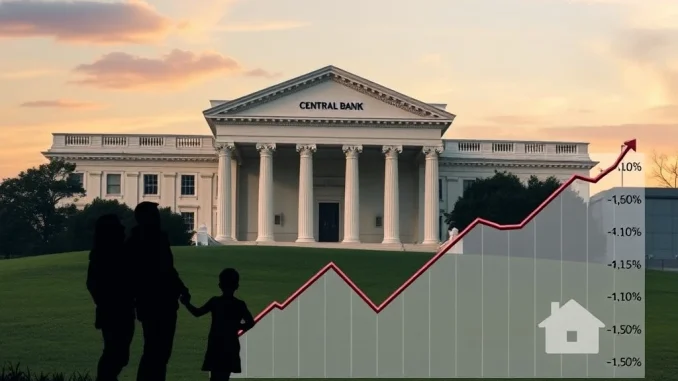
At the heart of Rieder’s argument lies the pressing issue of Housing Market Strains. The current high interest rate environment has made homeownership an increasingly distant dream for millions, choking off demand and stifling market activity. BlackRock highlights that a mere 6% reduction in mortgage rates could make housing significantly more accessible for approximately 5.5 million households. This statistic alone underscores the profound impact that even a modest policy shift could have on individual financial well-being and overall economic vitality.
Consider the direct benefits of improved Mortgage Affordability:
- Increased Purchasing Power: Lower rates mean lower monthly payments, allowing more individuals and families to qualify for loans and enter the housing market.
- Stimulated Demand: A more affordable market can reignite buyer interest, leading to increased transactions and a healthier real estate sector.
- Reduced Foreclosure Risk: Existing homeowners struggling with adjustable-rate mortgages could find relief, preventing defaults and stabilizing neighborhoods.
- Economic Multiplier Effect: A revitalized housing market boosts related industries, from construction and home improvement to furniture and appliances, creating jobs and economic growth.
These tangible benefits are what BlackRock believes are essential to unlock the current economic gridlock and alleviate the immense pressure on household budgets.
The Fed’s Balancing Act: Navigating Rate Cuts Amidst Economic Stability Goals
The Federal Reserve finds itself in a delicate position. While institutional demands, championed by the BlackRock CIO, are mounting for more accommodative policies, the central bank’s primary mandate remains inflation control. Chair Jerome Powell and the FOMC are expected to weigh various factors, including trade tensions and the overarching goal of maintaining Economic Stability, during their upcoming meeting.
The Fed’s decision-making process is typically data-dependent, meaning they will closely scrutinize incoming economic indicators before making any significant policy shifts. However, Rieder’s public intervention highlights the considerable influence of institutional voices in shaping monetary debates. The central bank must balance the risk of reigniting inflationary pressures with the need to prevent a prolonged economic slowdown, particularly in crucial sectors like housing. This complex interplay of data, institutional pressure, and economic foresight will define the Fed’s next steps.
Beyond Housing: The Ripple Effect on Economic Stability and Market Dynamics
The implications of the debate surrounding Fed Rate Cuts extend far beyond just the housing sector. If the Federal Reserve approves rate cuts, it could trigger a significant surge in risk appetite across the broader financial landscape. This shift would likely boost equities, credit markets, and potentially even alternative assets like cryptocurrencies, as investors seek higher returns in a more accommodative monetary environment.
Conversely, should the Fed maintain its current high-rate stance, the risks of further dampening economic activity, especially in interest-rate-sensitive sectors, become more pronounced. BlackRock’s position can be seen as a strategic bet on the necessity of policy flexibility to prevent a more severe or prolonged economic slowdown. The decisions made at the upcoming FOMC meeting will be closely watched by global markets, as they have the potential to either stabilize investor confidence or deepen existing uncertainties, profoundly impacting the trajectory of overall Economic Stability.
BlackRock CIO Rick Rieder’s call for immediate Fed rate cuts represents a significant divergence from the cautious consensus on Wall Street, highlighting the severe strains currently impacting the housing market and broader economic stability. His argument, bolstered by the potential for millions of households to benefit from improved mortgage affordability, puts immense pressure on the Federal Reserve to consider a more accommodative monetary policy. While the Fed must balance inflation control with economic growth, the increasing demands from influential institutional voices like BlackRock underscore the critical nature of the upcoming FOMC meeting. The decisions made will undoubtedly shape financial dynamics for the foreseeable future, impacting everything from housing prices to investment strategies across all asset classes.
Frequently Asked Questions (FAQs)
1. Who is Rick Rieder and what is his role at BlackRock?
Rick Rieder is the Chief Investment Officer (CIO) of Global Fixed Income at BlackRock, one of the world’s largest asset managers. In this role, he oversees the firm’s strategies and investments in fixed income markets globally, making his insights highly influential in financial circles.
2. Why is BlackRock advocating for Fed rate cuts?
BlackRock, through Rick Rieder, is advocating for Fed rate cuts primarily to alleviate significant strains in the housing market and to reduce broader inflationary pressures. They believe that current high interest rates are creating ‘dangerous tightness’ in the economy, making housing unaffordable for many and stifling economic activity.
3. How would lower mortgage rates impact households?
Lower mortgage rates would directly reduce monthly mortgage payments for new homebuyers and those looking to refinance, significantly improving mortgage affordability. Industry estimates suggest that a 6% reduction in mortgage rates could make housing more accessible for approximately 5.5 million households, easing their financial burdens.
4. What are the Federal Reserve’s main considerations regarding rate cuts?
The Federal Reserve’s primary considerations when deciding on rate cuts include controlling inflation, maintaining full employment, and ensuring overall economic stability. They weigh incoming economic data, global trade tensions, and the potential impact of their decisions on various sectors of the economy before adjusting monetary policy.
5. How might Fed rate cuts affect the broader financial markets?
If the Fed approves rate cuts, it could spur a surge in risk appetite, potentially boosting equities, credit markets, and other asset classes as investors seek higher returns in a lower-interest-rate environment. Conversely, maintaining high rates risks further dampening economic activity across various sectors.