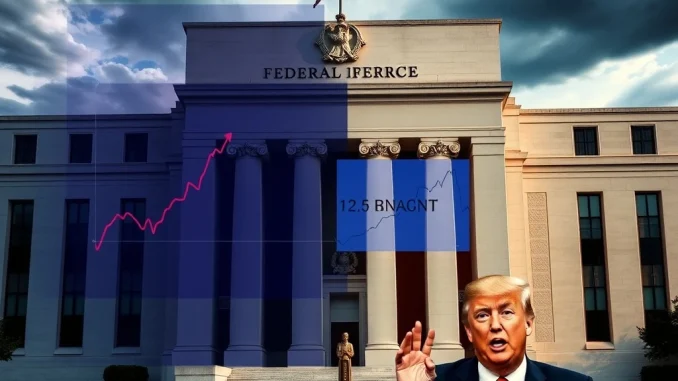
The Federal Reserve’s decision to hold interest rates steady has sent ripples through the markets, as inflation and political pressure from Donald Trump add layers of complexity to the economic outlook. What does this mean for investors and the broader economy? Let’s break it down.
Why Did the Fed Hold Rates Steady?
The Federal Open Market Committee (FOMC) kept the federal funds rate at 5.25%-5.50%, a move widely anticipated by analysts. Here’s why:
- Persistent inflation: Despite slowing growth, inflation remains above the Fed’s 2% target.
- Strong labor market: Unemployment remains low, reducing urgency for rate cuts.
- Internal dissent: Two FOMC members pushed for a 0.25% cut, signaling growing divisions.
Trump’s Pressure on the Fed
Donald Trump has openly criticized the Fed’s stance, demanding immediate rate cuts to stimulate growth. His recent trade announcements—including a 40% tariff on Brazil—add another layer of economic uncertainty. Analysts warn that political interference could undermine the Fed’s independence.
What’s Next for Interest Rates?
Jerome Powell’s upcoming speech will be critical in shaping market expectations. Key points to watch:
- Timing of cuts: Markets are pricing in a 96-97% chance of rates holding, but future cuts remain uncertain.
- Economic signals: Powell may hint at adjustments if inflation cools or growth slows further.
- Market reaction: Stocks have stayed stable, but volatility could follow Powell’s remarks.
Impact on Key Sectors
High interest rates are reshaping industries:
| Sector | Impact |
|---|---|
| Construction | Delayed projects due to borrowing costs |
| Tech | Lower valuations for growth stocks |
| Consumer Goods | Slower spending amid high loan rates |
Conclusion: A Delicate Balancing Act
The Fed faces mounting challenges—stubborn inflation, political pressure, and a divided committee. Powell’s next moves will determine whether the U.S. economy lands softly or stumbles. Investors should stay alert for signals in his upcoming speech.
Frequently Asked Questions (FAQs)
1. Will the Fed cut rates in 2025?
Analysts expect cuts later this year, but timing depends on inflation and growth data.
2. How does Trump influence Fed decisions?
While the Fed is independent, Trump’s public criticism adds political pressure, potentially swaying market expectations.
3. What sectors benefit from high rates?
Banks and financial institutions often see higher profits, while growth-sensitive sectors struggle.
4. Could tariffs worsen inflation?
Yes. Trump’s proposed tariffs on Brazil and others could raise consumer prices, complicating the Fed’s inflation fight.