In a landmark move that could reshape the intersection of traditional finance and blockchain technology, Washington D.C.-based F/m Investments has formally requested SEC approval to tokenize shares of its U.S. Treasury 3-Month Bill ETF (TBIL) as of late 2024. This unprecedented application represents the first formal request for regulatory relief concerning the tokenization of a registered investment company’s ETF shares, potentially setting a crucial precedent for the entire financial industry.
Tokenized ETF Proposal: A Detailed Breakdown
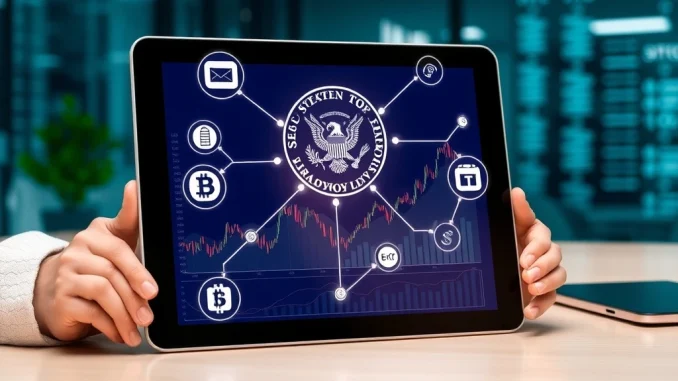
F/m Investments submitted its groundbreaking request to the U.S. Securities and Exchange Commission in late 2024. The firm specifically seeks permission to record ownership of TBIL ETF shares on a permissioned blockchain ledger. This technological shift would enable the transfer and settlement of shares to occur on-chain rather than through traditional financial infrastructure. Consequently, the proposal marks a significant departure from conventional ETF operations.
The company emphasizes that the tokenized shares would maintain identical characteristics to their traditional counterparts. Specifically, they would share the same CUSIP identifier, shareholder rights, fee structures, voting power, and economic conditions. Moreover, F/m Investments asserts that the tokenized structure would operate fully within the existing regulatory framework established by the Investment Company Act of 1940. The firm has outlined several key safeguards in its proposal:
- Board Oversight: Traditional governance structures would remain intact
- Daily Transparency: Regular reporting would continue as required
- Third-Party Custody: Assets would remain with qualified custodians
- Independent Auditing: Regular audits would verify all operations
Historical Context and Industry Evolution
The financial industry has witnessed gradual blockchain integration over recent years. Previously, various firms experimented with tokenizing private assets and creating digital representations of securities. However, F/m Investments’ proposal represents the first formal attempt to tokenize shares of a publicly registered investment company. This distinction carries significant regulatory implications.
Traditional ETF settlement typically requires two business days (T+2). Blockchain technology could potentially reduce this timeframe to near-instantaneous settlement. Additionally, tokenization might lower operational costs associated with clearing and settlement processes. The permissioned blockchain approach differs substantially from public blockchain implementations, offering greater control and regulatory compliance.
| Aspect | Traditional ETF | Proposed Tokenized ETF |
|---|---|---|
| Ownership Record | Centralized ledger | Permissioned blockchain |
| Settlement Time | T+2 typically | Potential for near-instant |
| Transfer Mechanism | Traditional systems | On-chain transactions |
| Regulatory Framework | Investment Company Act 1940 | Same Act with blockchain adaptation |
| Custody Arrangement | Third-party custodians | Same with blockchain recording |
Regulatory Precedents and SEC Considerations
The SEC has previously approved blockchain-based products with certain limitations. For instance, the commission authorized Bitcoin futures ETFs while maintaining cautious oversight. However, tokenizing existing registered investment company shares presents novel regulatory questions. The SEC must evaluate whether blockchain recording satisfies existing requirements for ownership tracking and investor protection.
Financial legal experts note that the Investment Company Act of 1940 doesn’t explicitly address blockchain technology. Therefore, regulators must interpret whether tokenization complies with the spirit of existing regulations. The SEC’s response will likely consider several factors including investor protection, market integrity, and technological reliability. Furthermore, the permissioned nature of the proposed blockchain addresses some traditional regulatory concerns about transparency and control.
Potential Market Impact and Industry Implications
Approval could trigger significant changes across multiple financial sectors. Asset managers might explore similar tokenization strategies for other investment products. Additionally, secondary markets could develop for tokenized ETF shares, potentially increasing liquidity and accessibility. The technology might also enable fractional ownership of ETF shares at more precise levels than currently possible.
Market infrastructure providers would need to adapt their systems to accommodate blockchain-based ETFs. Custodians, transfer agents, and exchanges would require technological upgrades. However, successful implementation could reduce operational friction and costs throughout the investment lifecycle. International investors might benefit from streamlined cross-border transactions enabled by standardized blockchain protocols.
The proposal arrives during increased institutional interest in blockchain applications. Major financial institutions have invested substantially in distributed ledger technology research and development. Meanwhile, regulatory bodies worldwide have developed frameworks for digital assets. Consequently, F/m Investments’ request aligns with broader industry trends toward technological modernization.
Technological Implementation and Security Considerations
The permissioned blockchain approach offers distinct advantages over public alternatives. Authorized participants would control network access, enhancing security and compliance. Transaction validation would follow established governance protocols rather than proof-of-work or proof-of-stake mechanisms. This structure maintains regulatory oversight while leveraging blockchain efficiencies.
Cybersecurity remains a paramount concern for any financial technology implementation. Blockchain systems must demonstrate resilience against potential attacks and operational failures. The proposal includes multiple security layers including traditional custody arrangements supplemented by blockchain recording. Regular third-party audits would verify system integrity and proper functioning.
Investor Benefits and Potential Challenges
Tokenization could offer several advantages for ETF investors. Settlement acceleration might improve capital efficiency and reduce counterparty risk. Enhanced transparency through blockchain recording could provide clearer ownership trails. Additionally, the technology might enable innovative features like programmable dividends or automated corporate actions.
However, challenges remain regarding investor education and technological accessibility. Some market participants may require time to understand blockchain-based investment vehicles. Technological infrastructure must ensure reliable access for all investors regardless of technical sophistication. Regulatory approval would likely include specific requirements for investor disclosures and educational materials.
The proposal specifically addresses TBIL, a U.S. Treasury bill ETF with relatively straightforward underlying assets. This choice demonstrates a cautious approach starting with less complex instruments. Success with Treasury ETFs could pave the way for tokenizing more complex investment products in the future. The strategy reflects industry best practices for gradual technological adoption.
Conclusion
F/m Investments’ request for SEC approval to tokenize ETF shares represents a pivotal moment for financial innovation. The proposal bridges traditional regulatory frameworks with emerging blockchain technology through careful design and multiple safeguards. While the SEC’s decision remains pending, the application has already stimulated important discussions about modernizing financial infrastructure. Regardless of the outcome, this formal request marks significant progress toward integrating blockchain solutions within regulated investment vehicles. The financial industry will closely monitor developments as regulators evaluate this groundbreaking approach to ETF tokenization.
FAQs
Q1: What does tokenizing ETF shares actually mean?
Tokenizing ETF shares involves creating digital representations of ownership on a blockchain ledger instead of traditional record-keeping systems. These digital tokens would correspond directly to ETF shares with identical rights and economic benefits.
Q2: How would tokenized ETFs differ from cryptocurrency ETFs?
Cryptocurrency ETFs hold digital assets as their underlying investments. Tokenized ETFs would hold traditional assets like Treasury bills but use blockchain technology to record and transfer ownership of the ETF shares themselves.
Q3: What is a permissioned blockchain and why is it important?
A permissioned blockchain restricts participation to authorized entities, unlike public blockchains that anyone can join. This controlled access helps maintain regulatory compliance, enhances security, and ensures proper governance for financial applications.
Q4: Would tokenized ETF shares trade differently than traditional shares?
The trading mechanism might remain similar through traditional exchanges, but settlement and ownership transfer would occur on-chain. This could potentially accelerate settlement times from the current T+2 standard to near-instant completion.
Q5: What happens if the SEC approves this proposal?
Approval would establish a regulatory precedent for tokenizing registered investment company shares. Other asset managers would likely pursue similar applications, potentially accelerating blockchain adoption across traditional finance while maintaining existing investor protections.
Updated insights and analysis added for better clarity.
This article was produced with AI assistance and reviewed by our editorial team for accuracy and quality.