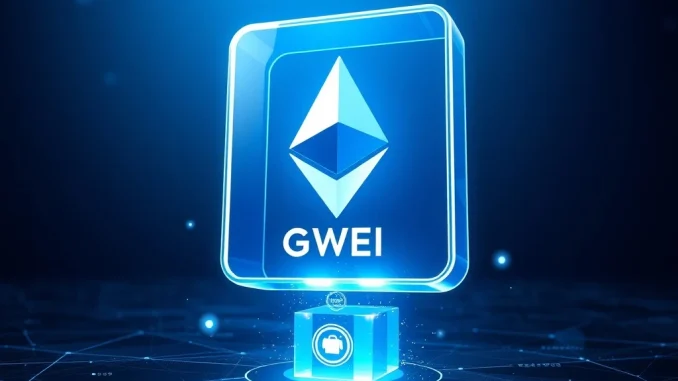
In a significant development for Ethereum’s infrastructure layer, the specialized block trading platform ETHGas has officially announced the launch of its proprietary GWEI token, fundamentally altering governance participation for its users. This strategic move, first reported by The Block, introduces a token-based voting mechanism that directly ties stakeholder influence to specific staking and lock-up conditions. Consequently, GWEI token holders will gain formalized rights to participate in critical protocol decisions, including parameter adjustments, system upgrades, and treasury fund management. The launch represents a broader industry trend toward formalized, on-chain governance for core trading and execution platforms within the Ethereum ecosystem.
ETHGas GWEI Token Launch and Core Governance Mechanics
The ETHGas platform serves a specialized niche by facilitating the trading of entire Ethereum blockspace, a critical resource for high-priority transactions. The introduction of the GWEI token creates a formalized governance layer for this ecosystem. According to the announcement, the token’s primary utility centers on granting proportional voting rights. These rights are not distributed uniformly, however. Instead, they are weighted based on two key factors: the amount of GWEI tokens a user stakes and the duration for which they commit to locking those tokens. This design incentivizes long-term alignment with the platform’s health and security.
Furthermore, the governance scope empowered by the GWEI token is notably comprehensive. Holders will deliberate on technical parameter adjustments, which can include fee structures and block construction rules. They will also vote on proposed protocol upgrades and have direct oversight regarding the allocation and use of the platform’s treasury funds. This model mirrors governance frameworks seen in major DeFi protocols but applies them directly to the infrastructure layer of block production and trading.
The Evolving Landscape of Ethereum Infrastructure Governance
The ETHGas initiative does not exist in a vacuum. It reflects a maturation phase within the Ethereum network, where ancillary services are developing sophisticated self-governance models. For context, block building and trading have become increasingly competitive fields following Ethereum’s transition to Proof-of-Stake. Specialized platforms like ETHGas optimize this process for users like decentralized applications (dApps) and large traders who require guaranteed transaction inclusion.
By launching a governance token, ETHGas is effectively decentralizing control over its operational parameters. This approach contrasts with traditional, centrally-managed infrastructure services. Industry analysts often cite this shift as essential for creating credibly neutral and resilient foundational layers. The GWEI token model specifically addresses the “skin in the game” principle, ensuring that those with the most significant long-term stake in the platform’s success wield the most influence over its future direction.
Expert Analysis on Token-Based Governance Models
Governance experts within the blockchain sector note that the success of such models hinges on thoughtful tokenomics and voter participation. A well-designed system must balance power to prevent dominance by a few large holders while still rewarding committed participants. The ETHGas model, which ties voting power to lock-up duration, is a recognized method to encourage long-term holding and reduce speculative trading pressure on the governance token itself. Historical data from other governance token launches shows that platforms with clear, impactful voting proposals tend to sustain higher levels of engaged participation.
Moreover, the explicit inclusion of treasury management as a voting item is a significant step toward full community stewardship. It grants token holders direct responsibility over the platform’s financial resources, which are typically used for development grants, security audits, and strategic initiatives. This level of transparency and community control is increasingly demanded by users in the decentralized finance and Web3 spaces, setting a new standard for infrastructure providers.
Potential Impacts and Future Implications for the Market
The launch of the GWEI token could have several immediate and long-term effects on the Ethereum block trading market. Firstly, it may attract more institutional and long-term participants to the ETHGas platform, as the governance token offers a way to influence the very service they depend on. Secondly, it sets a precedent that other block builders or relay services may follow, potentially leading to a wave of similar governance token launches. This could increase competition on the basis of not just efficiency, but also the quality and fairness of governance.
The following table outlines key areas of impact:
| Area of Impact | Short-Term Effect | Long-Term Implication |
|---|---|---|
| Platform Loyalty | Increased user staking and lock-up | More stable, committed user base |
| Market Competition | Pressure on rivals to offer similar governance | Industry-wide standard for user involvement |
| Protocol Development | Community-driven parameter tweaks | More resilient and user-aligned platform upgrades |
| Treasury Allocation | Transparent budgeting decisions | Sustainable funding for public goods and R&D |
Ultimately, the move aligns with Ethereum’s core ethos of progressive decentralization. By placing control over key parameters into the hands of its users, ETHGas is building a more robust and community-owned service. This could enhance the overall censorship resistance and reliability of Ethereum’s transaction processing layer, benefiting the entire network.
Conclusion
The launch of the GWEI token by the ETHGas platform marks a pivotal evolution in the governance of Ethereum’s critical infrastructure. By granting voting rights tied to staking and lock-up conditions, the initiative empowers its users to directly guide protocol decisions, parameter adjustments, and treasury management. This development not only strengthens the ETHGas ecosystem but also contributes to the broader trend of decentralizing control across all layers of the blockchain stack. The success of the ETHGas GWEI token model will be closely watched as a potential blueprint for the future of infrastructure governance in the Web3 era.
FAQs
Q1: What is the primary purpose of the GWEI token?
The GWEI token’s primary purpose is to serve as a governance instrument for the ETHGas platform. It grants holders voting rights on major protocol decisions, with voting power weighted by the amount and duration of tokens staked and locked.
Q2: How does the GWEI token voting system work?
The system uses a weighted voting model. A user’s voting power is determined by two factors: the quantity of GWEI tokens they have staked in the governance contract and the time commitment (lock-up period) for those tokens. Longer lock-ups typically confer greater voting weight per token.
Q3: What specific decisions can GWEI token holders vote on?
Holders can vote on key areas including adjustments to platform parameters (like fee structures), approval or rejection of proposed technical upgrades, and the management and allocation of the platform’s community treasury funds.
Q4: How does this launch affect ordinary Ethereum users?
While direct governance is for token holders, ordinary users may benefit from a more stable, transparent, and community-aligned block trading service. Better-governed infrastructure can lead to more predictable costs and reliable transaction inclusion for everyone on the network.
Q5: Is this the first governance token for an Ethereum infrastructure service?
While several DeFi protocols and L2 networks have governance tokens, the GWEI token is among the first specifically for a dedicated block trading and building platform, placing it at the forefront of decentralizing this particular layer of Ethereum’s execution stack.
This article was produced with AI assistance and reviewed by our editorial team for accuracy and quality.