In a move that could fundamentally reshape the security and accessibility of the world’s second-largest blockchain, Ethereum founder Vitalik Buterin has unveiled a pivotal proposal to integrate Distributed Validator Technology (DVT) natively into the network’s staking mechanism. Announced on the Ethereum research forum ethresear.ch in March 2025, this technical initiative aims to address a critical vulnerability in the current Proof-of-Stake system, potentially reducing slashing risks for millions of ETH validators and bolstering the network’s overall resilience. The proposal arrives as Ethereum continues to solidify its post-Merge infrastructure, with over 32 million ETH now actively staked.
Understanding the Core Ethereum Staking Challenge
Currently, an Ethereum validator operates as a single, monolithic node. This architecture presents a significant point of failure. Consequently, if that sole node experiences downtime due to technical issues, connectivity problems, or maintenance, the validator faces automatic penalties known as “slashing.” These penalties result in a gradual loss of staked ETH. Buterin’s analysis highlights that this setup creates unnecessary centralization pressure, often pushing stakers toward large, professional node operators who can guarantee higher uptime, rather than encouraging independent participation.
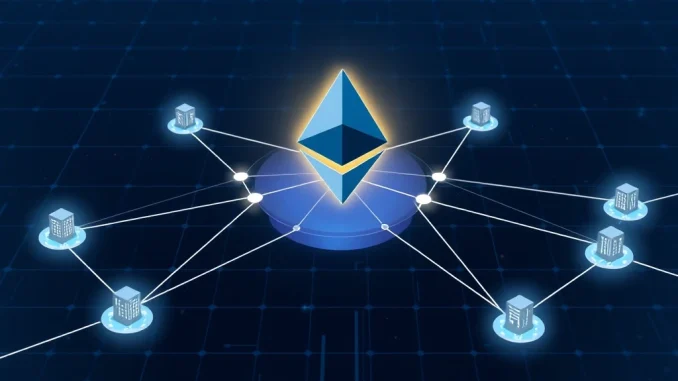
Distributed Validator Technology (DVT) offers a sophisticated solution to this problem. Essentially, DVT allows a validator’s single private key to be split—using cryptographic techniques like Shamir’s Secret Sharing—across multiple, independent nodes or machines. Therefore, for the validator to sign off on a block or attestation, a threshold of these nodes (e.g., 3 out of 5) must collaborate and agree. This process ensures the validator remains operational even if one or more of its constituent nodes goes offline.
- Fault Tolerance: The validator only incurs penalties if a super-majority of its distributed nodes fail simultaneously.
- Enhanced Security: A malicious actor would need to compromise multiple nodes to attack the validator, raising the barrier significantly.
- Decentralization: The technology enables staking pools and solo stakers to distribute their infrastructure geographically and across different client software.
The Technical Mechanics of Buterin’s DVT Integration Plan
Buterin’s proposal is not for a peripheral upgrade but for a native, protocol-level integration of DVT. This approach would embed the technology directly into Ethereum’s consensus layer, making it a foundational feature rather than an optional add-on. The core idea involves modifying the validator client software to natively support operations across a cluster of nodes. Historically, projects like Obol Network and SSV Network have been pioneering DVT at the application layer. However, Buterin’s vision involves bringing these benefits into the core protocol to maximize adoption and security guarantees for all validators.
A native implementation would simplify the staking experience dramatically. For instance, a user could run a validator by simply specifying a set of node endpoints and a threshold. The protocol would then manage the key distribution and signature aggregation internally. This method reduces complexity and minimizes trust assumptions compared to current third-party solutions. Furthermore, it creates a more robust network by design, as the failure of any single data center or internet service provider would have a diminished impact on overall network latency and finality.
Expert Analysis and Industry Implications
Blockchain infrastructure experts point to this proposal as a logical evolution for enterprise-grade staking. “Native DVT transforms staking from a high-availability IT challenge into a more resilient, decentralized operation,” notes a researcher from the Ethereum Foundation, who spoke on the customary condition of anonymity regarding ongoing development. The implications extend beyond individual stakers. Large staking services, which currently manage thousands of validators, could leverage native DVT to create more robust and attack-resistant architectures, potentially lowering their insurance costs and improving service reliability for clients.
The timeline for such an integration is necessarily cautious. Following the proposal on ethresear.ch, the next steps involve rigorous peer review, consensus-building among core developers, and the creation of formal Ethereum Improvement Proposals (EIPs). Subsequently, the change would need to be scheduled for a future network upgrade, likely following the already-planned Verkle trees and proto-danksharding implementations. This process ensures stability and thorough testing, meaning a live implementation is probable in the 2026-2027 timeframe.
Comparative Impact: Current System vs. Proposed DVT Future
| Aspect | Current Validator Model | Proposed DVT-Integrated Model |
|---|---|---|
| Node Dependency | Single point of failure | Distributed across multiple nodes |
| Slashing Risk | High for solo stakers | Significantly reduced |
| Infrastructure Cost | High (requires enterprise-grade uptime) | Potentially lower (can use consumer-grade, distributed hardware) |
| Network Decentralization | Pressure towards centralized node operators | Encourages geographic and client diversity |
| Validator Setup Complexity | Moderate | Initially higher, but simplified by native protocol support |
Conclusion
Vitalik Buterin’s proposal to natively integrate Distributed Validator Technology represents a strategic evolution for Ethereum staking. By directly addressing the slashing risks and single points of failure inherent in the current model, the plan aims to democratize participation and strengthen the network’s foundational security. While the path from proposal to mainnet involves extensive research and development, the direction is clear: a more resilient, accessible, and robust Ethereum staking ecosystem. This focus on Ethereum staking infrastructure underscores the blockchain’s ongoing commitment to technical excellence and decentralization as it scales to meet global demand.
FAQs
Q1: What is Distributed Validator Technology (DVT)?
DVT is a cryptographic protocol that splits a validator’s private key across multiple nodes. A threshold of these nodes must collaborate to sign transactions, preventing a single point of failure and increasing validator resilience.
Q2: How would native DVT integration benefit the average Ethereum staker?
It would significantly reduce the risk of slashing penalties due to downtime. Stakers could run their validators on less reliable hardware or in a distributed manner without fearing financial loss from occasional outages.
Q3: Is DVT a new concept for Ethereum?
No. Projects like Obol Network and SSV Network have been developing DVT solutions at the application layer. Buterin’s proposal is unique because it advocates for building DVT directly into Ethereum’s core protocol.
Q4: When could this change go live on the Ethereum mainnet?
Following standard Ethereum upgrade processes, which include research, proposal, testing, and community consensus, a realistic timeline for a mainnet implementation would likely be 2026 or later.
Q5: Would native DVT make running a validator more complex?
Initially, the conceptual setup might be more complex. However, the long-term goal of native integration is to abstract this complexity away, allowing users to benefit from DVT’s security without managing the underlying cryptography themselves.
Updated insights and analysis added for better clarity.
This article was produced with AI assistance and reviewed by our editorial team for accuracy and quality.