Ether faces significant headwinds in its attempt to reclaim the $2,400 price level, with analysts identifying three specific market indicators that must reverse their current negative trends to catalyze a sustainable rally. As of late March 2026, the second-largest cryptocurrency by market capitalization struggles with institutional outflows, declining decentralized exchange activity, and weak derivatives market sentiment. This analysis examines the concrete data points preventing upward momentum and the conditions required for a genuine breakout.
Ether Price Rally Hinges on Three Key Metrics
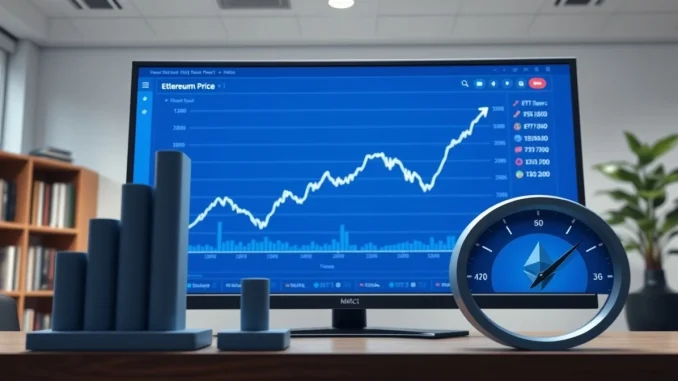
Ether’s price action in early 2026 demonstrates clear underperformance relative to the broader cryptocurrency market. Between Wednesday, March 25, and Thursday, March 26, 2026, ETH experienced a 6% correction, retesting the $2,050 support level. This decline extends a longer-term trend, with Ether’s value dropping approximately 31% since the beginning of the year. Market observers consistently point to three interconnected metrics that currently suppress bullish momentum: spot ETF flows, decentralized exchange volumes, and futures market premiums. A reversal in these areas could provide the necessary fuel for a push above the critical $2,400 resistance.
Spot ETF Outflows Reflect Institutional Caution
Institutional investment vehicles provide a transparent window into professional capital flows. Data from SoSoValue reveals a concerning pattern for Ether. U.S.-listed spot Ether exchange-traded funds recorded $298 million in net outflows over six consecutive trading days beginning March 18, 2026. This persistent redemption pressure suggests institutional investors are reducing exposure despite the availability of ETFs with embedded staking functionalities offering a 2.8% native yield. Consequently, this metric indicates that perceived risks currently outweigh the appeal of staking rewards for major investors.
The Regulatory and Macroeconomic Backdrop
Several external factors contribute to this cautious institutional stance. Regulatory uncertainty persists in the United States. The U.S. Senate is examining proposals that could restrict yields on stablecoins held on exchanges, a move contested by industry participants like Coinbase. Simultaneously, a March 2026 report from the Financial Action Task Force urged nations to enhance oversight of stablecoins used in peer-to-peer payments and cross-border transfers, citing challenges in monitoring suspicious activity. Furthermore, broader geopolitical tensions, including conflicts in the Middle East, have fostered a ‘risk-off’ environment across global markets, negatively impacting speculative assets like cryptocurrencies.
Declining DEX Volumes Signal Weak On-Chain Demand
Activity on Ethereum’s decentralized exchanges serves as a direct indicator of organic network demand and utility. Data from DefiLlama shows a stark contraction in this area. The current weekly average DEX volume of approximately $9.4 billion stands roughly 50% lower than levels maintained during the final quarter of 2025. This decline correlates with reduced activity across decentralized applications, suggesting weaker fundamental demand for the Ethereum network’s transaction processing capacity. Analysts argue that without a resurgence in on-chain activity and user engagement, Ether will struggle to maintain any rally above $2,400, as price gains would lack a foundational use-case support.
ETH Futures Premium Indicates Lack of Bullish Leverage
The derivatives market offers insights into trader sentiment and leverage demand. Data from Laevitas.ch indicates Ether’s two-month futures contracts traded at only a 2% annualized premium relative to spot markets on Thursday, March 26, 2026. Market structure experts note that under neutral-to-bullish conditions, this premium should typically range between 4% and 8% to compensate traders for the extended settlement period. The current depressed premium signals a distinct lack of demand for bullish leverage. It reflects a market where participants are unwilling to pay a significant cost to hold long futures positions, thereby revealing limited conviction in near-term price appreciation.
Potential Catalysts for a Sentiment Shift
While current indicators are negative, potential catalysts exist. Market observers note that accumulation of Ether by large corporate entities, including firms like BitMine and SharpLink, could provide substantial buy-side pressure if their purchasing programs accelerate. Additionally, any positive regulatory developments, particularly regarding stablecoin legislation or clearer guidance for institutional crypto products, could quickly improve investor perception. A de-escalation of broader macroeconomic tensions would also likely benefit risk assets, potentially redirecting capital toward cryptocurrencies.
Conclusion
A sustainable Ether price rally above $2,400 requires a coordinated reversal in three specific areas: consistent net inflows into spot ETFs, a meaningful recovery in Ethereum DEX volumes, and a normalization of the futures premium into a neutral range. As of March 2026, these indicators collectively paint a picture of institutional caution, weak on-chain demand, and skeptical derivatives trading. Until these metrics demonstrate sustained improvement, Ether will likely continue to face selling pressure and struggle to break key resistance levels. Market participants should monitor these fundamental signals closely for evidence of a genuine shift in market structure and sentiment.
FAQs
Q1: What are the three main indicators preventing an Ether rally?
The three primary indicators are persistent net outflows from U.S. spot Ether ETFs, significantly declining weekly volumes on Ethereum decentralized exchanges, and a depressed premium on ETH futures contracts indicating weak demand for bullish leverage.
Q2: How much have Ether ETFs seen in outflows recently?
According to data from SoSoValue, U.S.-listed spot Ether ETFs experienced $298 million in net outflows over six consecutive trading days starting March 18, 2026.
Q3: Why are DEX volumes important for Ether’s price?
Decentralized exchange volumes are a direct measure of organic demand and utility on the Ethereum network. Lower volumes suggest reduced user activity and transaction fees, which weakens the fundamental value proposition supporting the ETH token’s price.
Q4: What does a low futures premium indicate?
A low annualized premium for Ether futures contracts, such as the 2% level observed in late March 2026, signals that traders are not willing to pay a significant cost to hold long positions. This reflects a lack of bullish conviction and leverage demand in the market.
Q5: What could trigger a positive flip in these indicators?
Potential triggers include a shift to net inflows in ETF products, a resurgence in decentralized application usage and on-chain activity, positive regulatory clarity, or an improvement in the broader macroeconomic ‘risk-on’ sentiment that favors speculative assets.
This article was produced with AI assistance and reviewed by our editorial team for accuracy and quality.