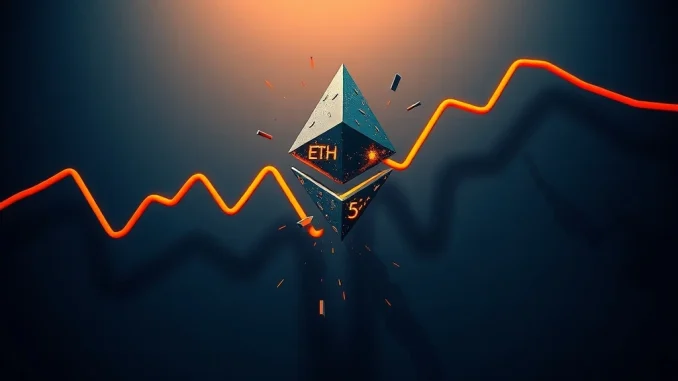
NEW YORK, April 14, 2026 — The cryptocurrency market reeled today as Ethereum (ETH) plummeted over 12% in a sharp, panic-driven selloff, directly triggered by a significant escalation of military conflict in the Middle East. The digital asset dropped to a critical support level of $1,859 in early trading hours, according to real-time data from CoinMarketCap. This sudden ETH drop catalyzed a cascade of liquidations across derivatives markets, most notably ensnaring the prominent but controversial trader known as Machi Big Brother for at least the third time this quarter. The selloff intensified following confirmed reports of new U.S. and Israeli military actions, underscoring the crypto market’s acute sensitivity to global geopolitical instability.
Ethereum Price Plunge and Geopolitical Catalyst
The price decline began accelerating shortly after 03:00 UTC, mirroring a spike in crude oil futures and a flight to traditional safe-haven assets like the U.S. dollar and gold. Blockchain analytics firm Glassnode reported that over $450 million in long positions were liquidated across major exchanges within a four-hour window, with Ethereum contracts constituting nearly 40% of that total. “The market is reacting to a textbook risk-off scenario,” stated Marcus Thielen, Head of Research at crypto analytics platform Matrixport. “Cryptocurrencies, despite being a nascent asset class, are now firmly correlated with macro sentiment. An escalation in a key oil-producing region immediately translates into deleveraging pressure.” The rapid descent saw ETH breach several technical support levels, with sell orders clustering around the $1,900 and $1,870 marks before finding temporary footing.
This event marks the most severe single-day decline for Ethereum since the banking sector turmoil of March 2025. Consequently, the broader crypto market cap shed over $180 billion. Historical data from CryptoQuant indicates that exchange reserves for ETH increased by approximately 120,000 coins during the selloff, suggesting a wave of deposits from holders looking to exit positions or margin traders facing collateral calls. The volatility index for major crypto assets spiked to its highest level in eight months.
Machi Big Brother Faces Another Multi-Million Dollar Liquidation
Amid the market-wide turmoil, on-chain sleuths and analytics platforms flagged another high-profile liquidation event for the entity known as Machi Big Brother. Data from DeBank and Etherscan reveals that a wallet address associated with the trader saw approximately $8.7 million in collateral liquidated across decentralized lending protocols like Aave and Compound. This liquidation primarily involved wrapped Bitcoin (WBTC) and ETH positions that fell below their health factors due to the price crash.
- Recurring Pattern: This is the third major liquidation event for Machi Big Brother in 2026, following similar incidents in January and February. The pattern highlights the extreme risks of highly leveraged strategies in volatile market conditions.
- Community Reaction: The event sparked intense discussion on crypto social media platforms. Some commentators pointed to it as a cautionary tale, while others noted the trader’s history of recovering from such setbacks.
- Market Impact: While the liquidation itself was a symptom of the broader crash, the large, forced sale of collateral likely contributed to localized selling pressure on the assets involved, creating a negative feedback loop.
Expert Analysis on Leverage and Systemic Risk
Dr. Lena Karpova, a financial risk professor at Stanford University and author of “Digital Asset Dynamics,” provided context. “The Machi Big Brother situation is a microcosm of a larger systemic issue,” Karpova explained. “High leverage embedded in decentralized finance (DeFi) protocols can amplify downturns. When a large, over-leveraged position is liquidated, it automatically sells assets into a falling market, potentially triggering further liquidations in a chain reaction. Protocols have improved their risk parameters since 2022, but today’s event shows the vulnerability remains.” Her research, cited in a recent Bank for International Settlements (BIS) report on crypto financial stability, emphasizes the need for more robust stress-testing frameworks for DeFi lending markets.
Historical Context: Crypto Markets and Geopolitical Shock
The severity of today’s reaction places it among the most significant geopolitical-driven crypto selloffs. To understand its relative impact, the table below compares key metrics from similar historical events.
| Event & Date | ETH Price Drop | Market Cap Loss | Primary Catalyst |
|---|---|---|---|
| Russia-Ukraine Invasion (Feb 2022) | -18% (3 days) | ~$250B | War in Europe, Sanctions |
| 2023 Israel-Hamas Conflict | -9% (24hr) | ~$90B | Regional Conflict Escalation |
| Today’s Escalation (March 2026) | -12% (24hr) | ~$180B | U.S./Israel Military Action |
Notably, the 2026 selloff appears more acute in its initial velocity. Analysts attribute this to the increased total value locked (TVL) in DeFi and the proliferation of leveraged derivatives products since earlier events, creating a more complex and interconnected risk web. The market’s maturity has not decoupled it from macro shocks; instead, it has changed the transmission mechanism.
What Happens Next: Market Technicals and Regulatory Scrutiny
Technical analysts are now watching the $1,850 level as critical support. A sustained break below could open the path toward the $1,750 region. Conversely, a swift de-escalation of geopolitical tensions could trigger a sharp, short-covering rally. The immediate focus for exchanges and protocols is managing the liquidation backlog and ensuring system stability.
Potential Regulatory Fallout and Industry Response
The event has already drawn comments from regulatory observers. A spokesperson for the U.S. Securities and Exchange Commission’s (SEC) Strategic Hub for Innovation and Financial Technology (FinHub) noted that such volatility “reinforces the need for comprehensive investor protection frameworks in digital asset markets.” Meanwhile, major crypto exchanges like Coinbase and Binance issued standard risk warnings to users about market volatility. The Crypto Council for Innovation, a leading industry advocacy group, is expected to release a statement emphasizing market resilience and the need for clear, sensible regulation rather than reactionary measures.
Conclusion
The dramatic ETH drop on April 14, 2026, serves as a stark reminder that cryptocurrency markets remain deeply susceptible to traditional geopolitical risk. The concurrent liquidation of Machi Big Brother illustrates the amplified personal and systemic dangers of excessive leverage. While the market has weathered similar storms, today’s event occurred within a more complex financial ecosystem of DeFi and derivatives. Investors should watch for stabilization around the $1,850 support level, monitor official statements from involved nations for de-escalation signs, and expect increased regulatory discourse around leverage and risk management in crypto markets in the coming weeks.
Frequently Asked Questions
Q1: Why did Ethereum crash today?
Ethereum’s price dropped over 12% primarily due to a sharp escalation of military conflict in the Middle East, involving the U.S. and Israel. This triggered a broad “risk-off” sentiment across financial markets, leading to massive selling and liquidations of leveraged crypto positions.
Q2: Who is Machi Big Brother and why is their liquidation significant?
Machi Big Brother is a pseudonymous but well-known cryptocurrency trader. Their repeated, multi-million dollar liquidations, including today’s estimated $8.7 million event, highlight the extreme risks of using high leverage in volatile markets and can contribute to wider selling pressure.
Q3: How does this crash compare to previous geopolitical crypto selloffs?
Today’s crash is among the most severe in terms of 24-hour percentage drop for Ethereum. It exceeded the initial reaction to the 2023 Israel-Hamas conflict but was slightly less severe than the multi-day drop following Russia’s invasion of Ukraine in 2022, though it occurred much faster.
Q4: What is a liquidation in cryptocurrency trading?
A liquidation occurs when a trader’s leveraged position is automatically closed by the exchange or protocol because the value of their collateral has fallen below a required threshold (the maintenance margin). This results in a forced sale of assets, often at a loss.
Q5: Could this event lead to more cryptocurrency regulation?
Analysts believe it increases the likelihood. Regulators like the SEC may point to such volatility and the risks of leveraged trading as justification for stricter rules on derivatives, lending protocols, and investor disclosures in the crypto space.
Q6: What should an average Ethereum holder do in this situation?
Experts advise against panic selling. Assess your risk tolerance and investment horizon. Consider it a reminder of crypto’s volatility. Ensure you are not using excessive leverage and that your investments are part of a diversified portfolio aligned with your long-term goals.
Updated insights and analysis added for better clarity.
This article was produced with AI assistance and reviewed by our editorial team for accuracy and quality.