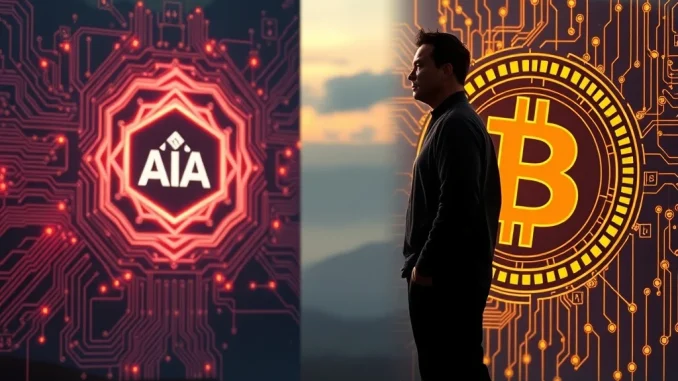
In a stunning revelation from previously confidential documents, Elon Musk briefly championed a revolutionary $10 billion OpenAI ICO in early 2018 before dramatically withdrawing support and departing the organization. This exclusive report from San Francisco, March 2025, uncovers the pivotal moment when artificial intelligence and cryptocurrency fundraising nearly converged under one of technology’s most influential figures.
The Elon Musk OpenAI ICO Proposal: A $10 Billion Vision
Internal documents obtained by CoinDesk reveal detailed discussions between Elon Musk and OpenAI founders in January 2018. Consequently, these records show Musk initially agreeing to an ambitious initial coin offering strategy. The proposed OpenAI ICO aimed to raise an unprecedented $10 billion through cryptocurrency tokens. This fundraising approach represented a radical departure from traditional venture capital methods. Moreover, the timing coincided with peak ICO market enthusiasm during cryptocurrency’s 2017-2018 boom period.
Several factors made the OpenAI ICO proposal particularly noteworthy. First, the organization had already established itself as a leading AI research lab. Second, Musk’s involvement promised significant market attention. Third, the $10 billion target exceeded most previous ICO fundraising records. Documents indicate the plan involved creating utility tokens for accessing OpenAI’s future AI services. However, regulatory concerns about cryptocurrency securities eventually surfaced during discussions.
Cryptocurrency Fundraising Context: The 2018 ICO Landscape
The proposed OpenAI ICO emerged during cryptocurrency fundraising’s most explosive period. Initial coin offerings raised approximately $6.2 billion in 2017. Furthermore, the market surged to $7.8 billion in the first quarter of 2018 alone. Regulatory uncertainty created favorable conditions for blockchain startups during this window. High investor demand for cryptocurrency projects drove unprecedented valuations. Many technology companies explored token-based fundraising models at this time.
| Project | Amount Raised | Date |
|---|---|---|
| EOS | $4.1 billion | 2017-2018 |
| Telegram | $1.7 billion | 2018 |
| Dragon Coin | $320 million | 2018 |
| Proposed OpenAI ICO | $10 billion (target) | January 2018 |
Several characteristics defined the 2018 ICO environment. Regulatory agencies had not yet established clear cryptocurrency guidelines. Retail investors demonstrated extraordinary enthusiasm for blockchain projects. Technology startups sought alternatives to traditional venture capital funding. The proposed OpenAI ICO would have dwarfed existing fundraising records if implemented successfully.
Regulatory Evolution and Market Cooling
Authorities began tightening cryptocurrency regulations throughout 2018. The U.S. Securities and Exchange Commission started classifying most ICO tokens as securities. Consequently, this regulatory shift dramatically changed fundraising calculations for technology companies. Market conditions cooled significantly after the cryptocurrency price correction of early 2018. Investor enthusiasm diminished as regulatory scrutiny increased. Many planned ICO projects either canceled or restructured their fundraising approaches during this period.
Musk’s Strategic Reversal and OpenAI Departure
Elon Musk withdrew his support for the OpenAI ICO shortly after initial discussions. Documents indicate growing concerns about regulatory compliance influenced this decision. Musk subsequently resigned from the OpenAI board in February 2018. His departure statement cited potential conflicts with Tesla’s artificial intelligence development. Tesla had significantly increased its AI research investment during this period. The electric vehicle company focused particularly on autonomous driving technology.
Several factors contributed to Musk’s strategic reversal. First, regulatory uncertainty created substantial legal risks for high-profile ICOs. Second, Tesla’s expanding AI ambitions required Musk’s full attention. Third, the cryptocurrency market’s volatility raised concerns about stable funding. Fourth, traditional fundraising methods offered more predictable capital access. Fifth, Musk recognized potential conflicts between OpenAI’s mission and profit-driven cryptocurrency models.
- Regulatory Risk: SEC enforcement actions against ICOs increased throughout 2018
- Corporate Focus: Tesla accelerated Autopilot and Full Self-Driving development
- Market Conditions: Cryptocurrency prices declined 80% from January 2018 peaks
- Mission Alignment: OpenAI’s nonprofit structure conflicted with token economics
- Timing Factors: Traditional venture capital offered immediate funding alternatives
Artificial Intelligence Development Pathways
The abandoned OpenAI ICO represents a fascinating alternative history for AI development. Token-based funding could have accelerated research through decentralized investment. However, this approach might have compromised OpenAI’s original nonprofit mission. Instead, the organization secured $1 billion in commitments from Microsoft and other partners. This traditional funding model supported OpenAI’s transition to a capped-profit structure in 2019. The current ChatGPT and GPT-4 developments emerged from this revised funding approach.
Historical Impact and Contemporary Relevance
The revealed OpenAI ICO discussions illuminate cryptocurrency’s evolving role in technology funding. Initial coin offerings represented a brief but significant fundraising innovation. Regulatory clarification eventually established clearer boundaries for token-based financing. Today’s cryptocurrency fundraising primarily occurs through regulated security token offerings and decentralized autonomous organizations. The proposed $10 billion OpenAI ICO demonstrates how close major technology organizations came to embracing cryptocurrency fundraising during blockchain’s early adoption phase.
Several contemporary developments connect to this historical revelation. First, artificial intelligence and blockchain convergence continues through projects like SingularityNET and Fetch.ai. Second, decentralized AI research represents an active development area in 2025. Third, regulatory frameworks have matured significantly since 2018’s uncertainty. Fourth, major technology companies now approach cryptocurrency integration with greater caution. Fifth, the fundamental tension between decentralized funding and centralized control remains unresolved in AI development.
Conclusion
The Elon Musk OpenAI ICO proposal represents a pivotal moment in both artificial intelligence and cryptocurrency history. This $10 billion fundraising plan nearly connected two transformative technologies during their critical development phases. Musk’s subsequent withdrawal and departure redirected OpenAI toward traditional funding models that produced today’s generative AI systems. The revealed documents provide crucial insight into technology funding’s evolution during blockchain’s explosive growth period. Ultimately, this historical episode demonstrates how regulatory considerations and strategic priorities shape technology development pathways, with the Elon Musk OpenAI ICO plan serving as a remarkable counterfactual in AI’s ongoing evolution.
FAQs
Q1: What was the proposed value of the OpenAI ICO Elon Musk considered?
A1: Documents reveal a $10 billion initial coin offering target, which would have been the largest cryptocurrency fundraising event in history at that time.
Q2: Why did Elon Musk withdraw support for the OpenAI ICO?
A2: Musk reportedly grew concerned about regulatory risks as authorities began classifying ICO tokens as securities, while also needing to focus on Tesla’s expanding artificial intelligence initiatives.
Q3: How does this revelation affect our understanding of OpenAI’s development?
A3: The abandoned ICO plan shows OpenAI seriously considered alternative funding models before securing traditional investment, highlighting how different approaches might have shaped today’s AI landscape.
Q4: Were other major technology companies considering ICOs in 2018?
A4: Yes, numerous technology startups explored initial coin offerings during cryptocurrency’s 2017-2018 boom period, though most large established companies ultimately avoided this fundraising method due to regulatory concerns.
Q5: How have cryptocurrency fundraising methods evolved since 2018?
A5: Initial coin offerings have largely been replaced by security token offerings, initial exchange offerings, and decentralized autonomous organization funding models that operate within clearer regulatory frameworks established since 2018.
Updated insights and analysis added for better clarity.
This article was produced with AI assistance and reviewed by our editorial team for accuracy and quality.