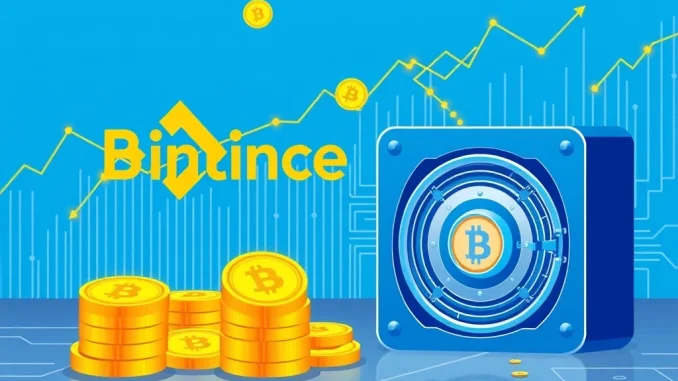
In a significant on-chain transaction capturing market attention, crypto market maker DWF Labs has executed a major withdrawal of Frax Share (FXS) tokens from the Binance exchange. According to data from the analytics platform Onchainlens, an address associated with DWF Labs moved 6.93 million FXS, valued at approximately $5.41 million, from the exchange to a private wallet. This substantial movement, observed on March 21, 2025, represents a notable shift in asset custody within the decentralized finance (DeFi) landscape. Market analysts typically interpret such large-scale withdrawals from centralized exchanges as a bullish signal for long-term holding, potentially reducing immediate sell-side pressure on the asset.
Decoding the DWF Labs FXS Withdrawal from Binance
The transaction, first identified by blockchain sleuths, involves a considerable sum within the Frax Finance ecosystem. DWF Labs, a prominent digital asset market maker and multi-stage Web3 investment firm, maintains a significant portfolio across various blockchain networks. The firm’s activities often serve as a bellwether for institutional sentiment. Consequently, this withdrawal of FXS—the governance and utility token of the Frax stablecoin ecosystem—warrants a detailed examination. The move aligns with a broader trend of sophisticated players moving assets off exchanges for purposes like staking, governance participation, or strategic treasury management.
Blockchain data provides transparent, verifiable evidence for this activity. Onchainlens and other analytics tools track wallet addresses known to be controlled by large entities like DWF Labs. These tools correlate deposit and withdrawal patterns with publicly known exchange wallets. The timing of this withdrawal is particularly interesting. It coincides with ongoing developments in the Frax Finance protocol, including discussions around its stablecoin expansion and veFXS governance model. Market participants now scrutinize whether this signals a vote of confidence in the protocol’s future direction.
The Role of Market Makers in Crypto Liquidity
Market makers like DWF Labs provide essential liquidity to cryptocurrency exchanges and trading pairs. They facilitate smoother transactions by continuously offering to buy and sell assets. When such an entity moves a large quantity of a token off an exchange, it can directly impact the available liquidity for that asset on that platform. This action may lead to a tighter order book, potentially increasing volatility or reducing slippage for large trades. Understanding this context is crucial for interpreting the market impact of the withdrawal.
Understanding Frax Finance and the FXS Token
To fully grasp the significance of a $5.41 million FXS movement, one must understand the underlying asset. Frax Finance is a pioneering fractional-algorithmic stablecoin protocol. Its flagship product, the FRAX stablecoin, aims to maintain its peg through a hybrid model combining collateral and algorithmic mechanisms. The FXS token sits at the heart of this system, serving multiple critical functions.
- Governance: FXS holders govern the Frax protocol. They vote on key parameters like collateral ratios, fee distributions, and new product integrations.
- Utility: The token accrues value from seigniorage revenue (profits from minting and redeeming FRAX) and fees generated within the ecosystem.
- Staking: Users can lock FXS to receive veFXS (vote-escrowed FXS), which grants amplified governance power and a share of protocol fees.
The table below outlines key metrics for the Frax Finance ecosystem as of March 2025, providing context for the scale of DWF Labs’ withdrawal:
| Metric | Value | Description |
|---|---|---|
| FRAX Market Cap | ~$1.8B | Total circulating supply of the FRAX stablecoin. |
| FXS Market Cap | ~$450M | Total market valuation of the FXS token. |
| FXS Circulating Supply | ~78M | Approximate number of FXS tokens in public circulation. |
| DWF Withdrawal Value | $5.41M | Value of 6.93M FXS tokens moved off Binance. |
| Withdrawal % of Circ. Supply | ~0.9% | Proportion of circulating FXS supply involved in this single transaction. |
This data shows the withdrawal represents nearly one percent of the token’s circulating supply, a non-trivial amount that could influence governance dynamics if the tokens are used for voting.
Interpreting Exchange Withdrawals: Bullish Signal or Routine Treasury Management?
The cryptocurrency market often views large exchange withdrawals as a positive indicator. The logic is straightforward: moving tokens to a private wallet suggests the holder intends to keep them for an extended period, removing them from the immediate trading supply on the exchange. This action can reduce potential selling pressure. Conversely, large deposits to an exchange often signal an intent to sell, as users typically move assets to an exchange only when preparing to trade.
However, analysts caution against over-simplification. For a firm like DWF Labs, the reasons can be multifaceted. The withdrawal could be part of routine treasury operations, a rebalancing of assets across different custody solutions, or preparation for specific DeFi activities. For instance, the tokens might be destined for staking in the Frax protocol to earn yields or to participate in an upcoming governance proposal. The move does not automatically guarantee a long-term hold, but it strongly suggests the assets are not earmarked for imminent sale on Binance.
Historical patterns support this interpretive framework. Previous instances where known whales or institutions moved assets off exchanges have frequently preceded periods of price consolidation or appreciation, though correlation does not equal causation. The current macroeconomic climate for digital assets, including interest rate environments and regulatory developments, also plays a role in how such signals are weighted by the market.
Evidence from On-Chain Analytics
On-chain analytics firms like Glassnode, Nansen, and IntoTheBlock provide data showing correlations between exchange net flows and asset prices. Their research generally indicates that sustained periods of exchange outflow (more withdrawals than deposits) often coincide with accumulation phases. The DWF Labs transaction is a single data point, but when combined with broader network metrics for FXS—such as the number of tokens held on exchanges versus in smart contracts—it contributes to a more complete picture of holder sentiment.
Potential Impacts on the FXS Market and Frax Ecosystem
The immediate impact of this withdrawal is multifaceted. Firstly, it reduces the readily available supply of FXS on Binance, one of the world’s largest cryptocurrency exchanges. This reduction could lead to increased volatility or wider bid-ask spreads for large FXS trades on that particular venue in the short term. Secondly, if DWF Labs intends to use these tokens for governance, it could shift the balance of power in upcoming Frax Improvement Proposals (FIPs). A single entity controlling nearly 7 million votes can significantly influence the direction of the protocol.
Furthermore, the action draws public attention to the Frax Finance ecosystem. Such notable activity from a respected market participant can spur further research and investment from other institutions and retail traders. It acts as a form of validation for the protocol’s underlying technology and economic model. The long-term health of algorithmic stablecoins remains a critical topic in DeFi, and Frax’s hybrid model is a leading experiment. Strategic backing from liquidity providers like DWF Labs contributes to its stability and credibility.
Finally, this event highlights the growing maturity of crypto market infrastructure. The ability to track such transactions transparently on-chain allows for a level of market analysis impossible in traditional finance. This transparency enables all participants to make more informed decisions, although it also requires careful interpretation to avoid misreading strategic operational moves as pure market signals.
Conclusion
The withdrawal of $5.41 million in FXS tokens from Binance by DWF Labs represents a significant on-chain event with clear implications for market structure and protocol governance. This analysis confirms the transaction as a strategic move likely aimed at long-term holding or active participation within the Frax Finance ecosystem, rather than preparation for a sale. The action reduces immediate sell-side liquidity on a major exchange and underscores the importance of the FXS token in the evolving DeFi landscape. As the cryptocurrency market continues to mature, the transparent nature of blockchain transactions will provide an invaluable, real-time ledger of institutional moves, requiring investors to develop sophisticated on-chain analytics skills to interpret them correctly. The DWF Labs FXS withdrawal serves as a prime case study in this new paradigm of market intelligence.
FAQs
Q1: What does it mean when a market maker like DWF Labs withdraws tokens from an exchange?
It typically indicates a move to hold the asset in custody for a longer period. Reasons can include treasury management, preparation for staking or governance participation, or a strategic decision to reduce exposure to exchange-related risks.
Q2: Is a large withdrawal always a bullish sign for the token’s price?
Not always, but it is generally interpreted as a reduction in immediate selling pressure. While often associated with bullish sentiment, it can also be part of routine operational moves by the entity involved. Comprehensive analysis requires looking at broader market trends and on-chain data.
Q3: What is Frax Finance, and what is the FXS token used for?
Frax Finance is a decentralized protocol that issues the FRAX stablecoin. The FXS token is its governance and utility token. Holders use FXS to vote on protocol changes and can stake it to earn a share of the system’s fees and revenue.
Q4: How can the public verify a transaction like this?
Anyone can verify the transaction using a blockchain explorer like Etherscan for Ethereum-based assets. By searching the wallet address or transaction hash provided by analytics platforms like Onchainlens, users can see the transfer details directly on the immutable ledger.
Q5: Could this withdrawal affect the governance of the Frax protocol?
Yes, potentially. If DWF Labs chooses to use the withdrawn FXS tokens for voting in governance proposals, it would control a substantial number of votes. This could influence the outcome of decisions regarding the protocol’s future development and parameters.
Q6: What are the risks of interpreting single on-chain events?
The primary risk is over-interpreting a single data point. One transaction does not define a trend. Accurate analysis requires examining net flows (withdrawals minus deposits) over time, the entity’s historical behavior, and the broader context of the asset’s ecosystem and the overall market.
This article was produced with AI assistance and reviewed by our editorial team for accuracy and quality.