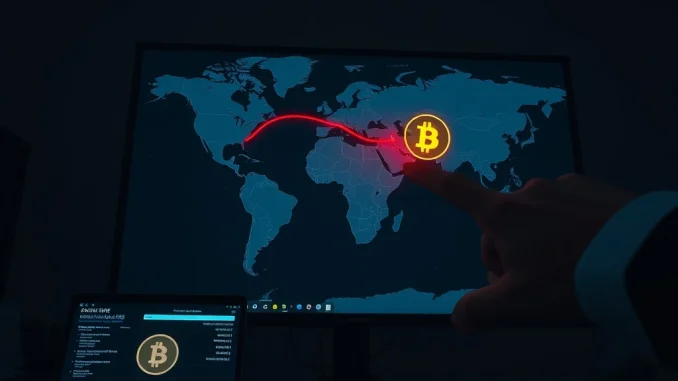
WASHINGTON, D.C., March 26, 2026 — The U.S. Department of Justice has launched a significant investigation into whether Iran utilized the global cryptocurrency exchange Binance to systematically evade American sanctions, according to a Wall Street Journal report. This DOJ Binance Iran sanctions probe centers on allegations that transactions on the platform facilitated the routing of funds to networks associated with Iran-backed groups, including Yemen’s Houthi militants. Federal officials are now actively contacting individuals with knowledge of these transactions to gather evidence, marking a major escalation in regulatory scrutiny of crypto’s role in international finance.
Scope of the DOJ’s Binance Sanctions Investigation
The Department of Justice’s investigation remains fluid, with key questions still unanswered. A central ambiguity, as reported by the Wall Street Journal, is whether the probe targets Binance the corporate entity, specific users who conducted the transactions, or both simultaneously. This distinction carries profound implications for legal liability and potential penalties. Officials have begun reaching out to people familiar with the suspect transactions, seeking interviews and documentary evidence. Consequently, this suggests the investigation has moved from a preliminary review to an active evidence-collection phase.
This new probe follows earlier revelations that Binance internally investigated and subsequently dismantled an inquiry into approximately $1 billion that flowed through its platform to a network tied to Iranian proxy groups. The timing is critical. It comes just over a year after Binance settled a landmark case with U.S. authorities. In November 2023, the exchange pleaded guilty to violating U.S. anti-money-laundering and sanctions laws, agreeing to a $4.3 billion fine and stringent oversight. Former CEO Changpeng “CZ” Zhao served a four-month prison sentence in 2024 before receiving a presidential pardon in October 2025.
Potential Impacts and Consequences of the Allegations
The allegations, if substantiated, could trigger severe repercussions across multiple domains. Firstly, for Binance, a new major settlement or guilty plea so soon after its 2023 agreement would likely invite exponentially harsher penalties from regulators and could threaten its operational license under U.S. oversight. Secondly, for the broader cryptocurrency industry, this case reinforces the persistent regulatory narrative that digital asset platforms present unique challenges for sanctions enforcement. Finally, for U.S. foreign policy, a confirmed breach would represent a significant failure of sanctions aimed at curtailing Iran’s financing of regional militant groups.
- Regulatory Repercussions: The investigation could lead to stricter “know-your-customer” (KYC) and transaction monitoring mandates for all crypto exchanges operating in or accessing U.S. markets.
- Market Confidence: Persistent legal troubles for a top-tier exchange like Binance may undermine institutional and retail investor confidence, potentially affecting liquidity and asset prices.
- Geopolitical Tensions: Evidence of successful sanctions evasion could harden the stance of U.S. lawmakers against crypto, fueling legislative efforts for more restrictive frameworks.
Expert Analysis and Institutional Response
Financial crime experts point to the technical challenges of policing decentralized networks. “Sanctions compliance in cryptocurrency is a cat-and-mouse game,” explained Dr. Sarah Chen, a former Treasury Department sanctions official now at the Georgetown Center for Financial Security. “Exchanges face immense pressure to monitor billions of data points across pseudonymous wallets. However, the 2023 guilty plea established that Binance had deficient compliance programs. This new probe asks whether those deficiencies were exploited by a state actor.” The U.S. Senate Banking Committee, led by Democrats, launched its own probe into crypto and terrorism financing in February 2026, indicating sustained congressional interest. Binance has consistently denied any organizational wrongdoing in facilitating sanctions evasion.
Broader Context of Crypto and Sanctions Enforcement
This investigation is not an isolated event but part of a clear, multi-year trend of intensifying regulatory action. The table below contrasts key recent enforcement actions related to cryptocurrency and sanctions.
| Entity | Year | Allegation / Violation | Outcome |
|---|---|---|---|
| Binance | 2023 | AML & Sanctions Violations | $4.3B fine, guilty plea, oversight |
| Bittrex | 2022 | Sanctions Violations (Crimea) | $24M settlement with OFAC |
| Tornado Cash Developers | 2024 | Conspiracy to Commit Sanctions Violations | Ongoing trial |
| Multiple Exchanges | 2025-Present | Potential Iran/North Korea Exposure | Senate & DOJ probes ongoing |
The pattern demonstrates a shift from targeting individual transactions to holding platforms accountable for systemic compliance failures. Furthermore, the focus has expanded from rogue individuals to sophisticated state-level actors seeking to leverage crypto’s borderless nature. This Binance sanctions evasion case represents the next potential escalation: a direct link between a major exchange, a sanctioned nation-state, and non-state militant groups.
What Happens Next in the Investigation
The immediate next steps are procedural but significant. The DOJ will continue its evidence gathering, which may include subpoenas for internal Binance communications, blockchain forensic analysis, and grand jury proceedings. A key milestone will be whether the Department decides to bring formal charges or seeks another negotiated settlement. Legal observers note that the 2023 settlement included a monitorship and compliance improvements; the new probe will test the effectiveness of those measures. Concurrently, the Senate’s parallel investigation may yield public hearings that increase political pressure on both Binance and its regulators.
Industry and Stakeholder Reactions
Reactions from the cryptocurrency industry have been measured but concerned. Advocacy groups like the Blockchain Association emphasize the industry’s commitment to compliance while warning against overreach that stifles innovation. “This is a serious allegation that deserves a thorough investigation,” said a spokesperson. “It also highlights the need for clear, consistent rules that all players can follow.” Some traders and analysts express worry about market volatility if Binance faces operational restrictions. Meanwhile, sanctions hawks in Congress view the probe as validation of their long-held concerns. The outcome will likely influence the final shape of comprehensive crypto legislation currently debated on Capitol Hill.
Conclusion
The DOJ probe into Iran’s alleged use of Binance marks a critical juncture for cryptocurrency regulation and global sanctions enforcement. It tests the resilience of post-2023 compliance reforms at a major exchange and probes the vulnerability of digital asset networks to exploitation by sanctioned states. The investigation’s findings will carry weight far beyond a single company, potentially reshaping compliance standards for the entire industry and influencing how nations apply financial pressure in geopolitics. Readers should monitor for official statements from the Department of Justice, further reporting from the Wall Street Journal, and any regulatory filings from Binance itself as this developing story unfolds.
Frequently Asked Questions
Q1: What exactly is the DOJ investigating regarding Binance and Iran?
The U.S. Department of Justice is investigating whether Iran used the Binance cryptocurrency exchange to evade U.S. economic sanctions. Specifically, they are examining if transactions on Binance helped route funds to networks linked to Iran-backed groups like the Houthi militants in Yemen.
Q2: What are the potential consequences for Binance if the allegations are proven?
If proven, Binance could face severe new penalties, including massive fines beyond the 2023 $4.3 billion settlement, stricter operational limitations, or even a threat to its ability to operate under U.S. oversight. It would also cause significant reputational damage.
Q3: What is the timeline for this investigation and when might we see results?
DOJ investigations of this scale can take months or years. Key near-term milestones include the completion of evidence gathering, potential grand jury activity, and a decision on whether to bring charges or seek a settlement. The Senate’s parallel probe may yield public hearings sooner.
Q4: How does cryptocurrency make sanctions evasion easier?
Cryptocurrency can facilitate cross-border value transfer without traditional banking intermediaries, offering a degree of pseudonymity. While transactions are recorded on public ledgers, tracing the real-world identity behind a wallet address can be challenging without robust exchange compliance.
Q5: Has Binance been in trouble for sanctions violations before?
Yes. In November 2023, Binance pleaded guilty to violating U.S. anti-money-laundering and sanctions laws, paying a $4.3 billion fine and agreeing to operate under government oversight. This new probe examines potential violations that may have occurred despite that settlement.
Q6: How does this affect everyday cryptocurrency users or investors?
For most users, the immediate impact may be minimal. However, a major enforcement action could increase regulatory scrutiny across all exchanges, potentially leading to more stringent identity checks, withdrawal limits, or reporting requirements. It may also contribute to short-term market volatility.