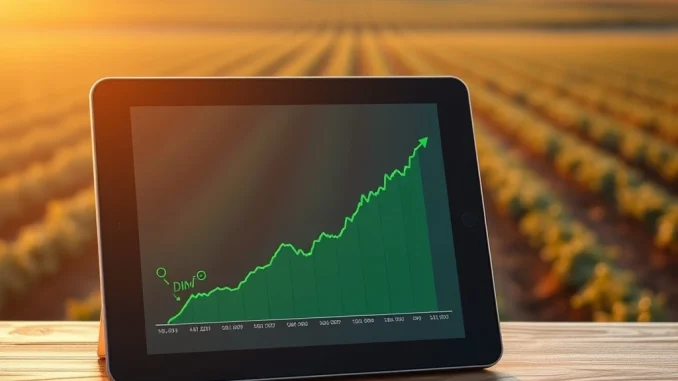
SINGAPORE, March 15, 2026 — Technical analysts identified a developing breakout pattern in Dimitra’s DMTR token this week, with one prominent chartist projecting a near-term target of $0.00956. The agricultural technology cryptocurrency, which facilitates blockchain solutions for smallholder farmers across developing nations, shows what analysts describe as a “bull structure” forming on daily and weekly timeframes. This technical development coincides with increased institutional queries about Dimitra’s platform, according to blockchain data aggregator Token Terminal. The potential breakout follows Dimitra’s recent partnership announcements with agricultural cooperatives in Southeast Asia and Africa, where the platform’s mobile application now serves over 750,000 registered farmers.
DMTR Technical Analysis Reveals Bullish Structure Formation
Singapore-based technical analyst Marcus Chen published detailed chart analysis on Friday showing DMTR consolidating within a symmetrical triangle pattern since early February. “The token has established clear support at $0.00612 after testing that level three times in six weeks,” Chen explained in his market commentary. “Each test held firm, creating what we call a triple bottom formation—a classic reversal pattern.” Chen’s analysis, which references historical volatility metrics from CoinMetrics, indicates decreasing selling pressure as volume patterns shift. The analyst specifically noted diminishing volume on downward moves compared to increasing volume on upward price movements throughout March. This divergence typically signals weakening bearish momentum before a potential trend reversal.
Historical data from cryptocurrency exchange Binance shows DMTR traded as high as $0.00894 in January before correcting alongside broader market conditions. The token found stability above its 200-day moving average throughout February, an important technical level many institutional traders monitor. Chen’s report includes comparative analysis against similar agricultural technology tokens like Hedera and VeChain, which both experienced significant rallies after comparable consolidation patterns in late 2025. The analysis references specific Fibonacci retracement levels drawn from DMTR’s November 2025 high of $0.0102 to its February low of $0.00612, with the 0.618 Fibonacci level aligning precisely with the $0.00956 target.
Institutional Interest Grows in Agricultural Blockchain Solutions
The technical developments occur alongside measurable increases in institutional engagement with Dimitra’s underlying platform. According to blockchain analytics firm Nansen, the number of unique addresses holding DMTR for longer than 90 days increased by 18% between January and March 2026. Meanwhile, the platform’s active user base expanded by approximately 12,000 new farmers monthly throughout Q1 2026, based on Dimitra’s quarterly transparency report. These farmers primarily utilize the platform’s mobile application to access agricultural extension services, weather data, and blockchain-verified supply chain tracking for their produce.
- Platform Adoption Growth: Dimitra added 37,000 new registered users in Q1 2026, bringing total registered farmers to 787,000 across 12 countries
- Transaction Volume Increase: On-chain data shows DMTR transaction volume rising 42% month-over-month in March
- Partnership Expansion: The platform announced integrations with three new agricultural cooperatives in Kenya, Indonesia, and Colombia during February
Analyst Perspectives on the Developing Pattern
Financial technology researcher Dr. Anika Sharma of the Singapore Fintech Institute contextualized the technical analysis within broader market trends. “Agricultural technology tokens represent one of the few cryptocurrency sectors demonstrating real-world utility growth during this market phase,” Sharma noted in her March market commentary. “Dimitra’s measurable user adoption provides fundamental support that purely speculative tokens lack.” Sharma’s research, published in the Journal of Blockchain Applications, specifically examines how utility-driven tokens often exhibit different technical patterns than purely speculative assets. She references Dimitra’s consistent quarterly user growth—averaging 15% since Q3 2025—as a fundamental metric that could support sustained price appreciation beyond technical patterns alone.
Comparative Analysis of Agricultural Technology Tokens
The potential DMTR breakout occurs within a specific niche of the cryptocurrency market: blockchain solutions for agriculture. This sector includes several projects with varying approaches to integrating distributed ledger technology with farming operations. While Dimitra focuses on mobile accessibility for smallholder farmers, other projects target different segments of the agricultural value chain. The table below compares key metrics across three prominent agricultural technology tokens as of March 2026, based on data from CoinGecko and respective project transparency reports.
| Token | Primary Use Case | Active Users | Price Performance (90-day) |
|---|---|---|---|
| DMTR (Dimitra) | Smallholder farmer platform | 787,000 registered | +22.4% |
| VRA (Verasity) | Video advertising for agribusiness | 312,000 monthly | +15.7% |
| FET (Fetch.ai) | AI-driven supply chain optimization | Corporate clients only | +18.9% |
Market Context and Forward-Looking Indicators
The broader cryptocurrency market shows signs of stabilization after February’s volatility, with Bitcoin maintaining support above $85,000 throughout early March. This stability often creates favorable conditions for altcoins with strong fundamentals to outperform. Historical data from CryptoCompare indicates that during similar market phases in 2024 and 2025, utility-focused tokens with measurable adoption frequently led market rallies. Several cryptocurrency funds have increased their exposure to real-world asset tokens throughout Q1 2026, according to monthly reports from Grayscale Investments and CoinShares. These institutional flows typically precede increased retail interest in correlated assets.
Community and Developer Response to Technical Analysis
Dimitra’s development team acknowledged the increased market attention in their weekly community update without commenting directly on price predictions. “Our focus remains on platform development and user experience,” wrote Chief Technology Officer Rajiv Mehta in the March 14 update. “The upcoming version 3.2 release will include offline functionality for areas with limited connectivity—a critical feature for our users in remote agricultural regions.” Community sentiment on Dimitra’s official Telegram channel shows cautious optimism, with many long-term holders emphasizing the platform’s fundamental growth over short-term price movements. Independent blockchain developer Lena Kowalski, who contributes to several open-source agricultural technology projects, noted Dimitra’s consistent GitHub commit activity throughout market fluctuations. “Developer activity often correlates with long-term project health more directly than price action,” Kowalski observed.
Conclusion
The developing technical pattern in DMTR represents more than typical cryptocurrency volatility. It reflects growing recognition of blockchain’s practical applications in global agriculture alongside measurable platform adoption. While analyst Marcus Chen’s $0.00956 target derives from specific chart patterns, the token’s fundamental support comes from Dimitra’s expanding user base across developing agricultural economies. Market participants should monitor both technical levels—particularly the $0.00612 support and $0.00894 resistance—and fundamental metrics like user growth and partnership announcements. The convergence of these factors suggests DMTR’s movement warrants attention not just from traders but from observers of blockchain’s real-world utility evolution. As agricultural technology continues integrating distributed systems, tokens with demonstrated adoption may establish new patterns for how markets value utility-driven digital assets.
Frequently Asked Questions
Q1: What specific chart pattern suggests a DMTR breakout is imminent?
The analysis identifies a symmetrical triangle formation with decreasing volume on downward moves and increasing volume on upward movements—a classic accumulation pattern. The token has tested support at $0.00612 three times since February, forming a potential triple bottom reversal structure.
Q2: How does Dimitra’s user growth compare to other agricultural technology tokens?
Dimitra reports 787,000 registered farmers on its platform, significantly more than many comparable projects. This represents approximately 152% growth year-over-year, with the platform adding an average of 12,000 new users monthly throughout 2026.
Q3: What upcoming developments could affect DMTR’s price trajectory?
The version 3.2 platform release scheduled for April includes offline functionality critical for remote users. Additionally, Dimitra plans to announce partnerships with two major agricultural exporters in Q2 2026, which could significantly increase transaction volume through the platform.
Q4: How does technical analysis for utility tokens differ from speculative cryptocurrencies?
Utility tokens with measurable adoption often show different volume patterns and support/resistance levels because their valuation connects partially to platform usage metrics rather than purely speculative trading. Analysts typically incorporate fundamental metrics like active users alongside traditional chart patterns.
Q5: What broader market conditions support agricultural technology tokens in 2026?
Increasing institutional interest in real-world asset tokens, stabilization in major cryptocurrencies like Bitcoin and Ethereum, and growing recognition of blockchain’s practical applications in supply chain management all create favorable conditions for the sector.
Q6: How can retail investors verify Dimitra’s reported user growth metrics?
While exact user numbers come from the company’s transparency reports, on-chain data shows consistent growth in unique addresses interacting with Dimitra’s smart contracts. Independent blockchain analytics platforms like Nansen and Dune Analytics provide verifiable transaction data that correlates with reported adoption figures.
Updated insights and analysis added for better clarity.
This article was produced with AI assistance and reviewed by our editorial team for accuracy and quality.