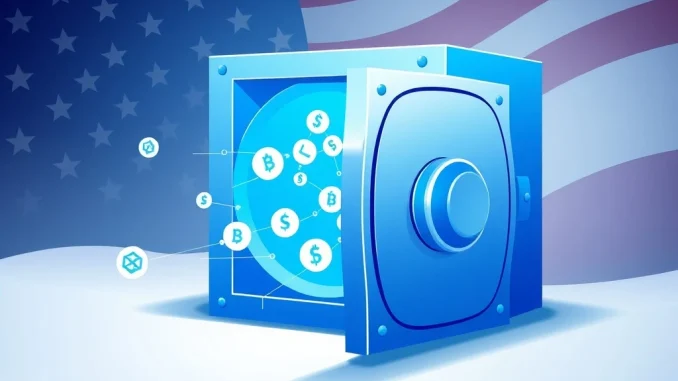
WASHINGTON, D.C., March 2025 – The Democratic National Committee has unveiled BlueVault, a revolutionary cryptocurrency donation platform that accepts Bitcoin and stablecoins, marking a significant strategic pivot in political fundraising ahead of the crucial 2026 midterm elections. This initiative represents the party’s most substantial technological fundraising innovation in a decade, fundamentally changing how political committees engage with digital asset donors while navigating complex regulatory landscapes.
BlueVault Crypto Donations: A Strategic Response to Changing Political Dynamics
The Democratic Party’s launch of BlueVault follows extensive internal analysis of the 2024 presidential election results. Party strategists identified concerning trends among younger, tech-savvy voters who increasingly view cryptocurrency as both an economic opportunity and a political issue. Consequently, the platform development began in late 2024 as part of a broader digital engagement strategy. According to Federal Election Commission records, cryptocurrency donations to federal candidates reached $94 million during the 2024 election cycle, demonstrating significant growth from previous cycles.
BlueVault operates as a dedicated infrastructure layer within existing Democratic fundraising systems. The platform specifically enables Democratic political committees, including the DNC, DSCC, and DCCC, to receive contributions in Bitcoin (BTC) and major stablecoins like USDC and USDT. Importantly, the system automatically converts cryptocurrency donations to U.S. dollars upon receipt, ensuring compliance with Federal Election Commission regulations that require reporting in traditional currency. This conversion mechanism addresses transparency concerns while maintaining the speed and efficiency benefits of blockchain transactions.
Political Fundraising Evolution and Cryptocurrency Integration
The Democratic Party’s move represents a notable shift in political fundraising strategy. Historically, both major parties have approached cryptocurrency with caution due to regulatory uncertainty and volatility concerns. However, recent FEC advisory opinions have clarified that cryptocurrency contributions are permissible as long as they meet existing disclosure requirements. The Republican Party established its own cryptocurrency donation infrastructure in 2022, creating competitive pressure for technological parity in digital fundraising capabilities.
Political finance experts note several key advantages of cryptocurrency donations:
- Lower transaction fees compared to traditional credit card processing
- Faster settlement times enabling rapid response to political developments
- Access to younger donor demographics increasingly using digital assets
- Enhanced security features through blockchain verification
Despite these advantages, the Democratic Party emphasizes that BlueVault focuses primarily on attracting small-dollar crypto donors rather than promoting specific cryptocurrency policies. This distinction reflects the party’s careful balancing act between engaging crypto-interested voters and maintaining broader policy priorities. The platform’s design specifically targets donations under $200, which constitute approximately 60% of all political contributions but only 20% of total dollars raised in recent election cycles.
Expert Analysis: The Strategic Calculus Behind Political Crypto Adoption
Political technology analysts observe that BlueVault represents more than just a new payment method. The platform serves as a strategic bridge to voters who prioritize technological innovation and digital privacy. According to a 2024 Pew Research Center study, 38% of Americans aged 18-49 have invested in, traded, or used cryptocurrency, compared to just 13% of those 50 and older. This demographic reality creates compelling political mathematics for parties seeking to build sustainable electoral coalitions.
Campaign finance experts highlight that cryptocurrency donations still represent a small fraction of overall political fundraising. During the 2024 election cycle, digital asset contributions accounted for approximately 1.2% of all federal political donations. However, their growth rate exceeds traditional donation methods, increasing by 240% from the 2022 midterms. This trajectory suggests cryptocurrency could become increasingly significant in future election cycles, particularly as digital asset adoption continues expanding among younger voters.
Regulatory Framework and Compliance Considerations
BlueVault’s development involved extensive consultation with election law experts and regulatory compliance specialists. The platform incorporates multiple layers of verification to ensure adherence to campaign finance laws. All cryptocurrency donations undergo immediate conversion to U.S. dollars at the time of receipt, with the conversion rate documented for FEC reporting purposes. Additionally, the system includes enhanced identity verification protocols that exceed standard Know Your Customer requirements for cryptocurrency exchanges.
The platform addresses several regulatory challenges unique to political cryptocurrency donations:
| Regulatory Challenge | BlueVault Solution |
|---|---|
| Donor Identification | Multi-factor authentication and blockchain analysis tools |
| Contribution Limits | Real-time tracking against FEC individual limits |
| Foreign National Prohibition | Geographic verification and IP address monitoring |
| Transaction Reporting | Automated FEC filing integration |
These compliance features represent significant technological advancements over earlier political cryptocurrency systems. The Democratic Party worked with blockchain analytics firms to develop proprietary tools that trace donation origins while maintaining donor privacy where legally permitted. This balanced approach aims to maximize security without creating unnecessary barriers for legitimate contributors.
Comparative Analysis: Political Party Approaches to Cryptocurrency
The Democratic Party’s BlueVault launch follows similar initiatives by Republican organizations, creating an interesting comparative landscape. The GOP’s cryptocurrency infrastructure, established in 2022, has processed approximately $28 million in digital asset donations through the 2024 election cycle. However, key differences exist in implementation strategy and philosophical approach between the two major parties’ systems.
Republican cryptocurrency platforms have generally emphasized broader acceptance of alternative cryptocurrencies beyond Bitcoin and stablecoins. In contrast, BlueVault initially supports a more limited selection of digital assets, reflecting what Democratic strategists describe as a “measured, security-first approach.” This distinction mirrors broader regulatory philosophy differences between the parties, with Democrats typically advocating for more stringent digital asset oversight while Republicans generally favor lighter regulatory frameworks.
Both parties face similar technical challenges in cryptocurrency fundraising, particularly regarding price volatility and regulatory compliance. However, their differing approaches reflect underlying political calculations about their respective donor bases and policy priorities. The Democratic focus on small-dollar donations through BlueVault aligns with the party’s emphasis on grassroots fundraising, while Republican platforms have historically attracted larger individual cryptocurrency contributions.
Technological Infrastructure and Security Protocols
BlueVault incorporates enterprise-grade security measures developed in partnership with cybersecurity firms specializing in blockchain technology. The platform uses multi-signature wallet technology requiring multiple authorized approvals for fund transfers, significantly reducing vulnerability to single-point failures or unauthorized access. Additionally, all cryptocurrency holdings undergo immediate conversion to U.S. dollars, eliminating exposure to market volatility that could affect donation values between contribution and reporting periods.
The technical architecture represents a hybrid approach combining traditional political fundraising infrastructure with blockchain integration. Donation data flows through established compliance systems while leveraging distributed ledger technology for transaction verification and security. This design philosophy prioritizes regulatory compliance without sacrificing the technological advantages of cryptocurrency transactions, particularly regarding transaction speed and reduced intermediary costs.
Future Implications for Political Fundraising and Voter Engagement
Political analysts project that BlueVault could influence fundraising strategies beyond the 2026 midterm elections. The platform’s success may encourage state and local Democratic committees to adopt similar cryptocurrency acceptance systems, potentially creating a standardized approach across different levels of political organization. Furthermore, the technological infrastructure could serve as a model for other political entities internationally, particularly in democracies with developing digital asset ecosystems.
The broader implications extend beyond fundraising mechanics to voter engagement strategies. By embracing cryptocurrency donations, the Democratic Party signals recognition of digital assets as legitimate financial instruments and acknowledges their growing importance in American economic life. This positioning may influence policy discussions around cryptocurrency regulation, particularly as both parties seek to appeal to voters for whom digital assets represent economic opportunity and technological progress.
Industry observers note that political cryptocurrency adoption typically follows broader financial sector trends. As traditional financial institutions increasingly integrate digital asset services, political organizations face growing pressure to offer similar capabilities to donors. This convergence between political and financial technology represents a significant evolution in campaign infrastructure, potentially reshaping how political organizations interact with supporters in the digital age.
Conclusion
The Democratic Party’s BlueVault crypto donation platform represents a strategic adaptation to changing technological and political landscapes ahead of the 2026 midterm elections. By accepting Bitcoin and stablecoin contributions through a secure, compliant infrastructure, the party aims to engage cryptocurrency-interested voters while expanding its small-dollar donor base. This initiative reflects broader trends in political fundraising digitalization and responds to competitive pressures in an increasingly technology-driven electoral environment. As cryptocurrency adoption continues growing among American voters, platforms like BlueVault may become standard components of political fundraising infrastructure, fundamentally transforming how campaigns finance their operations and connect with supporters in the digital age.
FAQs
Q1: What cryptocurrencies does the BlueVault platform accept?
The BlueVault platform currently accepts Bitcoin (BTC) and major stablecoins including USDC and USDT. The Democratic Party selected these digital assets based on market stability, regulatory clarity, and security considerations for political fundraising compliance.
Q2: How does BlueVault ensure compliance with campaign finance laws?
BlueVault incorporates multiple compliance features including immediate cryptocurrency-to-dollar conversion, real-time contribution limit tracking, enhanced donor identification protocols, and automated FEC reporting integration. The system converts all donations to U.S. dollars upon receipt for transparent reporting.
Q3: Why is the Democratic Party focusing on small-dollar crypto donations?
Party strategists identify small-dollar donors as crucial for sustainable political fundraising and broader voter engagement. By targeting contributions under $200, BlueVault aims to expand the donor base while minimizing regulatory complexity associated with larger cryptocurrency transactions.
Q4: How does BlueVault compare to Republican cryptocurrency fundraising systems?
While both parties accept cryptocurrency donations, key differences exist in implementation. BlueVault initially supports fewer digital asset types but emphasizes security and compliance features. Republican platforms typically accept broader cryptocurrency varieties but may have different compliance approaches reflecting varying regulatory philosophies.
Q5: What security measures protect BlueVault cryptocurrency donations?
The platform employs enterprise-grade security including multi-signature wallet technology, blockchain analytics for transaction verification, partnership with cybersecurity specialists, and immediate conversion to U.S. dollars to eliminate volatility exposure between donation and reporting periods.
This article was produced with AI assistance and reviewed by our editorial team for accuracy and quality.