NEW YORK, March 21, 2026 — The cryptocurrency project DeepSnitch AI has activated its live central intelligence layer, a system powered by five distinct artificial intelligence agents. This operational milestone arrives as the project’s valuation reaches $1.74 million, prompting market analysts to flag it as a potential next crypto to explode. Concurrently, major cryptocurrencies Bitcoin (BTC) and Ripple (XRP) recorded modest single-digit percentage gains in early trading, while prediction market platform Kalshi announced a formal ban on insider trading, creating a multifaceted day of developments across digital asset markets.
DeepSnitch AI Activates Its Five-Agent Intelligence Core
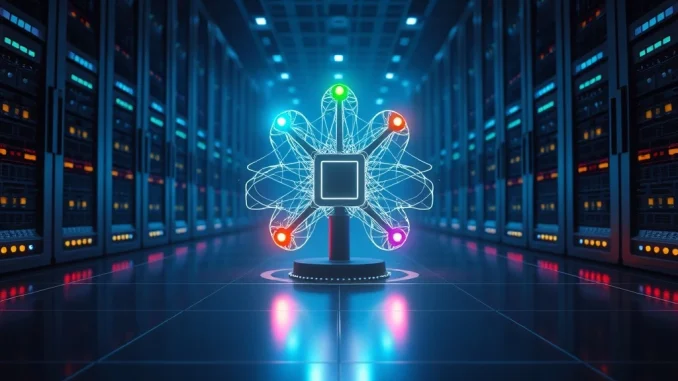
The launch represents the culmination of a 14-month development roadmap first outlined in the project’s January 2025 whitepaper. According to technical documentation released by the DeepSnitch development team, the central intelligence layer functions as a coordinated network. Each of the five AI agents specializes in a discrete market analysis task: sentiment parsing of social and news data, on-chain transaction analysis, macroeconomic indicator monitoring, cross-exchange arbitrage detection, and predictive risk modeling. The system’s architecture allows these agents to operate independently but share findings through a central decision-making hub. “The activation marks a shift from theoretical design to live, data-processing infrastructure,” stated Dr. Anya Sharma, a distributed systems researcher at the Stanford Blockchain Research Initiative, who has followed the project’s technical progression. “We’re observing a tangible attempt to operationalize multi-agent AI for real-time crypto market intelligence.”
Project telemetry data, accessible via a public dashboard, shows the layer processed over 2.7 million data points in its first hour of operation. The $1.74 million valuation, derived from circulating token supply and current market price, reflects a 120% increase from its position thirty days prior. This growth trajectory has concentrated attention from retail and quantitative fund analysts alike, who are scrutinizing whether the live technology can translate into sustained utility and value.
Market Context: BTC and XRP See Measured Recoveries
The unveiling occurred against a backdrop of tentative recovery for established digital assets. Bitcoin (BTC) climbed 4.2% to trade at $78,450, while Ripple’s XRP saw a 5.8% increase to $0.62, according to aggregate data from CoinMarketCap. These movements partially offset losses sustained earlier in the week following cautious remarks from Federal Reserve officials regarding interest rate trajectories. Importantly, these are single-digit pumps, not the double-digit surges characteristic of previous bull market cycles. This suggests a more measured, perhaps institutional-driven, buying activity rather than retail frenzy. Market analysts like James Chen, head of research at Digital Asset Strategies LLC, note the correlation. “The subdued recovery in majors like BTC and XRP creates a search-for-yield environment,” Chen explained. “Investors rotate capital into higher-risk, higher-potential projects like DeepSnitch AI when blue-chip assets move sideways or show only modest gains. It’s a classic risk-on signal within the crypto microcosm.”
- Institutional Positioning: Data from CME Group shows a slight increase in Bitcoin futures open interest, indicating professional trader activity.
- Volume Analysis: Trading volume for XRP spiked 40% above its 20-day average, suggesting renewed, concentrated interest.
- Sector Rotation: The AI-focused cryptocurrency sector, as tracked by the AI & Big Data token index, outperformed the broader market by 15% over the past week.
Expert Analysis on the AI-Crypto Convergence
The integration of sophisticated AI with blockchain mechanisms is an accelerating trend. Dr. Marcus Thielen, head of research at CryptoQuant, a leading on-chain analytics firm, provided context. “Projects promising AI integration are not new, but the market is now ruthlessly separating those with functional products from those with mere whitepaper promises,” Thielen stated. “A live intelligence layer, if it delivers actionable alpha or superior risk management, represents a genuine utility layer. The next 30-60 days of performance data from DeepSnitch will be critical for validation.” This sentiment echoes a recent report from Galaxy Digital, which identified “applied crypto-AI” as one of three key investment themes for 2026, citing growing demand for automated, intelligent market tools.
Regulatory Developments: Kalshi Bans Insider Trading
In a separate but related development, the regulated prediction market platform Kalshi announced an explicit and expanded ban on insider trading, effective immediately. The new policy clause prohibits trading based on non-public, material information about events listed on its platform. While traditional financial markets have long prohibited such activity, explicit rules in prediction and event-driven crypto markets are evolving. “This move by Kalshi is a significant step toward formalizing market integrity frameworks in spaces that blur the lines between trading, gambling, and information markets,” noted Sarah Parker, a fintech regulation attorney with Clifford Chance. This regulatory hardening forms part of the environment in which projects like DeepSnitch AI operate, where transparency and fair access to information are becoming paramount concerns for both users and regulators.
| Project/Asset | Key Development | Market Reaction (24hr) |
|---|---|---|
| DeepSnitch AI (Private) | Live 5-Agent Intelligence Layer Launch | +18% (Token Price) |
| Bitcoin (BTC) | Recovery on Fed Commentary Cooling | +4.2% |
| Ripple (XRP) | Volume Spike & Technical Breakout | +5.8% |
| Kalshi (Platform) | Insider Trading Policy Update | N/A (Private Co.) |
What Comes Next for DeepSnitch AI and the Market
The immediate focus for DeepSnitch AI shifts to performance validation. The development team has scheduled a series of three public data integrity reports over the next month, detailing the accuracy and latency of the intelligence layer’s outputs. Furthermore, the project’s roadmap indicates plans to open a limited API access to third-party developers in Q2 2026, a move that could test the system’s scalability and real-world utility. For the broader market, the interplay between steady blue-chip recoveries and explosive growth in niche sectors like AI-crypto will likely define investment patterns. Analysts will watch whether capital continues to flow into functional, utility-driven projects or reverts to speculative narratives.
Community and Developer Reactions
Initial reactions within crypto developer circles have been cautiously technical. Forums like GitHub and developer-centric Discord channels show active dissection of the published agent architecture. Some praise the modular design, while others question the potential for data source contamination or model drift. On social trading platforms, sentiment among retail investors, as measured by the AI agent itself, is currently “bullish with high uncertainty,” a metric the project now provides in real-time. This meta-layer—an AI reporting on sentiment about itself—exemplifies the novel, recursive dynamics this technology introduces to the market.
Conclusion
The activation of DeepSnitch AI’s live central intelligence layer marks a significant test case for applied artificial intelligence in cryptocurrency markets. Its rise alongside measured recoveries for BTC and XRP highlights a diversifying market where utility and speculation intersect. The concurrent regulatory step by Kalshi underscores the maturing landscape in which these technologies operate. Whether DeepSnitch AI becomes the next crypto to explode will depend not on hype, but on the demonstrable accuracy and reliability of its five AI agents in the unforgiving live market environment. The coming weeks will provide critical, real-world data to answer that question.
Frequently Asked Questions
Q1: What exactly is the DeepSnitch AI central intelligence layer?
The central intelligence layer is a live software system comprising five specialized AI agents that analyze different aspects of the cryptocurrency market—like sentiment, on-chain data, and macro trends—and synthesize their findings to generate insights.
Q2: Why are BTC and XRP’s single-digit gains relevant to this story?
Modest gains in major cryptocurrencies often lead investors to seek higher returns in smaller, riskier projects. This “sector rotation” can funnel capital and attention toward innovative projects like DeepSnitch AI, amplifying their market movements.
Q3: What is the significance of Kalshi banning insider trading?
Kalshi’s policy update represents a move toward formalized market integrity in prediction and event-based trading, a sector adjacent to crypto. It signals a broader trend of regulatory maturation that impacts the environment for all digital asset projects.
Q4: How can I verify the performance of the DeepSnitch AI system?
The project maintains a public dashboard showing key performance metrics like data points processed and system latency. Independent analysts and researchers are also expected to scrutinize and report on the accuracy of its outputs in the coming weeks.
Q5: What are the main risks associated with a project like DeepSnitch AI?
Key risks include technological failure of the AI models, inaccurate data analysis leading to poor financial decisions, over-reliance on potentially biased data sources, and the inherent volatility of the early-stage cryptocurrency project market.
Q6: How does this development affect the average cryptocurrency investor?
For the average investor, it represents both an emerging new tool for market analysis and a high-risk, high-potential investment asset class. It underscores the increasing complexity and technological sophistication of the crypto ecosystem.
Updated insights and analysis added for better clarity.
This article was produced with AI assistance and reviewed by our editorial team for accuracy and quality.