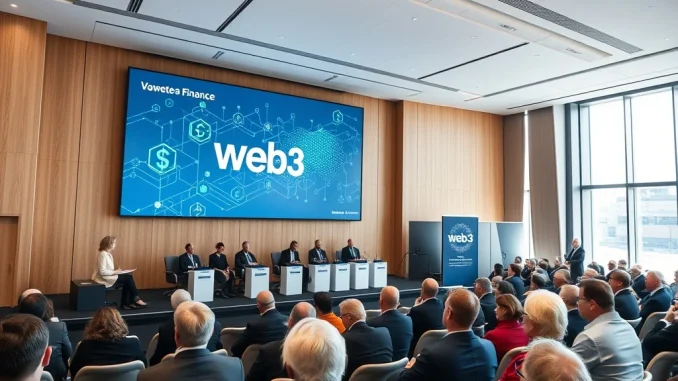
Davos, Switzerland, January 2026: The third annual DavosWeb3 summit has concluded, marking a pivotal moment in the evolution of decentralized technology. This year’s gathering, strategically timed alongside the World Economic Forum’s Annual Meeting, shifted its focus decisively from theoretical potential to actionable frameworks for responsible Web3 adoption. The core mission was clear: to forge tangible pathways that bridge established global institutions with the innovative power of blockchain, decentralized finance (DeFi), and digital asset ecosystems to address real-world challenges.
DavosWeb3 2026 Establishes a New Blueprint for Responsible Adoption
The 2026 iteration of DavosWeb3 represented a maturation of the dialogue surrounding blockchain and related technologies. Previous forums often centered on technical capabilities and investment theses. This year, the conversation advanced to governance, interoperability, and measurable impact. The agenda was constructed around several key pillars: regulatory harmonization, institutional onboarding protocols, sustainability standards for proof-of-work and proof-of-stake networks, and the development of use cases with direct socio-economic benefits. Panelists and working groups presented detailed white papers and pilot project results, moving beyond speculation to evidence-based discussion. This shift reflects a broader industry trend observed since 2023, where the failure of several poorly governed projects necessitated a stronger emphasis on compliance, security, and transparency.
Bridging the Institutional and Decentralized Divide
A primary achievement of the summit was creating a structured dialogue between traditional finance (TradFi) entities and native Web3 builders. For years, a trust deficit and knowledge gap hindered collaboration. DavosWeb3 2026 facilitated working sessions that translated decentralized concepts into institutional risk frameworks. Key discussion points included:
- Asset Tokenization: Developing global standards for representing real-world assets (RWAs) like bonds, commodities, and real estate on blockchain ledgers.
- Central Bank Digital Currencies (CBDCs): Exploring technical and philosophical intersections between sovereign digital currencies and permissionless decentralized networks.
- Decentralized Identity (DID): Crafting governance models for user-controlled digital identities that meet Know Your Customer (KYC) regulations without compromising privacy.
- Cross-Border Payments: Demonstrating how decentralized protocols can reduce settlement times and costs for international remittances and trade finance.
These discussions were not merely theoretical. Several multilateral organizations and global banks announced the formation of a joint task force to pilot a tokenized carbon credit trading platform, a direct outcome of the 2025 summit’s working groups.
The Imperative of Measurable Real-World Impact
Beyond financial infrastructure, a significant portion of the conference was dedicated to Web3’s role in global development and sustainability. Sessions highlighted deployable solutions rather than aspirational goals. For instance, one presentation detailed a blockchain-based supply chain system that successfully increased transparency and fair payments for agricultural cooperatives in East Africa. Another focused on using decentralized autonomous organizations (DAOs) to manage community-owned renewable energy grids. The emphasis was on creating technology stacks that are accessible, scalable, and designed with offline-first considerations for regions with limited internet connectivity. This focus on tangible utility aims to counter the narrative of Web3 as a purely speculative domain and anchor its value in solving documented inefficiencies.
Navigating the Evolving Regulatory Landscape
Regulatory clarity remains the single largest external factor influencing Web3 adoption. DavosWeb3 2026 featured unprecedented participation from policymakers and regulatory bodies. The dialogue moved from adversarial positions to collaborative problem-solving. A major topic was the implementation of the European Union’s Markets in Crypto-Assets (MiCA) regulation, which took full effect in late 2025, and its implications for global standards. Regulators expressed a need for better on-chain analytics and compliance tooling, while builders showcased advances in privacy-preserving compliance technology. The consensus was that a fragmented, jurisdiction-by-jurisdiction approach creates systemic risk, underscoring the need for the international coordination forums like DavosWeb3 provide.
| Focus Area | Primary Challenge Addressed | Notable Summit Outcome |
|---|---|---|
| Institutional DeFi | Counterparty risk and regulatory uncertainty | Blueprint for licensed, compliant DeFi liquidity pools |
| Digital Identity | Balancing privacy with anti-fraud measures | Framework for interoperable, sovereign identity standards |
| Sustainability | Energy consumption and e-waste concerns | Commitment to open-source ESG reporting protocol for validators |
| Consumer Protection | Smart contract vulnerabilities and user error | Proposal for a global consumer education initiative |
Expert Analysis on the Shift in Tone
Industry analysts observing the event noted a definitive change in tenor. “The hype cycle has conclusively given way to a build-and-integrate cycle,” remarked one fintech strategist attending the summit. “The conversations in 2026 are less about ‘disrupting’ legacy systems and more about ‘interfacing’ with them securely and reliably. This is a sign of technological maturity. The focus on ‘responsible adoption’ is a direct response to past failures and a prerequisite for attracting the scale of capital and talent required for the next phase of growth.” This perspective was echoed by multiple attendees, who pointed to the increased presence of corporate strategy officers and public sector officials as evidence of the field’s growing legitimacy.
Conclusion: A Foundation for the Next Decade of Web3
DavosWeb3 2026 concluded not with grand pronouncements of revolution, but with signed memoranda of understanding, technical working group charters, and clear project roadmaps. The summit successfully advanced the critical work of building the guardrails and on-ramps necessary for responsible Web3 adoption at a global scale. By fostering direct collaboration between innovators and incumbents, the event has helped translate decentralized technology’s promise into a lexicon of risk management, compliance, and impact measurement that large institutions understand. The true test will be the implementation of the frameworks developed in Davos over the coming year, setting the stage for the progress to be reviewed at DavosWeb3 2027. The overarching message is that for Web3 to achieve its potential for global impact, it must be built with responsibility, transparency, and interoperability as its core design principles.
FAQs
Q1: What is the main goal of the DavosWeb3 summit?
The primary goal of DavosWeb3 is to foster structured dialogue and collaboration between traditional global institutions (governments, banks, NGOs) and the decentralized Web3 ecosystem. It aims to develop practical frameworks for integrating blockchain and related technologies in a secure, compliant, and impactful manner.
Q2: How does DavosWeb3 relate to the World Economic Forum (WEF)?
DavosWeb3 is an independent event strategically scheduled during the same week as the WEF Annual Meeting in Davos, Switzerland. This timing allows for overlap in attendees, facilitating conversations between Web3 specialists and the broader cohort of global leaders in policy, business, and academia present for the WEF.
Q3: What does “responsible Web3 adoption” specifically refer to?
Responsible adoption refers to integrating decentralized technologies with a strong emphasis on consumer protection, regulatory compliance, financial stability, environmental sustainability, and real-world utility. It moves beyond speculation to focus on building resilient infrastructure that solves existing problems.
Q4: Which sectors saw the most concrete proposals for Web3 integration at the 2026 summit?
The most advanced discussions concerned financial market infrastructure (like asset tokenization and cross-border payments), supply chain transparency, and decentralized identity systems for digital credentials and access management.
Q5: What is the significance of institutional participation at DavosWeb3?
Active participation from major banks, asset managers, and multilateral institutions signals a shift from exploratory interest to operational planning. Their involvement is crucial for providing the scale of capital, regulatory engagement, and real-world use cases needed for Web3 technologies to move beyond niche applications.
Updated insights and analysis added for better clarity.
This article was produced with AI assistance and reviewed by our editorial team for accuracy and quality.