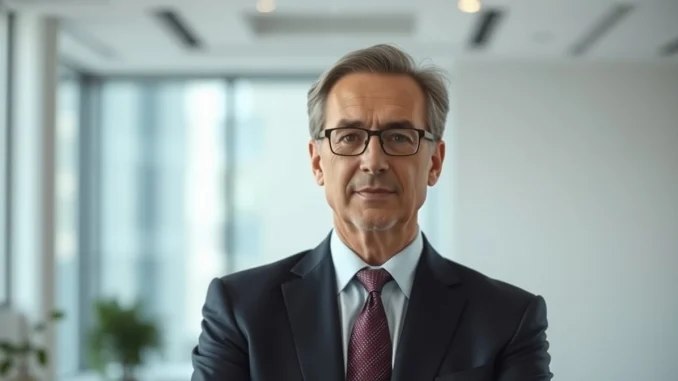
WASHINGTON, D.C. — March 27, 2026: Venture capitalist David Sacks has concluded his influential 130-day tenure as a special government employee overseeing artificial intelligence and cryptocurrency policy for the Trump administration. He confirmed this transition in a video interview with Bloomberg on Thursday, March 26, 2026. Sacks will now co-chair the President’s Council of Advisors on Science and Technology (PCAST), a move that significantly alters his proximity to executive power while expanding his advisory purview.
David Sacks Concludes Role as AI Czar
David Sacks served as a special government employee for two non-consecutive periods totaling 130 days. During this time, he acted as a key advisor directly to President Donald Trump on artificial intelligence and digital asset policy. This position granted him a direct line to the Oval Office and a tangible hand in shaping federal technology directives. His departure from this operational role marks a notable shift in the administration’s technology leadership structure.
As AI czar, Sacks helped formulate the national AI framework released by the White House last week. He described the framework’s primary goal as replacing a confusing patchwork of state-level regulations. “You’ve got 50 different states regulating this in 50 different ways,” Sacks told Bloomberg, “and it’s creating a patchwork of regulation that’s difficult for our innovators to comply with.” The framework seeks to establish cohesive federal standards.
The New Role on PCAST
Instead of his previous position, Sacks will now serve as co-chair of PCAST alongside senior White House technology adviser Michael Kratsios. This federal advisory committee studies complex scientific and technological issues. It then produces reports and makes policy recommendations to the President. The council itself does not create or enforce policy.
“I think moving forward as co-chair of PCAST, I can now make recommendations on not just AI but an expanded range of technology,” Sacks explained. His new portfolio will include advanced semiconductors, quantum computing, and nuclear power. This shift moves Sacks from a direct policy-shaping role to an advisory one, placing him further from the daily power center in Washington.
A Council of Tech Titans
The current iteration of PCAST, which Sacks boasts has “the most star power of any group like this” ever assembled, features an unprecedented roster of technology industry leaders. The initial 15 members include:
- Jensen Huang, CEO of Nvidia
- Mark Zuckerberg, CEO of Meta
- Larry Ellison, Chairman of Oracle
- Sergey Brin, Co-founder of Google
- Marc Andreessen, Co-founder of Andreessen Horowitz
- Lisa Su, CEO of AMD
- Michael Dell, CEO of Dell Technologies
This composition represents a decisive shift from previous councils, which often featured academic scientists and researchers. The current PCAST is built almost entirely from the executive leadership of the companies developing the technologies it will advise on.
Historical Context of PCAST Influence
The influence of PCAST has varied dramatically across presidential administrations. Its impact depends heavily on how each President chooses to utilize the council’s recommendations.
| Administration | Council Composition | Notable Output & Impact |
|---|---|---|
| Obama | Mix of academic and industry experts | 36 reports over 8 years; led to FDA rule for OTC hearing aids |
| Trump (First Term) | Slow to form; mixed membership | Handful of reports; limited measurable policy impact |
| Biden | Heavily academic (Nobel laureates, etc.) | Modest number of reports before end of term |
| Trump (Current) | Predominantly tech industry CEOs | Focus on AI framework, semiconductors, quantum computing |
President Obama’s PCAST was historically the most productive. It generated dozens of reports, with at least two leading to concrete regulatory changes. Conversely, President Trump’s first-term council took nearly three years to appoint its first members and produced limited work. President Biden’s council leaned on academic prestige but operated for a shorter duration.
Ethics and Criticism
Sacks’s previous role drew scrutiny regarding potential conflicts of interest. In 2025, TechCrunch reported that Sacks obtained ethics waivers. These waivers allowed him to maintain financial stakes in AI and cryptocurrency companies while simultaneously helping shape federal policy for those sectors. Government ethics experts and some lawmakers sharply criticized this arrangement. They argued it created inherent conflicts between public duty and private investment.
A spokesperson for Craft Ventures, the venture firm Sacks co-founded, has not yet responded to inquiries about his next steps following the PCAST appointment. The transition allows Sacks to return to his primary career as an investor and entrepreneur, roles he maintained even during his government service.
Foreign Policy Comments and the Transition Timing
The timing of Sacks’s role change followed public comments he made on foreign policy. Earlier in March 2026, on the “All In” podcast he co-hosts, Sacks urged the administration to find a diplomatic exit from the U.S.-backed conflict with Iran. He outlined escalating risk scenarios, including attacks on regional oil infrastructure and nuclear escalation.
President Trump later told reporters that Sacks had not discussed the matter with him directly. When Bloomberg asked about the podcast comments, Sacks distanced himself from foreign policy. “I’m not on the foreign policy team or the national security team,” he stated, adding that his podcast remarks represented his personal view, not an official administration position.
Analysts note that while the advisory shift may be part of a planned transition, such public divergences from administration policy can sometimes precipitate or accelerate changes in an advisor’s role and access.
Conclusion
David Sacks’s move from AI czar to PCAST co-chair represents a significant recalibration of his influence within the Trump administration. He exchanges direct policy input for a broader, albeit less immediate, advisory capacity. The newly constituted PCAST, with its concentration of tech industry billionaires, presents a novel experiment in government advisory. Its success will hinge on whether its high-profile recommendations translate into actionable policy. Sacks now navigates this influential yet indirect role, balancing his continued work in the private sector with his responsibilities on the premier White House technology council.
FAQs
Q1: What was David Sacks’s previous role in the Trump administration?
David Sacks served as a special government employee, often called the “AI czar,” for 130 non-consecutive days. He advised directly on artificial intelligence and cryptocurrency policy.
Q2: What is PCAST, and what will Sacks do there?
PCAST is the President’s Council of Advisors on Science and Technology. It is a federal advisory committee that studies complex tech issues, produces reports, and makes recommendations to the President. As co-chair, Sacks will help guide its work on AI, semiconductors, quantum computing, and nuclear power.
Q3: Why is the current PCAST considered unique?
The current PCAST is unique because its membership is dominated by sitting CEOs and founders of major technology companies, such as Jensen Huang (Nvidia) and Mark Zuckerberg (Meta), rather than academic scientists.
Q4: Did ethics concerns surround Sacks’s previous role?
Yes. Sacks obtained ethics waivers allowing him to keep financial stakes in AI and crypto companies while shaping federal policy for those sectors. Government ethics experts criticized this as a potential conflict of interest.
Q5: How influential has PCAST been in past administrations?
Influence has varied. The Obama-era PCAST was highly productive, leading to some policy changes. The Trump first-term council had limited impact, and the Biden-era council was active but short-lived due to the election cycle.
This article was produced with AI assistance and reviewed by our editorial team for accuracy and quality.