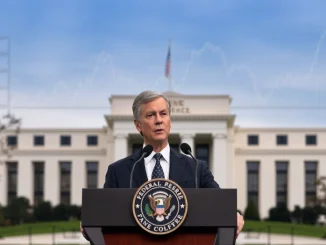
In the dynamic world of cryptocurrency, market sentiment often hinges on macroeconomic signals. Therefore, a recent statement from a key economic figure demands attention. Dallas Fed President Lorie Logan delivered an urgent warning. She cautioned against premature actions that could disrupt economic stability. This perspective directly influences the broader financial landscape, including digital assets.
Dallas Fed President Logan on Economic Balance
Dallas Fed President Lorie Logan recently voiced significant concerns. She spoke about the current state of the U.S. labor market. Logan believes it has largely achieved balance. Consequently, stimulating demand at this juncture could create problems. Such actions would likely worsen inflation. Crucially, they would not significantly boost employment. Her comments highlight a hawkish stance. This suggests the U.S. Federal Reserve should avoid cutting interest rates too soon. Logan’s view emphasizes stability over aggressive growth measures. She believes that a balanced economy requires careful handling.
Indeed, Logan’s remarks resonate across financial markets. Investors and analysts now closely watch the Fed’s next moves. Many wonder if other Fed officials share her strong convictions. Her assessment of the labor market is key. It implies that current employment levels are sustainable. Further stimulus, therefore, might only overheat the economy. This perspective often contrasts with calls for quicker rate cuts. Those calls typically aim to spur economic activity. However, Logan prioritizes price stability. She fears that unchecked demand could undo progress against rising costs.
Understanding Lorie Logan’s Hawkish Stance
Lorie Logan’s position is distinctly hawkish. This term describes policymakers who prioritize controlling inflation. They often favor higher interest rates or a slower pace of rate cuts. Logan’s comments align with this philosophy. She believes the current economic environment requires caution. Specifically, she argues that easing monetary policy prematurely carries substantial risks. This approach contrasts with a dovish stance. Dovish policymakers typically prioritize economic growth and employment. They might advocate for lower rates to stimulate activity. Logan, however, sees the primary threat as persistent inflation.
Her assessment hinges on the idea of a ‘balanced’ labor market. This means the number of available jobs roughly matches the number of job seekers. Such a balance suggests that employers are not struggling excessively to find workers. Similarly, workers are not facing widespread unemployment. In this scenario, injecting more demand into the economy becomes problematic. It might simply push wages and prices higher. This would happen without creating many new jobs. Therefore, Logan advocates for patience. She wants the Fed to observe economic data carefully. Only then should they consider changes to monetary policy.
The Broader Inflation Outlook and Market Implications
The inflation outlook remains a central concern for the Federal Reserve. Logan’s statements underscore this ongoing battle. High inflation erodes purchasing power. It also creates uncertainty for businesses and consumers. Therefore, the Fed has a dual mandate. They must achieve maximum employment and stable prices. Logan suggests that the employment side is largely met. This shifts the focus squarely onto price stability. Consequently, the Fed might need to maintain its restrictive policy for longer. This includes keeping benchmark interest rates elevated. Such a strategy aims to cool demand further. It helps bring inflation back to the Fed’s 2% target.
Market participants often react strongly to such hawkish signals. Expectations for future rate cuts can shift quickly. If the Fed keeps rates higher for longer, several impacts may follow:
- Higher Borrowing Costs: Loans for homes, cars, and businesses become more expensive.
- Stronger Dollar: A higher dollar can make U.S. exports more expensive.
- Impact on Risk Assets: Cryptocurrencies and stocks might face headwinds. Higher interest rates make safer investments, like bonds, more attractive.
- Slower Economic Growth: Reduced demand can lead to a moderation in economic expansion.
These implications are crucial for crypto investors. A tighter monetary policy environment often leads to less speculative investment. People may move capital into less volatile assets. Understanding the Fed’s direction is thus vital for navigating digital asset markets.
Examining the Labor Market Dynamics
The concept of a ‘balanced’ labor market is central to Logan’s argument. But what does this balance truly entail? It suggests that the supply and demand for labor are in equilibrium. Key indicators support this view. For instance, the unemployment rate remains low. Job openings, while off their peak, are still robust. Wage growth, while elevated, shows signs of moderating. These factors collectively paint a picture of a healthy, yet not overheated, job market. Logan’s assessment suggests that this balance is delicate. Any attempt to artificially boost demand could disrupt it. It could lead to a wage-price spiral, where rising wages chase rising prices.
Historically, the Federal Reserve has used various tools to manage the labor market. During downturns, they cut interest rates. This makes borrowing cheaper. It encourages businesses to invest and hire. However, when the economy is near full employment, the strategy shifts. The focus then moves to preventing overheating. This involves ensuring that demand does not outstrip supply. Logan’s comments highlight this transition. She sees the economy as having moved beyond the need for aggressive stimulus. Now, the priority is to consolidate gains. It is also to ensure long-term stability.
The Federal Reserve’s Delicate Balancing Act
The Federal Reserve constantly performs a delicate balancing act. They aim to achieve both full employment and price stability. This is their dual mandate. Logan’s remarks underscore the complexity of this task. She believes that further stimulating demand would only worsen inflation. This would occur without increasing employment significantly. Her hawkish stance reflects a commitment to the price stability component. It also acknowledges the strong performance of the labor market. For instance, recent jobs reports show continued strength. However, the pace of wage growth has slowed somewhat. This suggests some cooling, but not a collapse, in labor demand.
Other Fed officials may hold differing views. Some might argue for a more proactive approach to cutting interest rates. They might point to potential risks of an economic slowdown. However, Logan’s voice adds to the chorus of caution. This internal debate within the Fed is healthy. It ensures a thorough consideration of all economic data. Ultimately, the Federal Open Market Committee (FOMC) decides policy. Their decisions often reflect a consensus. However, strong individual views, like Logan’s, shape these discussions. Therefore, her perspective carries significant weight.
Navigating the Future: The Inflation Outlook and Beyond
The path forward for the U.S. economy remains uncertain. The inflation outlook is a key determinant of future Fed policy. While inflation has cooled from its peak, it remains above the Fed’s 2% target. Logan’s comments suggest that the final mile in this fight may be the hardest. She indicates that maintaining a restrictive policy is necessary. This will ensure inflation returns sustainably to target. This approach could mean higher interest rates for longer. Consequently, this might impact growth. However, Logan believes the alternative is worse. Uncontrolled inflation could lead to greater economic instability.
For investors, understanding this cautious stance is paramount. It suggests that a swift return to very low interest rates is unlikely. This environment demands careful asset allocation. It favors resilience and value over pure speculation. Furthermore, the crypto market, often sensitive to liquidity, will likely feel these effects. A tighter monetary policy typically means less capital flowing into riskier assets. Therefore, traders and investors should prepare for a potentially prolonged period of higher rates. This period requires strategic planning and careful risk management. The Dallas Fed’s perspective provides a crucial piece of this complex economic puzzle.
Conclusion: The Enduring Message from Dallas Fed’s Logan
Dallas Fed President Lorie Logan has delivered a clear message. She warns against stimulating demand when the labor market is largely balanced. Such actions, she argues, would only fuel inflation. They would not create meaningful employment gains. Her hawkish stance signals a reluctance to cut interest rates prematurely. This approach prioritizes long-term price stability. It acknowledges the progress made in the labor market. Logan’s insights are vital for understanding the Federal Reserve’s ongoing strategy. They highlight the persistent challenge of managing inflation. Her cautious view will undoubtedly influence future monetary policy debates. This ultimately impacts the broader economic landscape and investment decisions across all sectors, including the volatile cryptocurrency markets.
Frequently Asked Questions (FAQs)
What is Lorie Logan’s main concern regarding the U.S. economy?
Lorie Logan, President of the Dallas Fed, is primarily concerned that stimulating demand now would worsen inflation without significantly increasing employment. She believes the labor market is largely in balance.
What does a ‘hawkish stance’ mean in monetary policy?
A hawkish stance means a policymaker prioritizes controlling inflation. They typically favor higher interest rates or a slower pace of rate cuts to cool the economy and bring prices down.
How does the ‘balanced labor market’ concept influence Logan’s view on interest rates?
Logan views a balanced labor market as one where employment is robust and stable. In this scenario, she believes further demand stimulation is unnecessary and risky. It would likely only push up prices, not create more jobs, thus arguing against premature interest rate cuts.
What are the potential implications of the Federal Reserve maintaining higher interest rates for longer?
Maintaining higher interest rates for longer can lead to increased borrowing costs, a stronger U.S. dollar, and potential headwinds for risk assets like stocks and cryptocurrencies. It may also contribute to slower economic growth as demand cools.
How might Logan’s comments affect cryptocurrency markets?
Logan’s hawkish comments suggest a tighter monetary policy environment. This typically reduces overall liquidity and makes safer investments more attractive. Consequently, this can lead to less speculative capital flowing into cryptocurrencies, potentially impacting their prices.
What is the Federal Reserve’s dual mandate?
The Federal Reserve’s dual mandate is to achieve maximum employment and maintain stable prices (low and stable inflation). Logan’s recent statements emphasize the price stability aspect, given her assessment of the labor market.