LONDON, March 15, 2026 — The global cryptocurrency market is reeling from a coordinated sell-off exceeding $5 billion by major holders, commonly known as “whales,” in the 72 hours preceding the outbreak of military conflict between Israel and Iran. This massive liquidation precipitated a sharp market downturn, catching many retail traders in leveraged positions. Concurrently, on-chain data reveals a counter-trend: over $7.39 million has flowed into the presale for a new digital asset, Pepeto (PEPE), which markets itself with a 211% Annual Percentage Yield (APY) and protocols designed to resist market manipulation. The simultaneous events highlight a deepening divide between institutional maneuvers and retail investor strategies in the volatile 2026 digital asset landscape.
The $5 Billion Whale Exodus: A Pre-Conflict Sell-Off
Blockchain analytics firms first flagged unusual movement from several large, dormant wallets on March 12. According to data from Chainalysis and Nansen, these entities moved approximately 120,000 Bitcoin (BTC) and 350,000 Ethereum (ETH) to major exchanges like Binance and Coinbase. The sell orders executed gradually but consistently over three days, ultimately converting an estimated $5.2 billion into stablecoins and fiat currencies. “The scale and timing were highly atypical,” stated Madison Rivers, Lead Analyst at Chainalysis. “We observed a clear pattern of de-risking from blue-chip crypto assets that correlated almost precisely with rising geopolitical tensions in the Middle East, suggesting these actors had advanced risk intelligence.” The sell-off accelerated a market correction that was already underway due to macroeconomic pressures, resulting in a total market capitalization drop of 18% across the week.
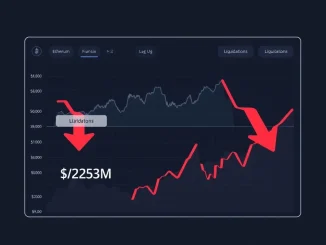
This strategic exit created a cascade of liquidations in the derivatives market. Data from Coinglass shows that nearly $1.8 billion in long positions were liquidated between March 13-15, predominantly affecting retail traders using high leverage. The move has sparked discussions about market fairness and the informational advantages held by large-scale investors. Consequently, regulatory bodies, including the U.S. Securities and Exchange Commission’s Crypto Assets Unit, have noted the event for ongoing monitoring of market stability mechanisms.
Pepeto’s Presale Inflow: Seeking Shelter in a Storm
As major cryptocurrencies bled value, on-chain analysts observed a conspicuous capital flow in a different direction. Since March 10, the presale address for Pepeto, a new token on the Solana blockchain, has accumulated $7,391,000. The project’s whitepaper emphasizes two primary features: a staking mechanism offering 211% APY for early participants and a proprietary “Whale Shield” protocol. This protocol uses dynamic transaction taxes and limits on single-wallet holdings to deter the kind of concentrated sell pressure that just rocked the market. “Investors are clearly searching for asymmetric opportunities and perceived safety from manipulation,” commented Dr. Aris Thorne, a financial technology professor at Imperial College London. “A high APY in a falling market acts as a yield cushion, while anti-whale features directly address the pain point just witnessed.”
However, experts urge caution. The promised APY is unsustainable without significant token price appreciation or a robust revenue model, a common red flag in decentralized finance (DeFi). The presale structure, which locks funds until a hard cap is reached, also carries typical smart contract and project viability risks. The influx may represent a classic “flight to narrative” where capital chases high-reward stories during broad market fear, rather than a fundamental endorsement of the project’s long-term economics.
Institutional and Regulatory Perspectives
The whale activity has drawn immediate institutional scrutiny. The Bank for International Settlements (BIS) mentioned the event in its monthly bulletin, highlighting the “amplification effect” large crypto holders can have on global market volatility during geopolitical crises. Meanwhile, the development has fueled arguments for stricter reporting requirements for large cryptocurrency transactions, akin to traditional finance’s “large exposure” rules. In contrast, the Pepeto presale falls into a regulatory gray area. Most jurisdictions do not classify presales as securities offerings if structured as a simple token swap, placing the onus of due diligence entirely on the investor. This regulatory gap underscores the ongoing challenge for authorities worldwide.
Historical Context and Market Psychology
This event mirrors past crypto market cycles where whale movements preceded major corrections. For instance, similar large outflows were observed before the May 2021 and November 2022 market downturns. The critical difference in 2026 is the direct link to a traditional geopolitical trigger—state-level military conflict. This correlation strengthens the argument that cryptocurrency is increasingly integrated into global macro risk assessments. The table below compares recent major whale-induced sell-offs:
| Date | Estimated Sell-Off Value | Primary Asset | Market Cap Drop (7-day) |
|---|---|---|---|
| May 2021 | $3.1B | Bitcoin | −35% |
| Nov 2022 | $4.4B | Bitcoin/Ethereum | −22% |
| March 2026 | $5.2B | Bitcoin/Ethereum | −18% |
The psychology driving investment into projects like Pepeto during such times is also well-documented. Behavioral economists refer to it as “risk compensation”—where investors, faced with losses in one arena, seek disproportionately high returns elsewhere to compensate, often overlooking associated risks. The narrative of “protection from whales” directly taps into the retail frustration felt after events like this week’s liquidation cascade.
What Happens Next: Market Trajectory and Regulatory Response
Market analysts are divided on the short-term path. Technical indicators suggest the market is in oversold territory, which could precipitate a relief rally. However, the fundamental trigger—geopolitical instability—remains unresolved, likely suppressing sustained bullish momentum. All eyes are now on whether the whale wallets begin to repurchase assets at lower prices, a common strategy to increase holdings after inducing price drops. On-chain monitoring will be intense over the coming fortnight.
Community and Developer Reactions
The crypto community reaction has been polarized. On social platforms, many retail traders express anger and feelings of predation, calling for decentralized governance models to penalize manipulative bulk selling. Conversely, some argue this is simply the free market at work. Developers behind projects like Pepeto are capitalizing on the sentiment, accelerating their marketing to position their tokens as democratized alternatives. This event is likely to accelerate development and adoption of on-chain analytics tools for the average investor, making whale tracking more accessible.
Conclusion
The March 2026 crypto market movement reveals a market at a crossroads. The pre-conflict $5 billion whale exodus demonstrates the sector’s continued vulnerability to coordinated actions by large holders and its non-trivial linkage to global events. Simultaneously, the $7.4 million pivot into the Pepeto presale underscores a relentless retail search for yield and fairness, even if it ventures into high-risk territory. The key takeaways are clear: market structure risks persist, regulatory frameworks remain inadequate for real-time crisis prevention, and investor behavior continues to cycle between fear and opportunistic greed. Observers should monitor whale wallet activity for re-entry signals and scrutinize the post-launch performance of high-APY projects like Pepeto, as their success or failure will inform the next chapter of retail crypto strategy.
Frequently Asked Questions
Q1: What exactly triggered the crypto market crash in March 2026?
The immediate trigger was a $5.2 billion sell-off by large holders (whales) from March 12-14. This sell-off was strategically timed just before the outbreak of open conflict between Israel and Iran, which compounded existing market fears and triggered massive liquidations in leveraged retail positions.
Q2: How does the Pepeto presale offer 211% APY, and is it safe?
The APY is generated through a staking mechanism that rewards early presale participants with new PEPE tokens. Such high yields are typically unsustainable long-term and rely on continuous new investment or significant price appreciation. The “safety” is relative; while its “Whale Shield” may deter manipulation, the project carries standard smart contract, regulatory, and viability risks inherent to new crypto projects.
Q3: Are whale sell-offs like this illegal?
Currently, in most jurisdictions, simply selling a large amount of a cryptocurrency is not illegal. It becomes a regulatory concern if it involves insider trading (using non-public information), market manipulation (like spoofing or wash trading), or violates specific exchange terms of service. Investigations would focus on whether the whales acted on material non-public information about the geopolitical situation.
Q4: What can retail investors do to protect themselves from such events?
Experts recommend using lower leverage to avoid liquidation, diversifying across asset classes, employing stop-loss orders cautiously (as they can cascade in volatile markets), and utilizing on-chain analytics tools to monitor large wallet movements. A long-term, dollar-cost-averaging strategy is also less vulnerable to short-term volatility.
Q5: How is this event different from previous crypto market crashes?
The primary difference is the clear, direct link to a traditional geopolitical military conflict. Past crashes were more often tied to macroeconomic policy (interest rates), failures of specific entities (like FTX), or technical market cycles. This event signals crypto’s further maturation as an asset class sensitive to global macro risks.
Q6: What are regulators likely to do in response to this?
Regulatory discussions will likely intensify around imposing “large exposure” reporting requirements for crypto whales, enhancing real-time market surveillance capabilities for regulators, and potentially revisiting rules around stablecoin reserves that facilitate such large, rapid conversions into fiat proxies.
Updated insights and analysis added for better clarity.
This article was produced with AI assistance and reviewed by our editorial team for accuracy and quality.