Significant developments in cryptocurrency regulation and investment unfolded on March 27, 2026, as U.S. lawmakers proposed new tax rules, a major exchange operator deepened its commitment to prediction markets, and data revealed retail investors’ substantial role in Bitcoin acquisition vehicles. These events collectively highlight the ongoing maturation and complex integration of digital assets into the global financial system.
Crypto Tax Proposal Advances Without Bitcoin Exemption
U.S. lawmakers released a discussion draft of the Digital Asset PARITY Act, outlining proposed cryptocurrency tax rules that notably exclude a specific exemption for Bitcoin. This legislative move signals a deliberate step toward integrating digital assets into the existing financial regulatory framework. The draft proposal, which has not yet been formally introduced in Congress, aims to initiate substantive debate on digital asset taxation.
Key provisions of the draft legislation include limited tax relief for certain transactions involving dollar-pegged stablecoins under $200. Furthermore, the proposal clarifies that income generated from staking, lending, and validator activities would be subject to annual taxation based on fair market value. This approach contrasts with previous industry hopes for more lenient treatment of long-term Bitcoin holdings.
Industry Reaction and Regulatory Context
The proposal has already drawn criticism from segments of the crypto community, particularly Bitcoin advocates. They argue the draft prioritizes stablecoins—digital assets pegged to traditional currencies—over the original cryptocurrency. This development occurs amid broader U.S. efforts to define crypto market structure, establish clear taxation guidelines, and determine regulatory oversight responsibilities across multiple agencies including the SEC and CFTC.
Historically, calls for a de minimis exemption for small Bitcoin transactions have paralleled similar exemptions for foreign currency transactions. Proponents argue such a rule would simplify tax reporting for everyday crypto use. The absence of this provision in the current draft suggests lawmakers are pursuing a more comprehensive and potentially stricter initial regulatory stance.
ICE Doubles Down on Polymarket with $600 Million Investment
Intercontinental Exchange (ICE), the parent company of the New York Stock Exchange, completed a new $600 million direct cash investment in prediction market platform Polymarket. This transaction deepens ICE’s strategic bet on prediction markets as a growth area for traditional exchange operators. The company also stated it expects to purchase up to $40 million of Polymarket securities from existing holders.
This latest investment advances a previously announced commitment made in October 2025, where ICE indicated it would invest up to $2 billion in Polymarket. That earlier deal marked one of the largest institutional forays into the prediction market sector. Terms for the new $600 million investment, including the company’s valuation, were not publicly disclosed.
Prediction Markets Face Regulatory Scrutiny
The significant investment proceeds even as the prediction market sector encounters evolving regulatory scrutiny within the United States. Legal actions are underway in at least 11 states against platforms like Polymarket and its competitor, Kalshi. Regulators often grapple with classifying these markets, debating whether they constitute financial instruments, gambling operations, or a novel asset class requiring new rules.
ICE’s continued investment signals strong institutional confidence in the long-term viability of prediction markets. These platforms allow users to trade on the outcomes of real-world events, from elections to economic indicators. Consequently, industry analysts view this move as part of a broader trend of traditional finance entities seeking exposure to innovative, technology-driven financial products.
Retail Investors Dominate Strategy’s Bitcoin-Linked Shares
Data revealed that retail investors constitute the largest cohort of buyers for Strategy’s “Stretch” perpetual preferred shares (STRC). These high-yield, low-volatility financial instruments have been used to acquire over $1 billion worth of Bitcoin in 2026. Strategy CEO Phong Le stated on March 25, 2026, that approximately 80% of STRC owners are retail investors.
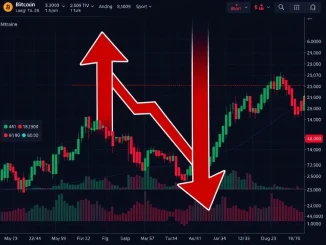
“Retail investors prefer low-volatility, high-yield digital credit,” Le remarked, highlighting the 11% yield as a significant attractor. This trend persists despite Bitcoin’s price being down approximately 45% from its all-time high recorded in late 2025. The data suggests sustained retail interest in Bitcoin exposure, albeit through vehicles designed to mitigate the cryptocurrency’s notorious price volatility.
Michael Saylor’s Role and Corporate Strategy
Strategy’s executive chairman, Michael Saylor, has intensified sales and marketing efforts for the Stretch shares following declines in both Bitcoin’s price and his company’s stock. He has pitched these shares as a method for gaining Bitcoin exposure without directly enduring its volatility. In March 2026 alone, Strategy utilized roughly $1.2 billion raised from at-the-market sales of STRC to purchase Bitcoin, though the company has since reverted to using common stock sales for its most recent acquisitions.
The structure of these shares represents a financial innovation within crypto investment. They offer a fixed yield while being indirectly backed by the company’s Bitcoin treasury. This model appeals to investors seeking income and asset appreciation potential without direct custody of the volatile underlying asset.
Broader Market Implications and Future Outlook
These three developments—regulatory, institutional, and retail—paint a picture of a cryptocurrency market entering a new phase of complexity. The tax proposal underscores government efforts to normalize treatment of digital assets. Simultaneously, ICE’s investment reflects institutional capital flowing into adjacent crypto technologies. Finally, the retail data demonstrates continued mainstream interest, albeit through sophisticated financial products.
The coming months will likely see vigorous debate over the Digital Asset PARITY Act. Key points of contention will include the lack of a Bitcoin exemption, the treatment of staking rewards, and the thresholds for stablecoin transactions. The outcome will significantly impact how millions of U.S. investors and businesses report their crypto activities.
Conclusion
The day’s events on March 27, 2026, underscore the dynamic and multi-faceted evolution of the cryptocurrency landscape. The advancing crypto tax proposal represents a critical step toward regulatory clarity, while major investments by traditional finance giants like ICE validate the sector’s growth potential. The strong retail participation in innovative investment vehicles further demonstrates deepening, albeit more nuanced, public engagement with digital assets. Together, these trends indicate a market moving beyond speculation toward integration, facing both the challenges of regulation and the opportunities of institutional adoption.
FAQs
Q1: What is the Digital Asset PARITY Act?
The Digital Asset PARITY Act is a discussion draft of proposed U.S. legislation aimed at establishing clear tax rules for cryptocurrencies. It focuses on taxing income from activities like staking and lending and offers limited exemptions for small stablecoin transactions, but it notably does not include a specific exemption for Bitcoin.
Q2: Why is ICE investing in Polymarket?
Intercontinental Exchange (ICE) is making significant investments in Polymarket, a prediction market platform, signaling its belief that prediction markets represent a new area of growth for financial exchange operators. This is part of a broader trend of traditional institutions entering crypto-adjacent sectors.
Q3: What are Strategy’s “Stretch” shares?
Strategy’s “Stretch” perpetual preferred shares (STRC) are financial instruments that offer a fixed yield and are used by the company to raise capital for purchasing Bitcoin. They are designed to provide investors with exposure to Bitcoin’s potential appreciation while mitigating its direct price volatility.
Q4: How are retail investors involved in cryptocurrency today?
Recent data shows retail investors are major participants, particularly in structured products like Strategy’s Stretch shares. They are seeking exposure to digital assets through vehicles that offer yield and lower volatility, indicating a move toward more sophisticated investment approaches beyond direct token ownership.
Q5: What is the current regulatory environment for crypto in the U.S.?
The U.S. regulatory environment is in a state of development, with multiple agencies involved. The new tax proposal is one part of a larger effort to create a comprehensive framework covering market structure, investor protection, and taxation for digital assets, amid ongoing legal actions in areas like prediction markets.
This article was produced with AI assistance and reviewed by our editorial team for accuracy and quality.