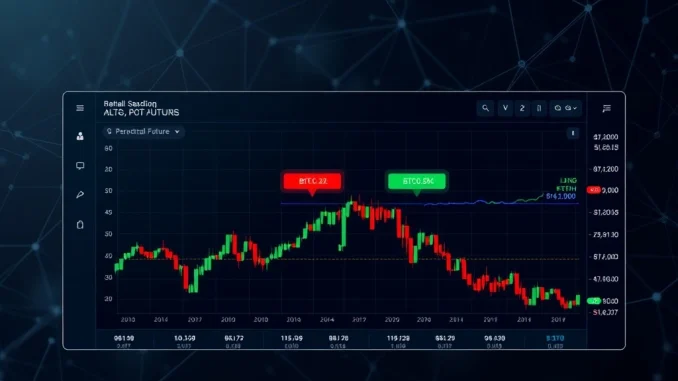
Global cryptocurrency markets experienced significant turbulence during the last 24-hour trading period, resulting in substantial forced position closures across major perpetual futures contracts. Traders faced approximately $69.69 million in total liquidations, with Bitcoin positions accounting for the majority of these forced exits. This liquidation event provides crucial insights into current market sentiment and leverage utilization patterns across digital asset derivatives markets worldwide.
Crypto Perpetual Futures Liquidations Analysis: Bitcoin Dominates Forced Position Closures
Bitcoin perpetual futures contracts witnessed the most substantial liquidation volume during this volatile period. Market data reveals that BTC positions experienced $41.59 million in forced closures, representing approximately 59.7% of the total liquidation volume across tracked cryptocurrencies. Furthermore, an overwhelming 89.52% of these Bitcoin liquidations affected long positions, indicating that bullish traders faced the most significant pressure as prices declined. This pattern suggests that leveraged long positions had accumulated extensively before the market downturn, creating substantial vulnerability to price corrections.
Perpetual futures contracts differ significantly from traditional futures in their structure and mechanics. These derivative instruments lack expiration dates, allowing traders to maintain positions indefinitely while paying or receiving funding rates based on the contract price relative to the underlying spot market. The funding rate mechanism helps maintain price alignment between perpetual contracts and their underlying assets. However, this structure also enables traders to employ substantial leverage, sometimes exceeding 100x on certain platforms, dramatically increasing both potential returns and liquidation risks.
Ethereum and Alternative Cryptocurrency Derivatives Face Similar Pressure
Ethereum perpetual futures followed Bitcoin with $18.95 million in liquidations, comprising 27.2% of the total forced position closures. Similar to Bitcoin, long positions dominated Ethereum liquidations at 73.11%, though this percentage remained notably lower than Bitcoin’s extreme long-dominated liquidation ratio. This difference potentially indicates more balanced positioning in Ethereum derivatives or differing trader expectations between the two leading cryptocurrencies. The substantial Ethereum liquidation volume occurred despite relatively smaller price movements compared to previous volatility events, suggesting increased leverage utilization in recent weeks.
Meanwhile, RIVER perpetual futures presented a contrasting liquidation pattern with $9.15 million in forced closures. Unlike Bitcoin and Ethereum, RIVER experienced majority short position liquidations at 56.91%, indicating that bearish traders faced unexpected pressure as prices moved against their positions. This divergence highlights how different cryptocurrencies can experience opposing liquidation dynamics even during the same broader market period. The RIVER data suggests that some alternative cryptocurrencies may have bucked the broader market trend, catching short sellers by surprise and triggering their forced position exits.
| Cryptocurrency | Total Liquidations | Long Position % | Short Position % |
|---|---|---|---|
| Bitcoin (BTC) | $41.59 million | 89.52% | 10.48% |
| Ethereum (ETH) | $18.95 million | 73.11% | 26.89% |
| RIVER | $9.15 million | 43.09% | 56.91% |
| Total | $69.69 million | 78.24% average | 21.76% average |
Understanding Liquidation Mechanics and Market Impact
Liquidations occur automatically when a trader’s position loses sufficient value to fall below the maintenance margin requirement. Trading platforms then forcibly close these positions to prevent negative balances. This process creates cascading effects in several important ways:
- Price amplification: Forced selling during long liquidations or buying during short liquidations can accelerate price movements
- Liquidity provision: Liquidations provide counterparty positions for traders taking opposing views
- Volatility spikes: Concentrated liquidations often correlate with increased price volatility
- Sentiment indicators: Liquidation patterns reveal prevailing market positioning and sentiment extremes
Historical analysis demonstrates that extreme liquidation events frequently precede short-term market reversals. When excessive long or short positions face forced closure, this often removes one-sided pressure from the market, potentially allowing prices to stabilize or reverse direction. However, substantial liquidations can also trigger further panic selling or buying as remaining traders adjust their positions in response to the volatility.
Derivatives Market Context and Historical Comparisons
The current liquidation event represents a moderate volatility episode compared to historical extremes in cryptocurrency derivatives markets. During major market downturns in previous years, daily liquidation volumes have exceeded $2 billion across all cryptocurrencies. The May 2021 market correction, for instance, triggered approximately $8.6 billion in liquidations within 24 hours as Bitcoin declined nearly 30%. Similarly, the November 2022 FTX collapse produced over $1 billion in daily liquidations as panic spread through cryptocurrency markets.
Recent months have shown increasing institutional participation in cryptocurrency derivatives, potentially altering traditional liquidation patterns. Institutional traders typically employ more sophisticated risk management strategies and lower leverage ratios compared to retail participants. Consequently, their growing presence may gradually reduce the frequency and severity of extreme liquidation events. Nevertheless, the cryptocurrency derivatives market remains substantially more leveraged than traditional financial derivatives, maintaining elevated liquidation risks during periods of heightened volatility.
Regulatory Developments and Risk Management Considerations
Global regulatory bodies continue developing frameworks for cryptocurrency derivatives trading, potentially affecting future liquidation dynamics. Several jurisdictions have implemented or proposed leverage limits on cryptocurrency derivatives, particularly for retail traders. The European Union’s Markets in Crypto-Assets (MiCA) regulation, for example, includes provisions addressing derivatives trading and investor protection. Similarly, the United Kingdom’s Financial Conduct Authority has restricted cryptocurrency derivatives for retail consumers since January 2021.
Professional traders employ various strategies to manage liquidation risks in perpetual futures markets:
- Position sizing: Limiting leverage to maintain adequate margin buffers
- Hedging: Using spot positions or options to offset futures exposure
- Monitoring funding rates: Adjusting positions based on changing funding costs
- Stop-loss orders: Implementing pre-defined exit points before liquidation levels
- Portfolio diversification: Spreading exposure across multiple assets and instruments
Market Structure Implications and Future Outlook
The current liquidation patterns provide valuable insights into cryptocurrency market structure and participant behavior. The dominance of long position liquidations suggests several possible market conditions. First, bullish sentiment may have become excessively concentrated before the recent price decline. Second, traders might have employed higher leverage on long positions compared to short positions. Third, price movements may have been more pronounced to the downside, disproportionately affecting long positions.
Exchange data indicates that open interest typically declines following significant liquidation events as traders reduce leverage exposure. This deleveraging process often creates conditions for reduced volatility in subsequent trading sessions. However, if prices continue moving against remaining positions, additional liquidations can occur, potentially extending the volatility period. Market analysts monitor funding rates closely following liquidation events, as extreme funding rates can signal continued positioning imbalances that might lead to further forced position closures.
Conclusion
The recent crypto perpetual futures liquidations totaling $69.69 million highlight ongoing volatility and leverage risks in cryptocurrency derivatives markets. Bitcoin’s dominant position in these forced closures, particularly affecting long positions, reveals current market dynamics and trader positioning. Ethereum followed similar patterns with majority long liquidations, while RIVER presented a contrasting short-dominated liquidation profile. These events underscore the importance of risk management in leveraged cryptocurrency trading and provide valuable data points for understanding market sentiment and structure. As cryptocurrency derivatives markets continue evolving, monitoring liquidation patterns remains essential for assessing market health and potential volatility triggers.
FAQs
Q1: What causes liquidations in cryptocurrency perpetual futures?
Liquidations occur when a trader’s position loses sufficient value to fall below the maintenance margin requirement, triggering automatic position closure by the trading platform to prevent negative account balances.
Q2: Why were Bitcoin long positions disproportionately affected in recent liquidations?
The 89.52% long position liquidation ratio for Bitcoin suggests that bullish traders had accumulated substantial leveraged positions before prices declined, making them vulnerable to forced closures during the downturn.
Q3: How do perpetual futures differ from traditional futures contracts?
Perpetual futures lack expiration dates and utilize a funding rate mechanism to maintain price alignment with underlying assets, allowing indefinite position maintenance with periodic funding payments between long and short positions.
Q4: What market impacts typically follow significant liquidation events?
Substantial liquidations often reduce open interest and leverage in the market, potentially decreasing volatility. However, they can also trigger further price movements as remaining traders adjust positions and liquidity conditions change.
Q5: How can traders manage liquidation risks in cryptocurrency derivatives?
Effective risk management strategies include conservative leverage usage, position hedging with spot or options markets, implementing stop-loss orders, monitoring funding rates, and maintaining diversified portfolios across different assets and instruments.
Updated insights and analysis added for better clarity.
This article was produced with AI assistance and reviewed by our editorial team for accuracy and quality.