Significant regulatory and institutional developments are reshaping the cryptocurrency landscape, with major announcements from the European Central Bank and the U.S. Securities and Exchange Commission marking a pivotal week for digital assets. These moves signal a maturation phase for blockchain integration into traditional finance.
Crypto News: ECB Advances Digital Euro Implementation
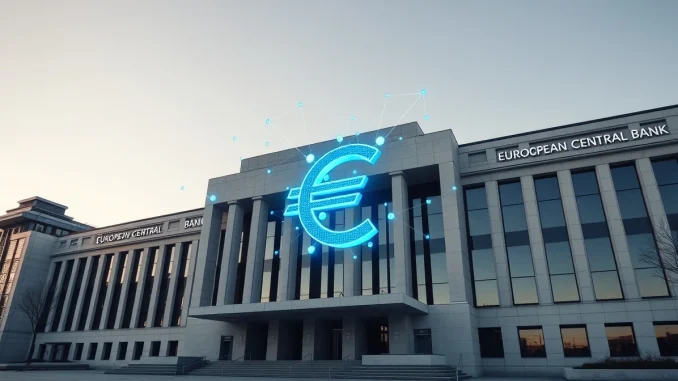
The European Central Bank has initiated a crucial phase for its central bank digital currency project. On March 18, 2026, the ECB announced it is seeking industry experts to develop real-world integration frameworks for the digital euro. This move transitions the project from theoretical design to practical implementation planning.
The bank opened applications for two specialized workstreams under its Rulebook Development Group. Consequently, the first workstream will focus on ATM and payment terminal specifications. This includes defining communication protocols, ensuring offline transaction capability, and maintaining interoperability with existing European payment standards like SEPA.
Simultaneously, the second workstream will establish testing and certification processes for payment service providers. The ECB’s call for experts specifically targets professionals with experience in payment hardware, transaction security, and financial infrastructure. This development follows the ECB’s earlier completion of the investigation phase for the digital euro in late 2025.
Infrastructure Integration Challenges
Integrating a CBDC with existing infrastructure presents unique technical hurdles. The ECB must ensure the digital euro works seamlessly across diverse systems while maintaining robust security. Furthermore, the design must support both online and offline transactions to guarantee universal access.
Industry analysts note this implementation phase typically precedes a final decision on issuance. The European Parliament and Council must still adopt necessary legislation based on the European Commission’s 2023 proposal. The current technical work aims to prepare systems for potential future deployment.
SEC Approves Landmark Nasdaq Tokenization Pilot
In a parallel development, the U.S. Securities and Exchange Commission approved Nasdaq’s proposed pilot for tokenized securities trading on March 18, 2026. This regulatory green light enables the exchange to create and trade tokenized versions of traditional stocks and ETFs on a blockchain-based system.
The pilot program establishes that tokenized stocks will trade identically to their conventional counterparts. They will share the same order book, ticker symbol, and pricing data. Additionally, they will confer identical shareholder rights, including dividends and voting privileges.
Participation will initially be limited to eligible institutional participants. The securities eligible for tokenization are restricted to constituents of the Russell 1000 Index, along with ETFs tracking the S&P 500 and Nasdaq-100. This controlled scope allows regulators to monitor the novel market structure’s performance and risks.
| Parameter | Specification |
|---|---|
| Eligible Securities | Russell 1000 constituents, S&P 500 ETFs, Nasdaq-100 ETFs |
| Trading Mechanism | Same order book as traditional shares |
| Participant Type | Eligible institutional investors only |
| Regulatory Status | SEC-approved pilot program |
This approval follows Nasdaq’s earlier strategic partnership with cryptocurrency exchange Kraken, announced in early March 2026. That collaboration aims to facilitate the movement of securities between traditional and tokenized formats. The pilot represents a significant step toward bridging conventional equity markets with blockchain technology.
SEC Chair Provides NFT Regulatory Clarity
SEC Chair Paul Atkins offered further clarification on the regulatory status of non-fungible tokens during a March 18, 2026 interview. His comments followed the SEC’s recent interpretive release that categorized certain digital assets typically outside securities laws.
Atkins reiterated that the agency identifies four primary digital asset categories that generally do not qualify as securities:
- Digital commodities (like Bitcoin)
- Digital tools and utilities
- Digital collectibles, including most NFTs
- Properly structured stablecoins
During the CNBC interview, Atkins emphasized that the SEC’s analysis remains fact-specific. “The determination always depends on the economic reality of the transaction,” Atkins stated, referencing the Howey Test established by Supreme Court precedent in 1946. He noted that most NFTs, as unique digital collectibles, lack the common enterprise and profit expectation elements essential to an investment contract.
However, Atkins cautioned that certain NFT projects structured as investment schemes with promised returns could still fall under securities regulations. This clarification provides valuable guidance for creators and marketplaces navigating the complex regulatory environment.
Context and Market Impact
These developments occur within a broader regulatory evolution. The European Union’s Markets in Crypto-Assets (MiCA) regulation became fully applicable in December 2025, establishing a comprehensive framework for crypto-asset service providers. In the United States, legislative efforts for clearer digital asset regulation continue in Congress.
Market observers note these institutional moves may enhance mainstream adoption. The ECB’s technical work builds trust in CBDC reliability. Similarly, Nasdaq’s SEC-approved pilot legitimizes tokenization technology for traditional assets. Meanwhile, clearer NFT guidelines may reduce regulatory uncertainty for digital artists and collectors.
Technical implementation will face scrutiny. The digital euro must demonstrate superior privacy protections compared to commercial payment systems. Nasdaq’s pilot must prove blockchain settlement’s efficiency benefits outweigh its complexity. The NFT market must distinguish collectibles from investment products clearly.
Conclusion
This week’s crypto news demonstrates accelerating institutional engagement with blockchain technology. The ECB’s practical planning for the digital euro, combined with the SEC’s approval of regulated tokenized trading and clearer NFT guidance, marks progress toward integrated digital asset frameworks. These developments suggest a future where traditional finance and blockchain systems coexist with defined regulatory parameters. The focus now shifts to successful implementation and monitoring of these pioneering initiatives.
FAQs
Q1: What is the current status of the digital euro project?
The European Central Bank is in the preparation phase, seeking experts to design technical implementation for ATMs and payment terminals. A final decision on issuance depends on forthcoming European Union legislation.
Q2: Can retail investors participate in Nasdaq’s tokenized stock pilot?
No. The initial pilot is limited to eligible institutional participants only. The SEC and Nasdaq are testing the system with professional investors before considering broader access.
Q3: Are all NFTs exempt from securities regulations?
No. SEC Chair Atkins clarified that while most NFTs as digital collectibles are not securities, those structured as investment contracts with profit expectations could still be regulated. Each case depends on its specific facts and circumstances.
Q4: What are the key technical challenges for the digital euro?
Major challenges include ensuring offline transaction capability, maintaining interoperability with existing payment systems, guaranteeing robust security and privacy, and achieving widespread acceptance across diverse European economic environments.
Q5: How does Nasdaq’s tokenization pilot benefit traditional markets?
The pilot aims to demonstrate potential benefits like faster settlement times, reduced counterparty risk, increased transparency through distributed ledger technology, and the creation of new financial products bridging traditional and digital asset markets.
Updated insights and analysis added for better clarity.
This article was produced with AI assistance and reviewed by our editorial team for accuracy and quality.