Global cryptocurrency markets entered a phase of cautious stabilization in January 2026, marking a significant shift from the extreme fear that dominated late 2025. The Crypto Fear & Greed Index climbed to 54, returning to neutral territory for the first time in months. However, this sentiment improvement contrasts sharply with persistently low trading volumes around $400 billion daily, far below the $600-900 billion peaks of mid-2025. This divergence creates a complex market dynamic where price stability masks underlying participation concerns.
Crypto Market Stabilization Signals Return to Neutral Sentiment
The cryptocurrency market’s emotional pendulum has swung back toward equilibrium after months of defensive positioning. Market analysts track this shift through multiple indicators beyond simple price movements. The Fear & Greed Index’s recovery from extreme fear levels below 20 to its current neutral position at 54 represents a psychological milestone. This improvement reflects several converging factors that have calmed investor nerves.
Firstly, major cryptocurrencies have established clearer support levels. Bitcoin maintained its position above $42,000 throughout early January 2026, while Ethereum consolidated around $2,300. These stability patterns emerged despite ongoing macroeconomic uncertainties. Secondly, institutional participation through approved exchange-traded funds provided structural support. The market now processes these developments with measured optimism rather than the reactive trading that characterized previous months.
The Mechanics of Market Sentiment Recovery
Sentiment recovery typically follows a predictable pattern in cryptocurrency markets. Initially, extreme fear creates oversold conditions and capitulation events. Subsequently, stabilization in major assets allows confidence to rebuild gradually. The current phase represents this rebuilding period, where investors reassess fundamentals without rushing into aggressive positions. Historical data from previous market cycles shows similar patterns where sentiment normalization precedes volume recovery by several weeks.
Trading Volume Analysis Reveals Underlying Market Weakness
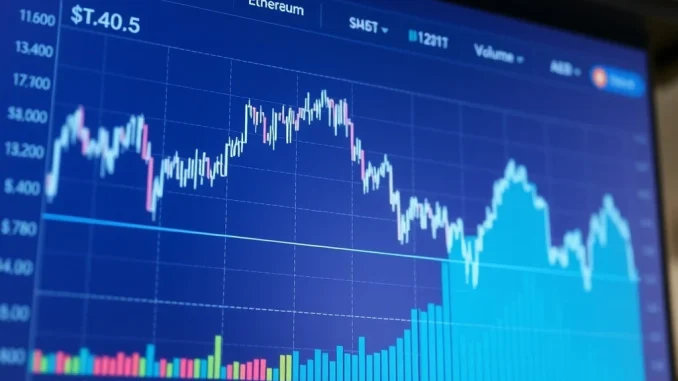
While prices stabilize, trading volume tells a more nuanced story about market health. Daily spot volumes hovering around $400 billion represent a 33-55% decline from mid-2025 peaks. This volume contraction suggests several important market characteristics that investors should consider carefully.
- Reduced Speculative Activity: Lower volumes typically indicate decreased short-term trading and leverage use
- Limited Retail Participation: Retail investors often drive volume spikes during bullish phases
- Concentrated Capital Movement: Available liquidity focuses on specific assets rather than spreading broadly
- Increased Market Fragility: Thin volumes can amplify price movements when large orders execute
The volume decline becomes particularly significant when analyzed alongside volatility metrics. The 30-day volatility for major cryptocurrencies has decreased by approximately 40% since November 2025. This combination of low volume and declining volatility often precedes significant directional moves, though the timing and direction remain uncertain.
Bitcoin ETF Inflows Provide Institutional Support Floor
Institutional participation through U.S.-listed Bitcoin ETFs created a fundamental support mechanism for cryptocurrency markets. On January 14, 2026, these products recorded approximately $843.6 million in net inflows, with BlackRock’s IBIT ETF alone attracting $648 million. These inflows represent continued institutional confidence despite retail hesitation.
| ETF Provider | Ticker | Net Inflows (Jan 14) | Total Assets |
|---|---|---|---|
| BlackRock | IBIT | $648 million | $28.4 billion |
| Fidelity | FBTC | $127 million | $18.7 billion |
| Ark Invest | ARKB | $42 million | $5.2 billion |
| Bitwise | BITB | $26 million | $3.8 billion |
This institutional support creates what market technicians describe as a “psychological floor” for prices. However, it doesn’t automatically translate to broader market participation. The divergence between institutional accumulation and retail hesitation represents a defining characteristic of the current market phase. Institutional flows provide stability while retail volumes determine momentum potential.
Regulatory Developments Influence Market Caution
Regulatory uncertainty contributed to the cautious market environment in early 2026. On January 15, the U.S. Senate Banking Committee postponed discussion on major cryptocurrency market structure legislation. This delay followed Coinbase’s withdrawal of support, with the exchange stating the proposed bill created conditions “worse than the status quo” for stablecoins and decentralized finance.
Regulatory developments typically affect cryptocurrency markets through several channels. First, they influence institutional adoption timelines as compliance requirements clarify. Second, they impact product development roadmaps for exchanges and service providers. Third, they shape retail investor confidence in market legitimacy. The current regulatory pause creates what economists call “decision paralysis,” where market participants delay significant moves until regulatory clarity improves.
The Global Regulatory Landscape Comparison
While U.S. regulation remains uncertain, other jurisdictions progressed with clearer frameworks. The European Union’s Markets in Crypto-Assets (MiCA) regulation entered its full implementation phase in December 2025. Asian markets, particularly Singapore and Japan, maintained progressive but structured approaches. This regulatory divergence creates geographic variations in market participation patterns that volume data reflects.
Market Structure Evolution and Selective Capital Allocation
The current stabilization phase reveals important evolution in cryptocurrency market structure. Capital movement has become increasingly selective rather than broadly distributed. Analysis of blockchain data shows concentration in specific sectors:
- Layer 1 Protocols: Ethereum and select competitors attracted development activity
- DeFi Blue Chips: Established decentralized finance protocols maintained user bases
- Institutional Products: ETF-related activity dominated certain flow categories
- Niche Innovations: Specific technological advancements drew focused investment
This selective capital allocation creates what analysts describe as a “quality over quantity” market environment. Projects with clear utility and sustainable models receive attention while speculative assets languish. The volume concentration in specific areas suggests sophisticated investors driving current market activity rather than broad-based participation.
Historical Context and Market Cycle Analysis
Current market conditions find historical parallels that provide context for potential developments. Previous cryptocurrency cycles experienced similar phases where sentiment recovery preceded volume expansion. The 2019-2020 period, following the 2018 bear market, showed comparable patterns of institutional accumulation during low retail participation.
Market cycle analysis suggests several potential paths forward from current conditions. Volume could gradually increase as confidence builds, leading to sustained upward movement. Alternatively, prolonged low participation might precede another sentiment downturn if catalysts fail to materialize. Technical analysts monitor key resistance levels and volume profiles for directional clues, while fundamental analysts assess adoption metrics and development activity.
The Role of External Market Factors
Traditional financial markets influence cryptocurrency participation through several mechanisms. Equity market performance affects risk appetite broadly. Interest rate expectations impact capital allocation decisions. Commodity movements, particularly gold’s record performance in early 2026, compete for safe-haven and inflationary hedge positioning. These interconnected relationships mean cryptocurrency markets don’t operate in isolation, despite their unique characteristics.
Conclusion
The cryptocurrency market stabilization in January 2026 represents a complex interplay of improving sentiment and persistent volume concerns. The return to neutral territory on the Fear & Greed Index marks psychological progress from extreme fear conditions. However, trading volumes around $400 billion daily suggest limited participation despite price stability. Institutional support through Bitcoin ETFs provides fundamental backing, while regulatory uncertainty and selective capital allocation characterize the current environment. Market participants should monitor volume recovery as a key indicator of sustainable momentum, recognizing that current conditions favor cautious consolidation over aggressive positioning. The crypto market stabilization phase offers breathing room for reassessment but requires volume confirmation for conviction.
FAQs
Q1: What does the Crypto Fear & Greed Index at 54 indicate about market sentiment?
The index at 54 indicates neutral market sentiment, representing a significant recovery from extreme fear levels below 20 in late 2025. This neutral position suggests balanced emotions among market participants without strong bullish or bearish bias.
Q2: Why is trading volume important when analyzing cryptocurrency market health?
Trading volume measures market participation and liquidity. High volumes confirm price movements and suggest broad conviction, while low volumes during price stability may indicate weak participation that could precede significant moves when volumes return.
Q3: How do Bitcoin ETF inflows affect overall cryptocurrency markets?
Bitcoin ETF inflows provide institutional buying pressure that supports prices and creates psychological support levels. However, these flows don’t automatically translate to broader market participation or volume increases across all cryptocurrency assets.
Q4: What typically follows a market stabilization phase like the current one?
Historical patterns show stabilization phases can lead to either sustained recovery if volume and participation increase, or renewed declines if catalysts fail to materialize. The direction often depends on fundamental developments and broader financial market conditions.
Q5: How does regulatory uncertainty impact cryptocurrency trading volumes?
Regulatory uncertainty often causes market participants to delay significant decisions, reducing trading activity as they await clarity. This hesitation particularly affects institutional players who require regulatory certainty for large-scale allocations.
Updated insights and analysis added for better clarity.
This article was produced with AI assistance and reviewed by our editorial team for accuracy and quality.