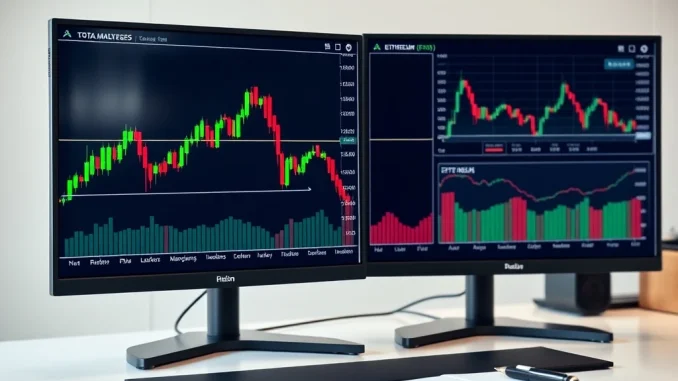
Global, March 2025: The cryptocurrency market is exhibiting the first concrete signs of stability following a period of intense volatility and significant sell-offs last week. Major digital assets like Bitcoin ($BTC) and Ethereum ($ETH), alongside broader sectors including decentralized finance (DeFi) and non-fungible tokens (NFTs), are now trading within tighter ranges. This consolidation suggests a shift from panic-driven selling to a more measured, cautious sentiment among investors and traders, a critical phase for assessing the market’s underlying health.
Crypto Market Stability Emerges from Volatile Conditions
After several days of pronounced downward pressure, the digital asset landscape has begun to settle. Market data from major exchanges shows a notable decrease in volatility metrics compared to the peaks observed last week. The Bitcoin Fear & Greed Index, a popular sentiment gauge, has moved slightly away from “Extreme Fear” territory, though it remains cautious. This stabilization is not merely a flatline in prices but a reduction in the wild intraday swings that characterized the sell-off. Analysts point to several contributing factors for this calming effect. First, the aggressive liquidation of leveraged positions, which fueled the initial downturn, appears to have largely run its course. Second, on-chain data indicates that long-term holders, often called “HODLers,” have shown remarkable resilience, with the percentage of Bitcoin supply last active over a year ago remaining near all-time highs. This behavior suggests a foundational layer of conviction that can buffer against short-term panic.
Bitcoin and Ethereum Lead the Consolidation Phase
The two largest cryptocurrencies by market capitalization are at the forefront of this stabilizing trend. Bitcoin ($BTC), after testing a key support level that held firm, has established a new, higher trading range. Its dominance rate—the percentage of the total crypto market cap that Bitcoin represents—has also stabilized, indicating that the flight to relative safety has paused. Ethereum ($ETH) mirrors this pattern, with its price action showing reduced volatility. The network’s upcoming protocol upgrades continue to provide a fundamental narrative that supports holder sentiment beyond mere price speculation. Furthermore, the futures markets for both assets show a normalization in funding rates. During the sell-off, funding rates turned deeply negative as traders bet heavily on further price declines. Their return to near-neutral levels is a technical indicator that the extreme bearish positioning has unwound, creating conditions for a more balanced market.
DeFi and NFT Activity Reflect Cautious Optimism
The stabilization extends beyond spot prices into the ecosystem’s application layers. In DeFi, the total value locked (TVL) across major protocols has ceased its sharp decline and begun to show slight inflows in certain sectors, particularly in more established lending and decentralized exchange platforms. This suggests that while investors remain risk-averse, they are not exiting the ecosystem entirely but are redeploying capital more selectively. Similarly, the NFT market, often a bellwether for speculative appetite, shows a nuanced picture. While floor prices for many high-profile collections remain depressed from their peaks, the volume of transactions has picked up from the lows of last week. This indicates a return of baseline trading activity, albeit at lower price points, as collectors and traders reassess value. The muted activity in these sectors aligns with the broader theme of cautious sentiment, where participation continues but without the exuberance seen in bull markets.
Analyzing the Causes and Consequences of the Sell-Off
To understand the significance of the current stability, one must examine the triggers of the preceding sell-off. The downturn was not isolated to crypto but occurred within a complex macro-economic backdrop. Key factors included:
- Macro-Economic Pressure: Shifting expectations around global interest rate policies and strength in traditional safe-haven assets drew capital away from risk-sensitive markets.
- Leverage Unwind: A cascade of liquidations in over-leveraged derivative positions accelerated the price decline, a common phenomenon in crypto corrections.
- Industry-Specific News Flow: Regulatory developments and project-specific updates contributed to negative sentiment.
The consequence of this volatility is a market that has been effectively “stress-tested.” Weak hands and excessive leverage were purged, which can create a healthier foundation for the next phase of growth. The current stability allows developers to focus on building, and provides institutions evaluating entry points with clearer data, free from the noise of extreme volatility.
The Path Forward: Indicators to Watch
Sustained stability will depend on monitoring several key indicators. On-chain metrics, such as exchange net flows, will reveal whether the current calm is due to decreased selling pressure or genuine accumulation. A sustained movement of assets off exchanges into private custody would be a strong sign of long-term confidence. Furthermore, the performance of the crypto market relative to traditional equity indices will be scrutinized. A return to decoupling, where crypto assets move independently of tech stocks, would signal that the market is trading on its own fundamental merits. Finally, the health of the stablecoin ecosystem is paramount. The market capitalization of major stablecoins like USDT and USDC serves as a measure of dry powder waiting on the sidelines; growth in this metric often precedes renewed buying interest.
Conclusion
The return of crypto market stability after a turbulent week is a significant development for investors and the industry. The consolidation in prices for Bitcoin, Ethereum, and related sectors indicates a market transitioning from a state of panic to one of cautious assessment. While the sentiment is far from bullish, this period of reduced volatility provides essential breathing room. It allows for the evaluation of fundamental strengths, the implementation of risk management strategies, and sets the stage for the market’s next directional move based on substantive developments rather than fear.
FAQs
Q1: What does “market stability” mean in the context of cryptocurrencies?
In crypto markets, stability refers to a period of reduced price volatility where assets trade within a relatively narrow range. It is characterized by lower daily percentage swings, normalized trading volumes, and a balance between buying and selling pressure, unlike the sharp, unilateral moves seen during a sell-off or rally.
Q2: How long do stabilization phases typically last after a major sell-off?
There is no fixed duration. Stabilization can last from several days to multiple weeks. Its length depends on external macro factors, the resolution of the issues that caused the sell-off, and the emergence of new catalysts that provide a directional impetus to the market.
Q3: Does stability in Bitcoin and Ethereum prices guarantee stability for altcoins?
Not necessarily. While Bitcoin and Ethereum often set the overall market tone, altcoins can exhibit independent volatility. However, prolonged stability in the major assets generally reduces systemic risk and can provide a more favorable environment for altcoins to find their own support levels.
Q4: What is the significance of DeFi’s Total Value Locked (TVL) stabilizing?
A stabilizing or rising TVL suggests that capital is not fleeing the DeFi ecosystem en masse. It indicates that users continue to see utility in these protocols for lending, borrowing, or providing liquidity, which supports the fundamental health of the sector beyond pure price speculation.
Q5: Should the current stability be interpreted as a sign that the market decline is over?
Stability is a neutral condition, not a directional signal. It indicates a pause and a rebalancing of forces. While it can be the foundation for a recovery, it can also precede further downward movement if negative catalysts re-emerge. It is a period for observation, not a definitive all-clear signal.
Updated insights and analysis added for better clarity.
This article was produced with AI assistance and reviewed by our editorial team for accuracy and quality.