Global, May 2025: The cryptocurrency market is demonstrating a significant and robust recovery this week, with Bitcoin ($BTC) and Ethereum ($ETH) posting substantial gains. This upward movement presents a striking contrast to prevailing market sentiment, as measured by the widely-followed Crypto Fear and Greed Index, which remains entrenched in “Extreme Fear” territory. The simultaneous rise in Total Value Locked (TVL) across decentralized finance (DeFi) protocols adds another layer of complexity to the current market dynamics, suggesting a divergence between on-chain activity and broader investor psychology.
Crypto Market Recovery Defies Sentiment Indicators
Over the past seven days, the digital asset market has staged a notable comeback. Bitcoin, the flagship cryptocurrency, reclaimed a critical psychological price level, rallying over 15% from its recent lows. Ethereum, the leading smart contract platform, mirrored this strength with gains exceeding 18%. This coordinated advance provided a much-needed boost to the overall market capitalization of the crypto sector, which had faced sustained pressure throughout the previous month. Analysts point to several potential catalysts for the move, including renewed institutional interest, positive regulatory developments in key jurisdictions, and technical buying after a prolonged period of consolidation. However, the persistence of extreme fear among retail investors, as quantified by the Fear and Greed Index, creates a fascinating market narrative of resilience against a backdrop of pessimism.
Analyzing the Persistent Extreme Fear and Greed Index
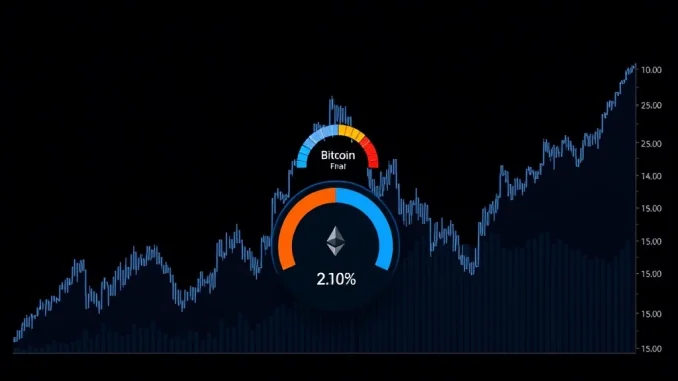
The Crypto Fear and Greed Index is a composite metric that aggregates data from various sources, including volatility, market momentum, social media sentiment, surveys, and dominance trends. A reading below 25 typically indicates “Extreme Fear.” Despite the price recovery, the index has stubbornly remained in this zone, highlighting a significant sentiment lag. This phenomenon is not unprecedented in financial markets. Historically, some of the most powerful rallies begin when sentiment is at its worst, as the market has already priced in substantial negative news. The current disconnect suggests that while prices are reacting to new, positive information or technical factors, the broader narrative of caution and uncertainty has not yet shifted. Market veterans often interpret such divergences as a potential sign that a trend may have more room to run, as the majority of participants remain skeptical or on the sidelines.
- Volatility: While recent price action has been positive, the memory of high volatility from the preceding downtrend continues to weigh on sentiment.
- Social Media Sentiment: Analysis of major platforms shows a prevalence of cautionary tales and warnings, overshadowing bullish commentary.
- Market Momentum/Dominance: Bitcoin’s dominance rate has seen fluctuations, indicating capital rotation that can unsettle investors focused on altcoins.
The Role of DeFi and On-Chain Fundamentals
While the Fear and Greed Index captures market psychology, on-chain data often provides a more fundamental view of network health and usage. A key supportive factor in the current recovery is the concurrent rise in DeFi’s Total Value Locked. TVL represents the sum of all assets deposited into decentralized lending, trading, and yield-generating protocols. An increasing TVL during a price recovery is a constructive signal; it suggests that capital is not merely speculating on price appreciation but is also being put to productive use within the ecosystem’s financial infrastructure. This activity can create a virtuous cycle: more value locked can lead to greater protocol revenue, enhanced security, and more robust network effects, which in turn can support higher asset valuations. The growth in Ethereum’s layer-2 scaling solutions has also contributed to lower transaction fees and increased usability, making DeFi activities more accessible and economically viable.
Historical Context and Market Cycles
The cryptocurrency market is notoriously cyclical, characterized by periods of explosive growth (bull markets) followed by prolonged contractions (bear markets). Each cycle exhibits unique drivers but shares common behavioral patterns. The current sentiment-price divergence bears resemblance to phases seen in early 2019 and mid-2021, where markets began to recover while many participants remained traumatized by recent losses. These periods often serve as a transition from a bear market to a new accumulation phase. Understanding this context is crucial for investors. Markets typically bottom not on bad news, but when the worst news is expected and sentiment is thoroughly washed out. The fact that prices are rising despite pervasive fear could indicate that the market has already digested a significant amount of negative macro and microeconomic data related to interest rates, regulation, and prior industry failures.
| Asset/Indicator | 7-Day Change | Key Level | Sentiment Context |
|---|---|---|---|
| Bitcoin (BTC) | +15.2% | Surpassed $68,000 | Rising price against extreme fear |
| Ethereum (ETH) | +18.5% | Reclaimed $3,500 | Strong DeFi TVL growth supportive |
| Crypto Fear & Greed Index | Reading: 22 | “Extreme Fear” Zone | Lagging indicator, slow to react to uptick |
| Aggregate DeFi TVL | +8.7% | $95 Billion | Fundamental on-chain strength |
Expert Perspectives on the Divergence
Financial analysts specializing in behavioral economics note that sentiment indicators like the Fear and Greed Index are most useful as contrarian signals at extremes. When readings are at historical lows, it often suggests that selling pressure has been exhausted, as most willing sellers have already acted. The subsequent price recovery, therefore, can occur with relatively low volume and against a wall of skepticism. Meanwhile, blockchain analysts emphasize the importance of differentiating between speculative sentiment and fundamental network activity. The growth in DeFi TVL, developer activity, and non-zero Ethereum addresses, for instance, paints a picture of an ecosystem that continues to build and attract capital irrespective of short-term price gyrations. This foundational growth may be providing a floor for asset prices that sentiment indicators fail to capture in real-time.
Conclusion
The current crypto market recovery, led by Bitcoin and Ethereum, presents a compelling case study in market psychology and fundamental analysis. While the Fear and Greed Index remains mired in extreme fear, reflecting widespread investor anxiety, on-chain metrics and price action tell a story of resilience and underlying strength. This divergence underscores a critical lesson for market participants: sentiment is a lagging indicator, and prices can often move ahead of a shift in the collective mood. The concurrent rise in DeFi TVL adds a layer of fundamental validation to the price recovery, suggesting real economic activity is supporting the move. For observers and investors, the coming weeks will be crucial in determining whether this recovery can catalyze a broader shift in sentiment, or if the extreme fear will reassert its downward pressure on the market.
FAQs
Q1: What is the Crypto Fear and Greed Index?
The Crypto Fear and Greed Index is a sentiment indicator that compiles data from volatility, market momentum, social media, surveys, and Bitcoin dominance to gauge whether investors are acting out of fear (potential buying opportunity) or greed (potential market top). It ranges from 0 (Extreme Fear) to 100 (Extreme Greed).
Q2: Why would the market recover while the index shows extreme fear?
This divergence often occurs because sentiment indicators are lagging. Prices can react quickly to new information or technical factors, while the broader market mood, shaped by recent negative experiences, takes longer to shift. Extreme fear can also indicate that selling pressure has diminished.
Q3: What does Total Value Locked (TVL) in DeFi indicate?
TVL measures the total amount of cryptocurrency assets deposited in DeFi protocols. A rising TVL during a price recovery suggests capital is flowing back into the ecosystem for productive use (like lending or providing liquidity), which is a positive fundamental sign beyond mere price speculation.
Q4: Is a market recovery during extreme fear a reliable bullish signal?
Historically, buying during periods of extreme fear has often been profitable over the medium to long term, as it suggests negativity is overly priced in. However, it is not a guaranteed short-term signal and should be considered alongside other fundamental and technical analysis.
Q5: How can Ethereum’s price be linked to DeFi TVL?
Ethereum is the primary blockchain for most major DeFi applications. Users must lock ETH or Ethereum-based tokens (like stablecoins) to participate. Increased DeFi activity drives demand for block space (gas fees) and for ETH itself, which is often used as collateral, creating a fundamental demand driver for the asset.
Updated insights and analysis added for better clarity.
This article was produced with AI assistance and reviewed by our editorial team for accuracy and quality.