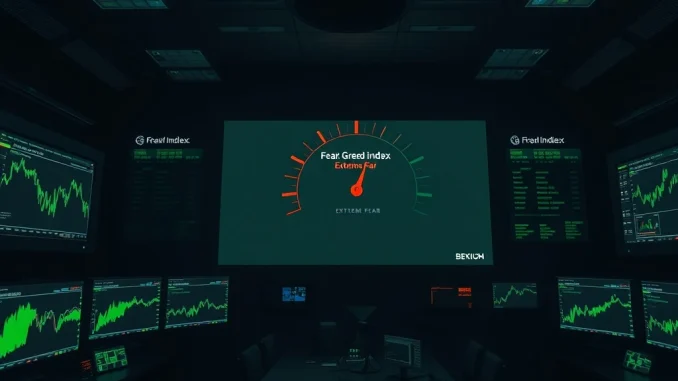
Global, May 2025: The cryptocurrency market is attempting a tentative recovery this week, with Bitcoin (BTC) and Ethereum (ETH) posting notable gains. This move upward, however, unfolds against a backdrop of persistently negative investor sentiment, declining trading volumes, and a fragmented landscape for decentralized finance (DeFi) and non-fungible tokens (NFTs). The simultaneous presence of rising prices and extreme fear creates a complex and cautious market environment that demands careful analysis.
Crypto Market Rebound: Analyzing the Price Action
After a period of sustained pressure, Bitcoin and Ethereum, the two largest cryptocurrencies by market capitalization, have shown signs of resilience. As of this analysis, Bitcoin has reclaimed a key psychological level above $62,000, while Ethereum has pushed past $3,200. This price action represents a significant technical rebound from recent lows. Historically, such movements often follow periods of intense selling pressure, where asset prices fall below perceived fair value, attracting buyers seeking a discount. However, the sustainability of this rebound remains an open question. Market technicians are closely watching for Bitcoin to hold above its 50-day moving average, a common indicator of medium-term trend health. The rally has been led primarily by spot market buying, a detail that analysts view as more constructive than a surge driven by leveraged futures contracts, which can be more volatile and prone to rapid reversals.
The Paradox of Prices and Sentiment
A defining characteristic of the current market phase is the stark divergence between price performance and overall market psychology. The widely cited Crypto Fear & Greed Index has remained entrenched in “Extreme Fear” territory for several consecutive weeks, even as prices have climbed. This index aggregates data from volatility, market momentum, social media sentiment, surveys, and dominance metrics to quantify emotion. An “Extreme Fear” reading typically coincides with potential market bottoms, as it suggests widespread capitulation. The persistence of this fear during a price rebound indicates deep-seated investor anxiety and a lack of conviction in the rally’s longevity. Many participants appear to be treating the uptick as a “dead cat bounce”—a temporary recovery before a further decline—rather than the start of a new bullish cycle. This sentiment is further evidenced by subdued retail participation and a notable absence of the speculative frenzy that often accompanies major crypto bull markets.
Volume Analysis: The Silent Warning
Compounding the sentiment issue is a clear decline in overall trading volume across major centralized and decentralized exchanges. Rising prices on falling volume is traditionally viewed as a bearish technical signal, suggesting the move lacks broad participation and strong conviction. Analysts point to several potential causes:
- Macroeconomic Hesitation: Traders may be sidelined due to uncertainty surrounding global interest rate policies and geopolitical tensions.
- Regulatory Watch: The industry continues to await clearer regulatory frameworks in major economies like the United States and the European Union.
- Institutional Pause: While institutional products like spot Bitcoin ETFs continue to see inflows, the pace has moderated, indicating a more measured approach from large-scale investors.
This volume trend suggests the current rebound is being driven by a relatively narrow set of actors rather than a wholesale return of capital to the digital asset space.
DeFi and NFT Sectors Show Mixed Signals
The performance beneath the surface of Bitcoin and Ethereum reveals a sector-specific divergence. The DeFi ecosystem is not moving in lockstep with the leading assets. Key metrics tell a nuanced story:
| Metric | Current Trend | Implication |
|---|---|---|
| Total Value Locked (TVL) | Stagnant/Modestly Up | Capital is not flooding back into DeFi protocols, indicating selective risk-taking. |
| DEX Trading Volumes | Down Significantly | Reflects the broader market volume decline and reduced speculative activity. |
| Yield Rates (Stablecoins) | Compressed, Low | Suggests low demand for leverage and a risk-off environment within DeFi. |
Conversely, the NFT market displays even more fragmentation. While the floor prices for established, blue-chip collections like Bored Ape Yacht Club and CryptoPunks have shown stability or slight increases, trading volume across the broader market remains thin. The activity appears concentrated at the very top tier, with little spillover into mid-tier or new projects. This creates a “flight to quality” dynamic within NFTs, where perceived safety and provenance trump speculative bets on newer assets. The bifurcation in both DeFi and NFTs underscores that the tentative rebound in core asset prices has not yet catalyzed a broad-based recovery across the entire cryptocurrency ecosystem.
Historical Context and Market Cycles
To understand the present, one must look to the past. The current setup—a technical rebound amid fearful sentiment and low volume—bears resemblance to periods in late 2018 and mid-2022. In both prior instances, sharp bear markets were followed by prolonged periods of consolidation and hesitant rallies that often retested previous lows. These phases, now referred to as “accumulation ranges,” were characterized by volatile, range-bound price action that shook out weak hands before a more sustained trend could begin. Veteran analysts caution that while conditions may be forming for a longer-term bottom, the process is rarely swift or linear. The market often requires time to rebuild fundamental confidence, which can be driven by developments in technology adoption, regulatory clarity, or macroeconomic shifts favorable to risk assets.
Conclusion
The cryptocurrency market is currently navigating a critical juncture, defined by a cautious crypto market rebound in Bitcoin and Ethereum prices that conflicts with overwhelmingly bearish sentiment and weak volume. This divergence creates a complex and uncertain environment. The mixed signals from the DeFi and NFT sectors further illustrate that any recovery is tentative and uneven. For investors and observers, the key takeaways are the importance of volume confirmation for price moves and the recognition that sentiment indicators often reach extremes at potential turning points. The market’s next major move will likely depend on a catalyst that can bridge the gap between rising prices and prevailing fear, whether from a macroeconomic shift, a landmark regulatory decision, or a breakthrough in real-world blockchain adoption. Until then, the prevailing mood remains one of cautious skepticism, even in the face of green on the charts.
FAQs
Q1: What is causing the crypto market rebound if sentiment is still fearful?
The rebound is likely driven by a combination of technical factors, such as prices reaching oversold levels that attract value-based buyers, and strategic accumulation by long-term investors. This often occurs independently of short-term retail sentiment, which tends to lag behind price action at potential inflection points.
Q2: Why is trading volume falling during a price increase?
Falling volume on rising prices can indicate a lack of broad market participation and conviction. It often suggests the move is being driven by a smaller pool of capital (e.g., institutional or algorithmic traders) rather than a widespread return of retail and institutional investors, raising questions about the rally’s sustainability.
Q3: How do DeFi trends relate to Bitcoin’s price?
While correlated, DeFi and Bitcoin do not always move in sync. DeFi’s health is tied to activity on smart contract platforms (primarily Ethereum) and demand for financial applications. Stagnant DeFi metrics during a Bitcoin rally suggest the uptick is not yet fueling broader ecosystem growth and may be more narrowly focused on store-of-value narratives.
Q4: What does “Extreme Fear” on the Crypto Fear & Greed Index mean?
The index is a sentiment gauge. “Extreme Fear” suggests market participants are highly risk-averse, potentially leading to panic selling or avoidance. Historically, prolonged periods of extreme fear have sometimes preceded market bottoms, as selling pressure exhausts itself, but it is not a precise timing indicator.
Q5: Are NFTs recovering along with Bitcoin and Ethereum?
The NFT market recovery is highly selective. Only the most established, high-value collections are seeing consistent interest and stable prices, a pattern known as a “flight to quality.” The broader NFT market, particularly for newer projects, remains illiquid and depressed, indicating a recovery is not yet widespread across the sector.
Updated insights and analysis added for better clarity.
This article was produced with AI assistance and reviewed by our editorial team for accuracy and quality.