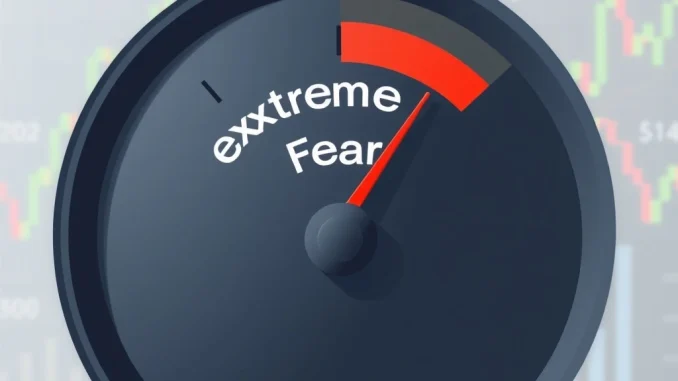
Global, May 2025: A significant shift in cryptocurrency market psychology occurred this week as the widely monitored Crypto Fear & Greed Index climbed nine points to a reading of 29. This crucial move pushed the indicator out of the “Extreme Fear” category and into the “Fear” zone, according to the latest data from Alternative. The change represents one of the most notable sentiment improvements in recent months, offering a data-driven glimpse into evolving investor confidence.
Crypto Fear & Greed Index Rises: Analyzing the Nine-Point Jump
The Crypto Fear & Greed Index serves as a daily barometer for the emotional state of the cryptocurrency market. It operates on a scale from 0 to 100, where 0 signifies “Extreme Fear” and 100 indicates “Extreme Greed.” The jump from 20 to 29, while still firmly in negative territory, marks a meaningful departure from the deepest pessimism. Analysts track this index because extreme fear readings have historically correlated with potential buying opportunities, while extreme greed often precedes market corrections. The index does not predict price direction but quantifies the prevailing emotional temperature, which can influence trading behavior and market volatility.
Understanding the Market Sentiment Calculation
The index’s move is not arbitrary; it results from a weighted calculation of multiple market data points. Alternative aggregates these factors to produce the composite score. The methodology provides a multi-faceted view of sentiment beyond simple price action.
- Volatility (25%): This component measures the magnitude of recent price swings. Increased volatility, especially to the downside, typically feeds fear. A stabilization or reduction in wild price swings contributes positively to the score.
- Market Momentum/Volume (25%): Trading volume and recent price momentum are key. Sustained volume, particularly on upward price movements, suggests growing participation and confidence, lifting the index.
- Social Media (15%): The volume and sentiment of cryptocurrency discussions on platforms like Twitter and Reddit are analyzed. A surge in positive mentions or a decline in panic-driven posts can improve the score.
- Surveys (15%): Periodic polls of the cryptocurrency community provide direct insight into retail investor sentiment.
- Dominance (10%): Bitcoin’s share of the total cryptocurrency market cap is tracked. Rising dominance often signals a “flight to safety” during fear, while altcoin rallies can indicate growing risk appetite.
- Trends (10%): Analysis of Google search trends for cryptocurrency-related terms. Spikes in searches for “Bitcoin crash” versus “buy Bitcoin” paint a picture of public interest and concern.
Historical Context and Market Cycles
To appreciate the significance of exiting “Extreme Fear,” one must view it through a historical lens. The index has spent prolonged periods in this zone during major bear markets, such as the extended crypto winter following the 2017-2018 peak and the deep sell-off triggered by the collapse of several major industry players in 2022. Transitions out of extreme fear have often, though not always, preceded periods of consolidation or gradual recovery. They signal that the peak of panic selling may have subsided, allowing for a more balanced assessment of market fundamentals. However, seasoned analysts caution that a single reading is a snapshot; the trend over weeks and months provides more reliable insight.
Implications for Investors and the Market Landscape
The shift from Extreme Fear to Fear carries several practical implications. For institutional investors, it may signal a slightly reduced risk environment, potentially encouraging deeper research or incremental portfolio positioning. For retail investors, it can serve as a reminder to move away from emotional, reactionary decisions and toward disciplined strategy. The change also reflects broader market mechanics. A fear-dominated market often features:
- Lower trading volumes as participants move to the sidelines.
- Increased stability in stablecoin market caps as capital seeks refuge.
- A focus on project fundamentals over speculation.
A move toward neutral sentiment (a score of 50) could indicate a return of speculative activity, but the current reading suggests caution remains the dominant theme.
The Role of Bitcoin and Macroeconomic Factors
As the largest cryptocurrency, Bitcoin’s performance heavily influences the overall index. Its price stability or recovery is a primary driver behind the sentiment improvement. Furthermore, the current macroeconomic backdrop—including interest rate expectations, inflation data, and traditional equity market performance—continues to exert a powerful influence on crypto asset prices. An improvement in the Fear & Greed Index may sometimes reflect a broader improvement in risk asset sentiment globally, rather than a crypto-specific catalyst. Discerning the source of the shift is key to understanding its potential longevity.
Conclusion
The Crypto Fear & Greed Index’s rise to 29 and its exit from the Extreme Fear zone provide a quantifiable measure of improving market sentiment. This shift, driven by a complex mix of volatility, volume, social data, and search trends, indicates a market moving from a state of peak pessimism to one of cautious fear. While far from bullish, this evolution is a critical step in the typical emotional cycle of financial markets. Investors and observers should monitor whether this improvement forms a sustained trend or proves temporary, using the index as one tool among many for understanding the ever-evolving cryptocurrency landscape.
FAQs
Q1: What does a Crypto Fear & Greed Index reading of 29 mean?
A reading of 29 places the market in the “Fear” category. It indicates that negative sentiment and caution are dominant among investors, but the extreme panic associated with the “Extreme Fear” zone (0-24) has subsided.
Q2: Who creates the Crypto Fear & Greed Index?
The index is created and maintained by Alternative, a company that provides data and analysis on cryptocurrency market sentiment. They have been publishing the index since 2018.
Q3: Can the Fear & Greed Index predict Bitcoin’s price?
No, the index is not a price prediction tool. It is a sentiment indicator. Historically, prolonged periods in “Extreme Fear” have sometimes marked potential buying zones, and “Extreme Greed” has signaled overbought conditions, but it does not forecast short-term price movements.
Q4: How often is the index updated?
The Crypto Fear & Greed Index is updated daily, typically once per 24-hour period, to reflect the latest market data.
Q5: Has the index ever been wrong?
As a sentiment indicator, it accurately reflects the data it measures. However, sentiment can remain extreme for long periods, and prices can continue to fall during “Extreme Fear” or rise during “Extreme Greed.” It should be used in conjunction with fundamental and technical analysis, not in isolation.