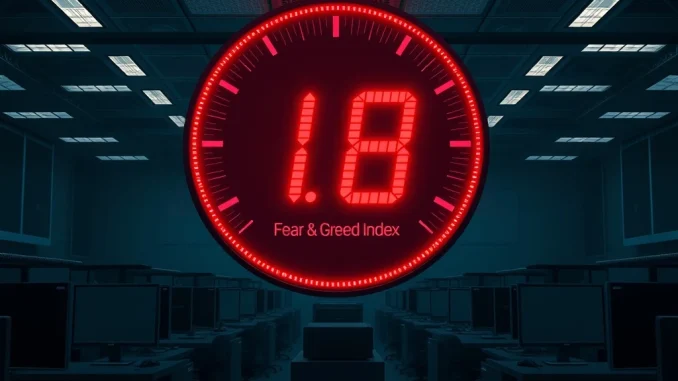
On March 28, 2026, global cryptocurrency markets witnessed a significant deterioration in investor psychology as the widely followed Crypto Fear and Greed Index fell back into “extreme fear” territory. The index, a composite metric tracking sentiment across multiple data sources, dropped to a reading of 18, down from 20 just days prior, according to data from CoinMarketCap. This sharp decline signals a resurgence of deep-seated anxiety among market participants, largely driven by unresolved geopolitical conflicts and a persistent bear market that began with the October 2025 crash. The Crypto Fear and Greed Index serves as a critical barometer for the emotional state of the crypto market, and its current plunge underscores the fragile confidence remaining after months of sustained losses.
Crypto Fear and Greed Index Signals Deepening Market Anxiety
The Crypto Fear and Greed Index’s fall to 18 marks a decisive shift from mere “fear” back into the “extreme fear” classification, a zone it has frequently revisited throughout the prolonged downturn. This reading is perilously close to the yearly low of 5 recorded in February 2026. Market analysts point to a confluence of factors driving the sentiment collapse. Firstly, escalating tensions in the Middle East involving the US, Israel, and Iran have severely eroded global risk appetite. Secondly, macroeconomic uncertainty persists, with investors grappling with ambiguous signals from central banks regarding interest rate policy and concerns over liquidity and sovereign debt levels. The index briefly recovered to 25 mid-week, but that optimism proved fleeting as negative headlines overwhelmed the fragile rally.
This sentiment gauge aggregates data from volatility, market momentum, social media sentiment, surveys, and dominance metrics. Its current trajectory mirrors the price action of major digital assets. Bitcoin (BTC), for instance, remains over 50% below its all-time high set before the October 2025 crash, despite a limited recovery attempt earlier this year. The correlation between the index’s readings and trading volume is stark; analysis from CryptoQuant indicates the recent price collapse coincided with an approximate 50% reduction in overall crypto trading volume, suggesting a market characterized by caution and capital flight rather than accumulation.
Altcoins Bear the Brunt of the Sentiment Collapse
While Bitcoin often sets the tone, the altcoin sector is experiencing disproportionate damage from the prevailing extreme fear. According to CryptoQuant analyst Darkfost, a startling 38% of altcoins are currently hovering at or near their all-time low prices. This situation is more severe than the aftermath of the FTX collapse in late 2022. “Altcoins remain the last sector of the crypto market where liquidity typically flows for speculative gains,” Darkfost told Cointelegraph. “So this severe depreciation is not surprising, given the geopolitical and macroeconomic deterioration observed over the past several months.” The data reveals a market where fear has triggered a broad-based retreat from riskier assets.
- Social Media Silence: Mentions of altcoins on major social platforms have sunk to their lowest level in two years, as reported by sentiment analysis firm Santiment. This decline in discussion volume often precedes or accompanies price stagnation.
- Search Trend Corroboration: Worldwide Google search volume for the phrase “Bitcoin going to zero” hit its highest level since 2022 in February 2026, according to Google Trends data. This peak in pessimistic searches aligns perfectly with the index’s yearly low, validating the depth of retail investor despair.
- Liquidity Evaporation: The 50% drop in trading volume highlights a critical reduction in market participation. Thin liquidity can exacerbate price swings, making recovery more difficult and increasing the risk of sharp, disorderly moves.
Expert Analysis on the Sentiment Freefall
Financial psychologists and market strategists emphasize that the Crypto Fear and Greed Index, while simplistic, captures a real behavioral dynamic. Dr. Anya Sharma, a behavioral economist at the Global Digital Asset Research Institute, notes that prolonged periods in “extreme fear” can create a self-reinforcing cycle. “When investors see this metric repeatedly hitting lows, it validates their anxiety and can delay re-entry into the market, even when fundamental valuations become attractive,” she explained in a recent institutional briefing. This perspective is echoed by traditional finance institutions monitoring crypto integration. A report from Fidelity Digital Assets’ research team last week cautioned that sentiment indicators, combined with on-chain data showing low new address growth, suggest the market is in a “capitulation phase” that typically precedes a basing period, though the timing remains uncertain.
Historical Context and Market Structure Comparison
The current market structure presents unique challenges compared to previous crypto winters. The 2018-2020 bear market was largely driven by the bursting of the Initial Coin Offering (ICO) bubble and regulatory crackdowns. The 2022 downturn was precipitated by the collapse of algorithmic stablecoins and centralized lenders like Celsius and Voyager. The present downturn, however, is more deeply intertwined with traditional macroeconomic and geopolitical headwinds, making it less insulated and potentially more protracted. The table below compares key sentiment and market metrics across the last three major bear phases.
| Bear Market Period | Avg. Fear & Greed Index | BTC Drawdown from ATH | Primary Catalysts |
|---|---|---|---|
| 2018-2020 | ~22 (Fear) | -84% | ICO Bubble Burst, Regulatory Pressure |
| 2022-2023 | ~25 (Extreme Fear/Fear) | -77% | Luna/UST Collapse, FTX Bankruptcy, Rate Hikes |
| 2025-2026 (Current) | ~15 (Extreme Fear) | -52% (from pre-Oct 2025 ATH) | Macro Uncertainty, Geopolitical Conflict, Sustained Outflows |
Path Forward: Monitoring for a Sentiment Shift
The immediate future for crypto markets hinges on a shift in the external drivers of fear. Market participants are closely watching for de-escalation in geopolitical hotspots and clearer guidance from the Federal Reserve on its balance sheet and interest rate trajectory. Historically, the Crypto Fear and Greed Index reaching “extreme fear” has sometimes marked contrarian buying opportunities for long-term investors, but analysts warn that “catching a falling knife” remains risky without a fundamental catalyst. The next key levels to watch are a sustained break above 45 (Neutral) on the index, which would signal a meaningful return of confidence, and a resurgence in stablecoin inflow metrics tracked by firms like Glassnode, indicating fresh capital waiting on the sidelines.
Industry and Community Reaction to the Plunge
Reactions within the crypto community have been mixed. Some veteran traders on platforms like X (formerly Twitter) are publicly stating they are beginning to accumulate positions, viewing the pervasive fear as a classic bottom signal. Conversely, decentralized autonomous organization (DAO) treasuries for several major Ethereum-based projects have voted to increase their stablecoin holdings, reflecting a defensive posture. Mainstream financial news coverage has largely framed the index drop as evidence of crypto’s continued volatility and sensitivity to global events, potentially reinforcing caution among institutional investors who had begun tentative allocations in 2024.
Conclusion
The Crypto Fear and Greed Index’s descent back into extreme fear territory at a reading of 18 is a powerful signal of the fragile state of cryptocurrency investor psychology in March 2026. Driven by a toxic mix of geopolitical tension and macroeconomic uncertainty, this sentiment collapse has hit altcoins with particular severity, pushing many to historic lows. While historical patterns suggest extreme fear can precede market inflection points, the current downturn’s linkage to broad global risks means recovery is unlikely without improvement in those underlying conditions. Investors and analysts alike will monitor this key sentiment gauge for the first signs of a durable shift away from fear, which would be a necessary precursor to any sustained market recovery.
Frequently Asked Questions
Q1: What does a Crypto Fear and Greed Index reading of 18 mean?
A reading of 18 falls squarely into the “Extreme Fear” classification (0-25). This indicates widespread panic, selling pressure, and negative sentiment across the cryptocurrency market, often driven by adverse news and price declines.
Q2: How does the current extreme fear level compare to the FTX collapse?
The current altcoin market stress is more severe in one key aspect: 38% of altcoins are near all-time lows, a higher percentage than after the FTX bankruptcy. However, the index itself reached similar extreme lows during both crises.
Q3: What typically needs to happen for the index to recover from extreme fear?
Recovery usually requires a catalyst that shifts market narrative, such as positive regulatory news, a major technical upgrade, de-escalation of geopolitical conflicts, or a sustained period of price stability and accumulation by large holders.
Q4: Should investors buy when the Fear and Greed Index shows extreme fear?
While extreme fear can indicate potential buying opportunities for long-term investors (a contrarian strategy), it is not a timing tool. Prices can remain low or go lower for extended periods. Thorough fundamental research is essential before making investment decisions.
Q5: What other metrics should be watched alongside the Fear and Greed Index?
Key complementary metrics include on-chain exchange flows, the percentage of supply in profit/loss, stablecoin market capitalization (indicating dry powder), and funding rates in perpetual futures markets to gauge leverage sentiment.
Q6: How does this affect everyday cryptocurrency users and holders?
For holders, extreme fear periods can test conviction and lead to panic selling. For users, network activity and transaction fees may decrease. For developers, funding and community engagement might temporarily slow until sentiment improves.