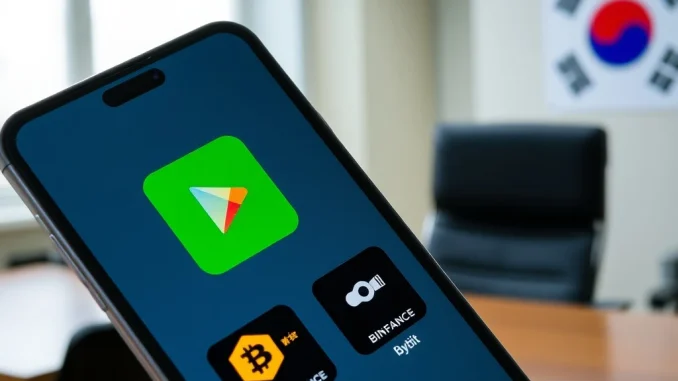
Seoul, South Korea – February 2025: A significant regulatory gap has emerged as unregistered crypto exchange apps remain accessible on the Google Play Store, defying a planned enforcement action by South Korea’s Financial Intelligence Unit (FIU). Major offshore platforms, including Binance, Bybit, and Bitget, continue to be available for download and updates, raising critical questions about the enforcement of digital asset regulations and the practical challenges of global app store governance.
Unregistered Crypto Exchange Apps Evade Scheduled Google Play Removal
The Financial Intelligence Unit (FIU), South Korea’s primary anti-money laundering and financial intelligence authority, announced a decisive step in late 2023. The regulator mandated that all cryptocurrency exchange applications operating in the South Korean market must register with the FIU to ensure compliance with the country’s strict financial reporting and consumer protection laws. This directive specifically targeted overseas exchanges without a physical presence or formal registration in South Korea. Google, in response to the FIU’s order, communicated to affected developers that non-compliant apps would be removed from the Google Play Store for users in South Korea, with an enforcement deadline set for January 28, 2025. This move aimed to create a safer digital asset environment by restricting access to platforms operating outside the national regulatory framework.
The Enforcement Challenge for Global App Stores
The continued presence of these apps highlights a complex enforcement dilemma. Google Play operates as a global marketplace, and geo-blocking or removing apps for specific regions involves intricate technical and policy layers. While Google has systems to restrict app availability by country, applying these filters consistently in response to dynamic regulatory demands from individual nations presents an ongoing challenge. The situation underscores the tension between global technology platforms and national financial regulators. Furthermore, the FIU’s authority extends to ordering domestic internet service providers to block access to the websites of non-compliant exchanges, a more direct form of enforcement. The apparent delay or inaction on the app store front creates a loophole, allowing users to potentially bypass website blocks by using mobile applications.
Historical Context of South Korea’s Crypto Regulatory Framework
South Korea has established itself as one of the world’s most proactive jurisdictions in cryptocurrency regulation. Following the boom and subsequent scandals of 2017-2018, the government implemented the Specific Financial Information Act. This law requires all virtual asset service providers (VASPs), including exchanges, to partner with local banks for real-name verified accounts and to register with the FIU. The regime mandates stringent anti-money laundering (AML) and know-your-customer (KYC) protocols. Domestic exchanges like Upbit and Bithumb successfully completed this process. The current action against offshore apps represents the latest phase in enforcing this framework, aiming to protect investors from unregulated entities that may not offer the same level of security, transparency, or recourse.
Implications for Investors and Market Integrity
The availability of these unregistered apps carries tangible risks for South Korean users. Investors trading on these platforms may lack the legal protections afforded by the domestic regulatory regime. Key concerns include:
- Consumer Protection Gaps: Users may have limited recourse in disputes over transactions, hacks, or sudden platform insolvencies.
- AML Vulnerabilities: Unregistered exchanges may not adhere to South Korea’s rigorous AML standards, potentially facilitating illicit financial flows.
- Market Distortion: Registered domestic exchanges bear significant compliance costs, creating an uneven playing field if unregistered competitors remain easily accessible.
- Tax Reporting Complexity: Transactions on foreign platforms can complicate the accurate reporting of capital gains, which is mandatory under South Korean law.
This scenario places the onus on individual investors to discern the regulatory status of the platforms they use, a burden that the FIU’s delisting order aimed to alleviate.
Potential Next Steps for Regulators and Google
The stalemate invites scrutiny of the next possible actions from both the FIU and Google. The FIU could escalate the matter through formal diplomatic or legal channels, applying greater pressure on Google’s regional or global compliance teams. Google may be conducting internal reviews or granting temporary grace periods to developers, though such details are rarely public. Alternatively, the enforcement may be proceeding in a phased or technical manner not immediately visible to all users. Observers also note that users can often sideload application packages (APKs) directly, meaning app store removal is a barrier, not an absolute block. This reality forces regulators to consider multi-pronged strategies combining technical blocks, public awareness campaigns, and legal consequences for entities soliciting business from unregistered platforms.
Global Precedent and Industry Reaction
South Korea’s situation is not isolated. Other nations, including India and the United Kingdom, have grappled with persuading global app stores to delist non-compliant financial apps. The outcome in South Korea may set a precedent for how effectively national regulators can enforce digital finance rules on multinational tech giants. Industry analysts suggest that clearer, standardized protocols between governments and app store operators are needed for the evolving digital asset sector. Some experts argue that the responsibility should also lie with the exchanges themselves to geo-fence their applications, restricting access from jurisdictions where they are not licensed to operate.
Conclusion
The presence of unregistered crypto exchange apps on Google Play following South Korea’s delisting deadline reveals a significant friction point in modern financial regulation. While the FIU’s intent to protect consumers and uphold market integrity is clear, the practical enforcement through global digital distribution platforms like Google Play involves complex coordination. This development underscores the ongoing challenge for regulators worldwide: effectively governing borderless digital asset services within national legal frameworks. The resolution of this standoff will be closely watched as a bellwether for the future of cryptocurrency app regulation and the accountability of major app marketplaces in the financial ecosystem.
FAQs
Q1: Which crypto exchange apps were supposed to be delisted from Google Play in South Korea?
Apps for major offshore cryptocurrency exchanges that have not registered with South Korea’s Financial Intelligence Unit (FIU), including Binance, Bybit, and Bitget, were scheduled for removal starting January 28, 2025.
Q2: Why does South Korea’s FIU want these apps removed?
The FIU enforces the Specific Financial Information Act, which requires all virtual asset service providers to register and comply with strict anti-money laundering and consumer protection rules. Unregistered exchanges operate outside this legal framework, posing risks to investors.
Q3: Can South Korean users still access these crypto apps?
As of early February 2025, reports confirm that the apps for Binance, Bybit, and Bitget remain available for download and updates on the Google Play Store in South Korea, contrary to the announced delisting plan.
Q4: What risks do users face by trading on unregistered exchanges?
Risks include a lack of legal recourse in disputes, weaker fund security, potential non-compliance with anti-money laundering standards, and complications with mandatory capital gains tax reporting under South Korean law.
Q5: What can the FIU do if Google doesn’t remove the apps?
The FIU can escalate pressure through official channels, order local internet providers to block the exchanges’ websites, and launch public awareness campaigns about the risks of using unregistered platforms. They may also pursue legal actions against the exchanges themselves.