A dramatic financial battle unfolds as Core Scientific, a leading Bitcoin mining company, faces a pivotal moment. Its largest active shareholder, Two Seas Capital, recently announced a staunch opposition to the proposed $9 billion CoreWeave acquisition offer. This crucial development sends ripples through both the cryptocurrency and artificial intelligence sectors. The decision highlights significant disagreements over valuation and strategic direction for the prominent Bitcoin miner.
Core Scientific’s Future: A Shareholder Showdown
Two Seas Capital, holding a substantial 6.5% stake in Core Scientific, declared its firm intention to vote against the proposed buyout. This move, reported by Cointelegraph, signals a significant challenge to the deal. The investment firm believes the offer severely undervalues Core Scientific. Furthermore, it argues the terms disproportionately favor CoreWeave, the AI data center specialist. Consequently, this rejection casts uncertainty over the acquisition’s future. Investors closely monitor the situation, understanding its potential impact on Core Scientific’s market position.
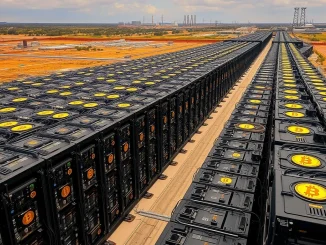
Core Scientific, known for its extensive Bitcoin mining operations, holds significant infrastructure. Its vast data center capacity makes it an attractive target for companies seeking to expand their computing power. This includes firms focused on high-performance computing for AI applications. Therefore, the proposed CoreWeave acquisition aimed to leverage this existing infrastructure for new purposes. However, Two Seas Capital’s public dissent now complicates these plans. This shareholder action underscores the importance of fair valuation in major corporate transactions.
Understanding the CoreWeave Acquisition Offer
The $9 billion offer from CoreWeave represented a substantial premium for Core Scientific. This bid reflects the increasing demand for high-capacity data centers. CoreWeave, a specialized cloud provider, focuses on GPU-accelerated computing. These resources are essential for advanced AI models and complex computational tasks. Therefore, acquiring Core Scientific’s extensive facilities would significantly boost CoreWeave’s operational scale. It would allow rapid expansion of its AI data center capacity.
Initially, the market reacted with cautious optimism to the news of the potential acquisition. However, Two Seas Capital’s letter introduces a new dynamic. The firm’s argument centers on the long-term value of Core Scientific’s assets. They contend that the offer does not fully account for the company’s future growth potential. This includes its strategic positioning within the evolving digital infrastructure landscape. Moreover, the rejection emphasizes the power of major shareholders in influencing corporate decisions. This situation highlights the complex interplay between shareholder interests and corporate strategy.
Two Seas Capital’s Bold Stance on Valuation
Two Seas Capital’s opposition stems from a detailed analysis of Core Scientific’s intrinsic value. The firm argues that the $9 billion offer falls short of the company’s true worth. This valuation gap, according to Two Seas Capital, could deprive Core Scientific shareholders of significant future returns. They point to the strategic importance of Core Scientific’s assets. These assets include robust power infrastructure and established operational capabilities. Such resources are increasingly valuable in the current market climate.
The firm’s public declaration serves as a direct challenge to Core Scientific’s board. It pressures them to reconsider the terms of the deal. Two Seas Capital’s stance suggests a belief that Core Scientific can achieve greater value independently. Alternatively, they may seek a higher offer from CoreWeave or another suitor. This firm action demonstrates a proactive approach to protecting shareholder interests. Ultimately, this situation sets the stage for potential renegotiations or a prolonged corporate battle. The outcome will certainly influence future investor confidence in both companies.
The Impact on Core Scientific Shareholders and Market Reaction
Following Two Seas Capital’s letter, Core Scientific shares experienced a notable surge. They rose 3% to $14.38, reflecting investor reaction to the news. This immediate uptick suggests that some investors agree with the undervaluation claim. It also indicates hope for a revised, higher offer. Conversely, CoreWeave also saw gains, with its shares climbing nearly 9%. This might reflect market confidence in CoreWeave’s strategic vision. It could also suggest anticipation of a successful, albeit potentially revised, acquisition.
For the average Core Scientific shareholder, this development introduces both opportunity and uncertainty. A rejected offer could lead to a better deal. However, it also risks the deal falling apart entirely. Such an outcome might negatively impact share prices in the short term. Furthermore, a prolonged dispute could divert management attention and resources. Therefore, investors will closely watch subsequent communications from both Core Scientific’s board and Two Seas Capital. The situation underscores the volatile nature of M&A activity in fast-evolving sectors like crypto and AI.
AI Data Center Growth and Industry Convergence
The proposed CoreWeave acquisition underscores a broader industry trend. The convergence of cryptocurrency infrastructure and AI data center needs is becoming increasingly apparent. Bitcoin mining operations require immense computational power and energy. This infrastructure, built for crypto, possesses significant potential for repurposing or dual use. Companies like CoreWeave are actively seeking such ready-made facilities. They aim to meet the exploding demand for AI-specific computing resources.
The global demand for AI processing power continues its exponential rise. This drives a need for specialized data centers with high-density computing capabilities. Traditional data centers often lack the necessary power and cooling infrastructure. Bitcoin mining facilities, however, are specifically designed for high energy consumption and heat dissipation. Consequently, they offer an attractive solution for AI companies. This strategic alignment makes Core Scientific’s assets particularly valuable. It also explains CoreWeave’s aggressive pursuit of the company. This trend highlights the innovative ways existing digital infrastructure is being adapted for future technological demands.
In conclusion, the ongoing saga between Core Scientific, CoreWeave, and Two Seas Capital remains a compelling story. It exemplifies the complex dynamics of corporate acquisitions in rapidly evolving tech sectors. The outcome will undoubtedly set precedents for future deals at the intersection of blockchain and artificial intelligence. All eyes remain on the next moves from these key players.
Frequently Asked Questions (FAQs)
Q1: Who is Core Scientific?
A1: Core Scientific is a leading publicly traded company primarily engaged in Bitcoin mining. It operates large-scale data centers designed for high-performance computing, particularly for cryptocurrency mining.
Q2: What is CoreWeave’s primary business?
A2: CoreWeave is a specialized cloud provider focusing on high-performance, GPU-accelerated computing. It offers infrastructure crucial for artificial intelligence (AI) development, machine learning, and visual effects rendering.
Q3: Why is Two Seas Capital opposing the CoreWeave acquisition?
A3: Two Seas Capital, Core Scientific’s largest active shareholder, believes the $9 billion offer significantly undervalues Core Scientific. They argue the deal does not reflect the company’s true worth or future growth potential and disproportionately benefits CoreWeave.
Q4: How did the market react to Two Seas Capital’s announcement?
A4: Following the announcement, Core Scientific’s shares rose by 3% to $14.38, indicating investor belief in a higher valuation or a revised offer. CoreWeave’s shares also gained nearly 9%, possibly reflecting confidence in their strategic vision.
Q5: What is the significance of this acquisition for the AI data center industry?
A5: This potential CoreWeave acquisition highlights the increasing demand for high-capacity data centers suitable for AI workloads. Bitcoin mining facilities, with their robust power and cooling infrastructure, are becoming attractive targets for AI companies seeking to rapidly expand their computing capabilities.
Q6: What could happen next in this acquisition saga?
A6: The situation could lead to several outcomes. CoreWeave might revise its offer with a higher valuation. Core Scientific’s board could enter negotiations for better terms. Alternatively, Two Seas Capital might initiate a proxy fight, or the deal could ultimately collapse, leading Core Scientific to pursue other strategic options.