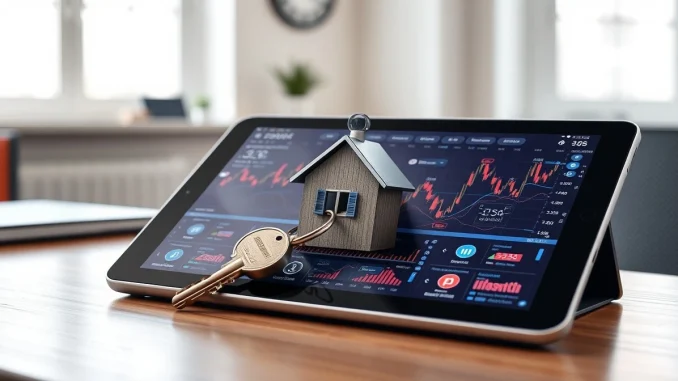
In a significant development for digital asset integration, cryptocurrency exchange Coinbase Global has launched a novel mortgage structure with Better Home & Finance. This structure, announced in March 2026, allows qualified borrowers to pledge Bitcoin or USDC as collateral to fund down payments on standard conforming mortgages tied to Fannie Mae-backed loans. This move represents a pivotal step in blending cryptocurrency with traditional U.S. housing finance.
Coinbase Token-Backed Down Payments Explained
The new structure enables borrowers to use digital assets held in Coinbase accounts as collateral for a separate loan. This loan specifically funds the cash down payment required for a primary mortgage. Consequently, the primary mortgage itself remains a standard, Fannie Mae–backed conforming loan originated and serviced by Better. This model allows homebuyers to retain exposure to their cryptocurrency investments. However, it replaces the traditional upfront cash requirement with additional debt secured by their crypto holdings.
According to the companies, borrowers cannot trade the pledged collateral while it is locked. Market volatility alone does not trigger margin calls as long as payments continue. Once the loan is active, the mortgage terms remain unchanged. This development builds directly on regulatory signals from mid-2025. At that time, the Federal Housing Finance Agency directed Fannie Mae and Freddie Mac to prepare proposals for recognizing cryptocurrency as an asset in mortgage risk assessments without requiring conversion to U.S. dollars.
Regulatory Context and Industry Momentum
The Coinbase and Better initiative is not an isolated event. Instead, it is part of a broader industry push to embed cryptocurrency across the mortgage lending stack. Earlier in 2026, other lenders took similar steps. For instance, loan servicer Newrez announced it would allow borrowers to use Bitcoin, Ether, crypto ETFs, and stablecoins as qualifying assets in underwriting without requiring liquidation.
Similarly, mortgage lender Rate launched its RateFi program. This program allows verified crypto holdings to count toward borrower reserves and, in some cases, income. However, those programs still required conversion to cash for down payments. The Coinbase model is distinct because it uses the assets as direct collateral. The following table summarizes key recent developments:
| Entity | Announcement (2026) | Key Feature |
|---|---|---|
| Coinbase & Better | March | Pledge BTC/USDC as collateral for down payment loan. |
| Newrez | January | Accept crypto as qualifying asset without liquidation. |
| Rate | February | Count crypto toward reserves/income; cash needed for closing. |
Understanding the Risks for Borrowers
While innovative, pledging crypto for down payments introduces specific risks. The model adds constraints tied to the pledged assets. Borrowers lose liquidity for the collateral duration. Although price swings do not directly alter the mortgage terms, they significantly influence the borrower’s overall risk exposure and financial flexibility. A sharp decline in collateral value could pressure the borrower’s financial position, even without a formal margin call on the down payment loan.
Industry analysts note this structure replaces cash with debt. Therefore, borrowers assume additional leverage. This factor is crucial in a market where affordability remains a major challenge. Data from late 2025 showed the average U.S. home price still exceeding $400,000. A standard 20% down payment often costs over $80,000. For crypto investors with substantial holdings but limited cash, this model presents a new path to homeownership. However, it requires careful consideration of the dual debt obligations.
The Affordability Argument and Market Impact
Proponents frame the development as a tool for middle-class affordability. Former U.S. Representative Tim Ryan, a member of Coinbase’s advisory council, discussed this with news outlets. Ryan argued digital assets can help address one of the biggest barriers to homeownership—the down payment. He stated digital assets have a practical place for working-class people, extending all the way to purchasing a home.
The integration could mark a shift in how crypto assets function in housing finance. Their role expands from merely being a qualifying asset in underwriting to becoming a direct component of mortgage financing. If adopted widely, this could increase liquidity options for a segment of potential homebuyers. However, widespread adoption depends on several factors:
- Regulatory clarity: Ongoing guidance from the FHFA and other bodies.
- Market stability: Borrower and lender comfort with crypto volatility.
- Consumer education: Understanding the complex risks involved.
Lenders have been gradually integrating crypto into processes since regulatory signals emerged in 2025. The current model represents a more direct financial engineering approach. It tests the boundaries of using volatile assets to secure long-term, stable debt.
Conclusion
Coinbase’s launch of token-backed down payments for Fannie Mae loans is a groundbreaking development at the intersection of cryptocurrency and traditional finance. It offers a novel solution for crypto-rich, cash-poor borrowers seeking homeownership. However, the model introduces layered risks through added debt and collateral constraints. Its success will hinge on regulatory acceptance, market conditions, and clear consumer understanding. As of March 2026, this initiative signals a tangible move toward crypto’s functional use in major financial transactions, potentially reshaping access to mortgage credit.
FAQs
Q1: How do Coinbase’s token-backed down payments work?
Borrowers pledge Bitcoin or USDC in their Coinbase account as collateral for a separate loan. This loan provides the cash for the down payment on a standard Fannie Mae-backed mortgage originated by Better.
Q2: What are the main risks of using crypto for a down payment?
Key risks include loss of liquidity for the pledged assets, increased personal leverage from taking on an additional loan, and exposure to cryptocurrency market volatility affecting overall financial health.
Q3: Does Fannie Mae directly accept cryptocurrency?
No. The primary mortgage is a standard U.S. dollar loan backed by Fannie Mae. The cryptocurrency is used only as collateral for a separate, ancillary loan that funds the cash down payment.
Q4: What happens if the value of my pledged crypto crashes?
According to Coinbase, market volatility alone does not trigger a margin call if you continue making payments. However, a severe drop in value increases your risk exposure and could affect your ability to manage both loan obligations.
Q5: Is this program available to all homebuyers?
No. The program is for qualified borrowers meeting specific eligibility criteria set by Coinbase, Better, and the underlying mortgage guidelines. It is not a universally available product.
This article was produced with AI assistance and reviewed by our editorial team for accuracy and quality.