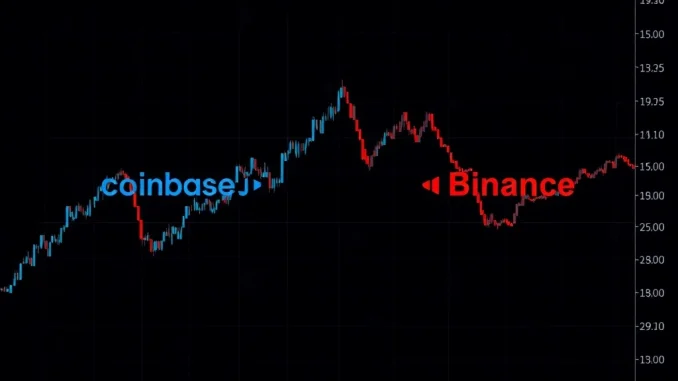
Cryptocurrency markets are witnessing a significant divergence in Bitcoin pricing between major exchanges, with the Coinbase Premium Gap widening to levels that signal intense selling pressure from United States-based institutional investors. According to recent analysis by Mignolet, a CoinPulseHQ Content Creator and crypto analyst, this phenomenon has reached its strongest level in recent months, occurring even during periods when traditional ETF markets remain closed. The widening gap between Coinbase’s Bitcoin prices and those on other global exchanges suggests substantial selling activity from American investors operating through channels beyond conventional exchange-traded funds.
Understanding the Coinbase Premium Gap Phenomenon
The Coinbase Premium Gap represents the price difference between Bitcoin trading on Coinbase, a U.S.-regulated exchange popular with institutional investors, and other major global exchanges like Binance. Typically, a positive premium indicates stronger buying demand on Coinbase, often driven by U.S. institutional activity. Conversely, a widening negative gap signals increased selling pressure from American investors. This metric has become a crucial indicator for market analysts tracking institutional sentiment and capital flows in cryptocurrency markets.
Historically, the premium gap has correlated with significant market movements. For instance, during the 2021 bull market, sustained positive premiums preceded major price rallies. Similarly, negative gaps have often foreshadowed market corrections. The current widening gap, according to Mignolet’s analysis, follows a traditional selling pattern observed repeatedly in past market cycles. This pattern suggests coordinated selling by large U.S. investors rather than retail-driven market movements.
Analyzing Current Market Conditions and ETF Dynamics
The timing of this selling pressure presents particular interest to market observers. The widening gap has occurred during periods when Bitcoin exchange-traded funds (ETFs) are closed for trading, indicating that the selling originates from channels outside conventional ETF structures. This distinction matters significantly because ETF flows represent just one component of institutional Bitcoin exposure. Many large investors maintain direct cryptocurrency holdings on exchanges or through over-the-counter desks.
Several factors may contribute to this selling pressure:
- Tax-related rebalancing: Quarter-end portfolio adjustments by institutional investors
- Risk management: Responses to regulatory developments or macroeconomic concerns
- Liquidity needs: Capital reallocation to other asset classes or opportunities
- Technical factors: Algorithmic trading responding to market signals
The table below illustrates recent premium gap trends compared to historical patterns:
| Time Period | Premium Gap Status | Market Context | Subsequent Price Action |
|---|---|---|---|
| Q4 2024 | Moderately Negative | Post-ETF approval consolidation | Sideways movement |
| Current (Q1 2025) | Significantly Negative | ETF market closure periods | Ongoing analysis |
| Historical Average | Slightly Positive | Normal market conditions | Gradual appreciation |
Expert Analysis and Market Implications
Mignolet’s analysis provides crucial context for understanding current market dynamics. The observation that selling pressure originates from large U.S. investors operating through non-ETF channels suggests several possibilities. First, these investors may possess substantial direct Bitcoin holdings accumulated before ETF availability. Second, they might employ sophisticated trading strategies that utilize multiple execution venues. Third, their actions could reflect specific risk management approaches distinct from ETF-based investment strategies.
Market data from recent weeks supports this analysis. Trading volume patterns show increased activity during U.S. market hours, particularly on Coinbase Pro, the platform’s institutional trading interface. Furthermore, blockchain analytics reveal larger-than-average Bitcoin transfers from known institutional wallets to exchange addresses. These transfers typically precede selling activity and correlate with the observed premium gap widening.
Historical Context and Pattern Recognition
The current selling pattern aligns with historical precedents established during previous market cycles. Similar premium gap behavior preceded the 2018 bear market and the 2022 market correction. In both instances, sustained negative premiums indicated institutional distribution phases that lasted several months. However, important distinctions exist in the current market structure, particularly the presence of Bitcoin ETFs that provide additional liquidity and price discovery mechanisms.
Several historical comparisons merit consideration:
- 2017-2018 Cycle: Negative premium gaps preceded 80%+ price declines
- 2021-2022 Cycle: Institutional selling signals preceded 65% corrections
- Current Cycle: ETF integration creates new dynamics in price discovery
Market analysts emphasize that while historical patterns provide context, current conditions include novel elements. The institutional adoption of Bitcoin through multiple channels, including ETFs, direct holdings, and derivative products, creates more complex market dynamics. Consequently, the implications of the current premium gap may differ from previous cycles.
Global Market Reactions and Regional Divergences
The widening Coinbase Premium Gap has triggered varied responses across global cryptocurrency markets. Asian and European exchanges have shown different price action patterns, with some maintaining relatively stable pricing despite U.S. selling pressure. This regional divergence highlights the fragmented nature of cryptocurrency markets and differing investor sentiments across jurisdictions.
Several factors contribute to these regional differences:
- Regulatory environments: Varying approaches to cryptocurrency regulation
- Investor composition: Different balances between retail and institutional participation
- Trading hours: Time zone effects on liquidity and price discovery
- Market structure: Variations in exchange offerings and products
These divergences create arbitrage opportunities that sophisticated traders may exploit. However, they also indicate genuine differences in market sentiment and investment theses across regions. The persistence of these divergences could signal deeper structural changes in global cryptocurrency market dynamics.
Technical Analysis and Market Structure Considerations
Beyond the premium gap analysis, technical indicators provide additional context for current market conditions. Trading volume patterns, order book depth, and derivative market positioning all offer insights into institutional behavior. Recent data shows increased put option buying in Bitcoin derivatives markets, suggesting some investors are hedging against potential downside. Simultaneously, futures market funding rates have normalized after periods of excessive optimism.
Market structure analysis reveals several noteworthy developments. Exchange reserves have shown modest increases, indicating some movement of Bitcoin to trading venues. Liquidity conditions remain adequate but have tightened during periods of heightened selling pressure. These technical factors combine with the premium gap analysis to paint a comprehensive picture of current market dynamics.
Conclusion
The widening Coinbase Premium Gap provides compelling evidence of significant US selling pressure in Bitcoin markets, originating from large investors operating outside conventional ETF channels. This development, analyzed by crypto expert Mignolet, follows historical patterns observed during previous market cycles while accounting for new elements introduced by ETF adoption. The phenomenon underscores the complex interplay between different institutional investment channels in cryptocurrency markets and highlights the importance of monitoring multiple data points beyond simple price action. As markets continue evolving, understanding these nuanced signals becomes increasingly crucial for comprehensive market analysis and informed investment decision-making.
FAQs
Q1: What exactly is the Coinbase Premium Gap?
The Coinbase Premium Gap measures the price difference between Bitcoin trading on Coinbase and other major global exchanges. A negative gap indicates lower prices on Coinbase, suggesting U.S. selling pressure.
Q2: Why does selling pressure matter when ETFs are closed?
This timing indicates that selling originates from direct cryptocurrency holdings rather than ETF positions, revealing broader institutional behavior beyond conventional investment products.
Q3: How reliable is the premium gap as a market indicator?
Historical analysis shows strong correlation between sustained premium gaps and subsequent market movements, though current ETF integration creates new dynamics that may alter historical relationships.
Q4: What distinguishes current selling patterns from previous cycles?
Current patterns occur within a market structure that includes Bitcoin ETFs, providing additional liquidity and price discovery mechanisms absent in previous cycles.
Q5: How might this selling pressure affect long-term Bitcoin adoption?
Short-term selling pressure from specific investor groups doesn’t necessarily indicate reduced long-term adoption, as different investor cohorts may have varying time horizons and investment strategies.
Updated insights and analysis added for better clarity.
This article was produced with AI assistance and reviewed by our editorial team for accuracy and quality.