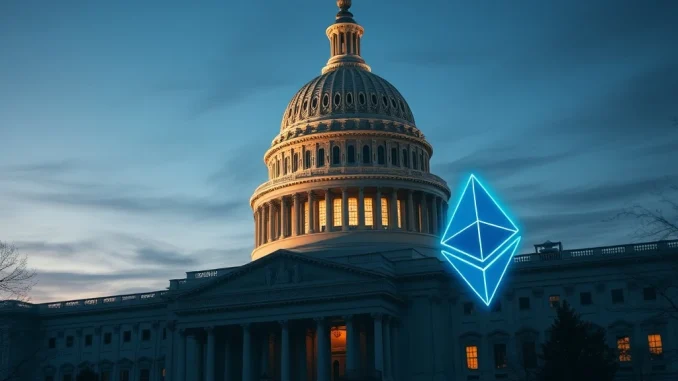
WASHINGTON, D.C. – March 2025 – The United States Senate’s latest attempt to create comprehensive cryptocurrency regulation has sparked immediate and significant backlash from industry leaders. Coinbase CEO Brian Armstrong has publicly declared the draft legislation from the Senate Banking Committee a substantial “setback” for the digital asset ecosystem. Armstrong argues the proposed framework could create more problems than it solves, potentially stifling innovation in critical areas like decentralized finance and tokenized assets.
Coinbase CEO’s Stark Warning on Senate Crypto Bill
Brian Armstrong announced his formal opposition to the draft bill through a detailed social media post. He stated he spent two days thoroughly reviewing the proposed legislation. Consequently, he determined he could not support its passage in its current form. Armstrong believes the draft presents several fundamental flaws. These flaws might negatively impact the broader crypto industry more than the existing regulatory ambiguity. His critique centers on four primary concerns that could reshape the American digital asset landscape.
Firstly, Armstrong highlighted the bill’s treatment of tokenized securities. The draft language appears to create what experts call a de facto ban on these instruments. Tokenized securities represent traditional assets like stocks or bonds on a blockchain. They promise increased efficiency and liquidity for financial markets. However, the proposed rules could severely restrict their development and use within the United States.
Secondly, the legislation takes a hardline stance against Decentralized Finance (DeFi). DeFi platforms allow peer-to-peer lending, borrowing, and trading without traditional intermediaries like banks. The Senate draft includes provisions that could effectively block many DeFi protocols from operating legally for U.S. users. This move contradicts the technology’s core principle of permissionless access.
Regulatory Authority and Stablecoin Features Under Threat
Thirdly, Armstrong identified a shift in regulatory power between two key agencies. The bill would weaken the Commodity Futures Trading Commission (CFTC) relative to the Securities and Exchange Commission (SEC). Many industry advocates view the CFTC as a more pragmatic regulator for certain digital commodities. They fear giving the SEC broader authority could lead to stricter enforcement actions. This change might chill innovation and business development.
Finally, the proposal targets a popular feature of some stablecoins. It includes language that could ban stablecoin reward features. These features, similar to interest, attract users by offering yields on holdings. Proponents argue they are essential for competition. Critics, including some lawmakers, compare them to unregulated banking services. A ban would significantly alter the value proposition of many dollar-pegged digital currencies.
Historical Context of U.S. Cryptocurrency Regulation Efforts
The current Senate draft does not exist in a vacuum. It represents the culmination of years of legislative debate and regulatory uncertainty. For nearly a decade, U.S. crypto firms have operated under a patchwork of state laws and conflicting federal guidance. The SEC has pursued numerous enforcement actions under existing securities laws. Meanwhile, the CFTC has claimed jurisdiction over crypto commodities like Bitcoin.
This regulatory friction has created a challenging environment for businesses. Many companies have expressed a desire for clear rules. However, they seek rules that foster innovation rather than suppress it. The bipartisan effort behind the current Senate bill acknowledges this need for clarity. Despite this, Armstrong’s reaction suggests the proposed solution may create new problems. His stance indicates a significant gap remains between legislative intent and industry needs.
Key Regulatory Challenges Identified by Experts:
- Defining jurisdictional boundaries between the SEC and CFTC.
- Creating consumer protections without stifling technological progress.
- Addressing the global nature of blockchain networks with national laws.
- Balancing financial innovation with systemic risk management.
The Global Competitive Landscape
Armstrong’s warning carries extra weight considering international developments. Other major economies are advancing their own crypto regulatory frameworks. The European Union implemented its Markets in Crypto-Assets (MiCA) regulation in 2024. Similarly, the United Kingdom and Singapore have established clearer guidelines. If the U.S. adopts overly restrictive rules, it risks pushing innovation and investment overseas. This potential brain drain is a central concern for many industry advocates.
Potential Impacts on Investors and the Broader Market
The Senate bill’s provisions could directly affect millions of American cryptocurrency users. A ban on stablecoin rewards would eliminate a source of passive income for holders. Restrictions on DeFi could limit access to a suite of financial tools. Furthermore, hurdles for tokenized securities might delay the modernization of traditional markets. These impacts extend beyond retail investors to include institutional players and technology developers.
Market analysts are closely watching the legislative process. Regulatory clarity typically reduces uncertainty, which markets favor. However, clarity that imposes heavy restrictions can have the opposite effect. The bill’s progress could influence cryptocurrency prices and venture capital funding. It may also determine whether the U.S. remains a leader in blockchain technology. The coming weeks of debate and potential amendments will be critical.
Comparison of Regulatory Approaches
| Jurisdiction | Regulatory Approach | Key Focus |
|---|---|---|
| European Union (MiCA) | Comprehensive, centralized framework | Consumer protection, market integrity |
| United Kingdom | Adaptive, phased implementation | Innovation, becoming a crypto hub |
| Singapore | Licensing-based, proactive engagement | Anti-money laundering, business growth |
| U.S. Senate Draft Bill | Restrictive, agency-centric | Investor protection, limiting novel features |
Conclusion
Brian Armstrong’s opposition to the Senate crypto bill draft highlights a pivotal moment for American digital asset policy. While acknowledging bipartisan effort, his analysis concludes the proposal is a step backward. The identified issues—affecting tokenized securities, DeFi, regulatory authority, and stablecoins—pose real risks to innovation. The path forward requires careful negotiation to balance necessary oversight with technological progress. The ultimate shape of this Senate crypto bill will significantly influence the future of finance in the United States and its competitive position globally.
FAQs
Q1: What are the main reasons Coinbase’s CEO opposes the Senate crypto bill?
Brian Armstrong cites four core problems: a de facto ban on tokenized securities, provisions blocking DeFi, weakening of the CFTC’s authority relative to the SEC, and a potential ban on stablecoin reward features. He believes these elements make the draft worse than the current regulatory environment.
Q2: What are tokenized securities and why does the bill affect them?
Tokenized securities are digital representations of traditional financial assets like stocks or bonds on a blockchain. The Senate bill’s language could severely restrict or effectively ban their creation and trading in the U.S., limiting a key innovation for modernizing capital markets.
Q3: How does this bill impact decentralized finance (DeFi)?
The draft legislation includes provisions that could make it illegal for many DeFi protocols to offer services to U.S. users. This would block access to peer-to-peer lending, borrowing, and trading platforms that operate without traditional banks or brokers.
Q4: Why is the shift in authority from the CFTC to the SEC significant?
Many in the crypto industry view the CFTC as having a more commodity-focused and pragmatic approach to regulation, while they often see the SEC as applying traditional securities rules too rigidly to new technologies. Shifting power could lead to stricter enforcement and less flexibility.
Q5: What happens next with this Senate crypto bill?
The draft will undergo committee review, debates, and likely amendments. Industry stakeholders, like Armstrong, will lobby for changes. The final version must pass both the Senate and House of Representatives before becoming law, a process that could take many months and may alter the bill substantially.
This article was produced with AI assistance and reviewed by our editorial team for accuracy and quality.