Claude Code Security Triggers Devastating $15B Cybersecurity Stock Plunge
New York, NY – April 10, 2025: The cybersecurity sector experienced a seismic shock this week as the launch of Anthropic’s Claude Code Security triggered a massive sell-off, erasing over $15 billion in market value from leading firms in a single trading session. The immediate and brutal market reaction to this new AI-powered security tool underscores a pivotal moment where advanced artificial intelligence begins to directly challenge and disrupt established technology incumbents. This event represents one of the most significant single-day valuation shifts in the history of the cybersecurity industry, prompting a fundamental reassessment of competitive dynamics and future growth trajectories.
Claude Code Security Announcement Sparks Immediate Sell-Off
Anthropic, the AI safety and research company, officially launched Claude Code Security on Tuesday morning. The platform represents a significant evolution of their Claude AI model, specifically fine-tuned to autonomously review, audit, and secure software code. According to the company’s technical documentation, the system can identify vulnerabilities, suggest patches, and enforce security best practices at a scale and speed unattainable by human teams. The announcement, made via a detailed blog post and a series of technical demonstrations, framed the tool as a breakthrough in proactive cyber defense. However, financial markets interpreted the news not as an addition to the security toolkit, but as a direct competitive threat to existing vendors whose business models rely on providing similar, though less automated, services.
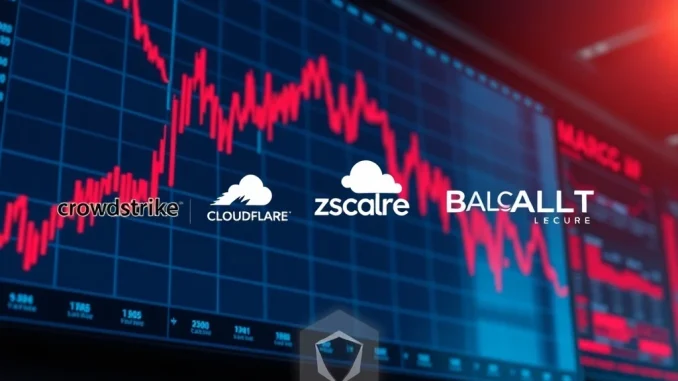
The market’s reaction was swift and severe. Within hours of the announcement, trading volumes for major cybersecurity stocks spiked dramatically. Analysis of market data shows a clear correlation between the timing of Anthropic’s press release and the onset of heavy selling pressure. Notably, the sell-off was not broad-based across the technology sector but was highly concentrated in companies whose core offerings overlap with code security and application protection. This targeted reaction suggests sophisticated investors quickly mapped the competitive implications of Claude’s new capabilities. The following table illustrates the scale of the single-session impact on key players:
| Company | Stock Symbol | Approx. Value Loss (Session) | Primary Product Overlap |
|---|---|---|---|
| CrowdStrike | CRWD | $5.8 Billion | Endpoint & Cloud Workload Security |
| Cloudflare | NET | $4.1 Billion | Web Application Firewall, API Security |
| Zscaler | ZS | $3.3 Billion | Zero Trust Network Access, Cloud Security |
| Palo Alto Networks | PANW | $2.2 Billion | Cloud Security, Threat Prevention |
Financial analysts at firms like BullTheory highlighted the event on social media, quantifying the total market capitalization wiped out at over $15 billion. This figure does not account for smaller cap stocks or related software companies that also experienced declines. The plunge reflects a classic market response to disruptive innovation: a rapid repricing of future cash flows for incumbents perceived to be at risk. Consequently, investor confidence in the near-term growth insulation of these established cybersecurity giants has been visibly shaken.
Analyzing the Market Reaction and Competitive Threat
The scale of the sell-off necessitates a deeper analysis beyond a simple news reaction. Several interconnected factors explain why Claude Code Security provoked such a dramatic response. First, the cybersecurity market has been valued for its resilient, subscription-based revenues and seemingly endless demand tailwinds. Investors have long treated top-tier cybersecurity firms as defensive growth stocks. The Anthropic announcement introduced a new variable: the potential for AI-native platforms to compress the value chain and automate services that were previously complex and labor-intensive.
Second, the specific capabilities demonstrated by Claude Code Security appear to encroach directly on lucrative product segments. For instance:
- Static Application Security Testing (SAST): A core module for companies like Checkmarx and Synopsys, now challenged by an AI that can review code in natural language.
- Software Composition Analysis (SCA): Tools that scan for vulnerable open-source libraries, a feature Claude can integrate seamlessly.
- Developer Security Training: Platforms that educate developers on secure coding, potentially made redundant by an AI that provides real-time, contextual guidance.
Third, the economic model poses a threat. Traditional cybersecurity tools are sold as enterprise licenses with high annual costs. An AI assistant like Claude could be offered at a fraction of the price per developer, undermining the per-seat or per-application pricing models of incumbents. This potential for price disruption adds significant uncertainty to future revenue projections for the affected companies. Market participants are now forced to consider whether AI will augment existing security stacks or begin to replace them for specific, high-volume tasks.
Historical Context and Industry Inflection Points
This event finds parallels in other technological inflection points that reshaped entire sectors. The rise of cloud computing, for example, initially battered the stocks of traditional hardware and on-premise software vendors before creating new giants. Similarly, the advent of disruptive fintech platforms triggered volatility for established banks and payment processors. The cybersecurity industry itself was born from the disruption of perimeter-based defense models by more agile, software-defined approaches. What makes the Claude Code Security launch distinct is the speed and specificity of the market’s judgment. The reaction suggests that investors, already highly attuned to AI’s transformative potential, are quick to penalize perceived laggards and reward potential disruptors, often in advance of any material impact on financial statements.
Furthermore, the sell-off occurred against a backdrop of heightened scrutiny on software supply chain security. High-profile breaches stemming from code vulnerabilities have made this area a top priority for regulators and enterprises alike. By positioning its AI as a solution to this critical problem, Anthropic tapped into a high-stakes, high-growth market segment. The market’s violent reaction indicates a belief that Claude Code Security is not a mere feature, but a potentially category-defining product that could reset customer expectations and competitive benchmarks.
Implications for the Future of Cybersecurity and AI
The immediate financial consequences are clear, but the longer-term implications for both the cybersecurity and AI industries are profound. For the cybersecurity sector, the event serves as a stark wake-up call. Established players must now accelerate their own AI integration strategies beyond marketing buzzwords. The competitive bar has been raised, moving from AI-assisted features to AI-native, autonomous security platforms. We can expect a surge in several strategic responses:
- Accelerated M&A Activity: Larger cybersecurity firms may seek to acquire AI startups to rapidly bolster their capabilities.
- Strategic Partnerships: Partnerships between cybersecurity vendors and foundational AI model providers (like Anthropic’s competitors) could become commonplace.
- Product Repositioning: Incumbents will likely emphasize the depth of their integrated platforms, threat intelligence networks, and human-led managed services—areas where a pure-play AI tool may have limitations.
For the AI industry, specifically companies like Anthropic, OpenAI, and Google DeepMind, the market reaction validates the immense commercial potential of applying large language models to vertical, enterprise-grade problems. It demonstrates that AI products can directly threaten multi-billion dollar market segments. However, it also raises the stakes for responsible deployment. A security tool powered by AI carries extraordinary responsibility; any significant failure or vulnerability in Claude Code Security itself could have catastrophic consequences for its users and trigger a severe backlash against AI in critical infrastructure.
Finally, for enterprises and developers, the emergence of tools like Claude Code Security promises to democratize high-level security expertise. It could lead to more secure software being built from the first line of code, potentially reducing the vast “security debt” that plagues modern digital infrastructure. The ultimate impact may be a net positive for global cybersecurity posture, even as it disrupts the commercial landscape of the vendors tasked with providing it.
Conclusion
The launch of Claude Code Security and the subsequent evaporation of $15 billion in cybersecurity stock value marks a definitive inflection point. It is no longer speculative to discuss AI’s disruptive potential in enterprise software; the financial markets have rendered a multi-billion dollar verdict. This event underscores the reality that AI innovation is moving from the lab to the market with tangible, immediate consequences for established industries. While the affected cybersecurity firms possess significant resources, brand loyalty, and existing customer bases to mount a defense, the paradigm has undeniably shifted. The focus moving forward will be on execution: Can Anthropic deliver on the promise of its AI security platform at scale, and can the incumbents evolve quickly enough to meet this new form of competition? The answers to these questions will determine the next chapter for one of technology’s most critical and dynamic sectors.
FAQs
Q1: What exactly is Claude Code Security?
Claude Code Security is a new AI-powered platform from Anthropic that uses the company’s Claude large language model to automatically review, analyze, and secure software code. It is designed to identify vulnerabilities, suggest fixes, and enforce security best practices during the development process.
Q2: Why did cybersecurity stocks fall so sharply after its announcement?
Investors perceived Claude Code Security as a direct competitive threat to existing cybersecurity companies. The AI’s capabilities in areas like code scanning and vulnerability detection could potentially automate services that are core revenue drivers for firms like CrowdStrike and Cloudflare, leading to fears of market share loss and pricing pressure.
Q3: Was the $15 billion loss in market value permanent?
Market valuations fluctuate daily based on news and sentiment. The $15 billion figure represents the single-session loss. Whether it recovers, worsens, or becomes a permanent devaluation depends on subsequent events, including the market adoption of Claude Code Security, the competitive response from incumbents, and the companies’ future financial results.
Q4: Does this mean AI will replace human cybersecurity professionals?
Not in the foreseeable future. While AI like Claude Code Security automates specific, repetitive tasks (like scanning code for known vulnerability patterns), complex threat hunting, incident response, strategic policy design, and managing customer relationships still require human expertise, intuition, and judgment. AI is more likely to augment professionals than replace them entirely.
Q5: How are the affected cybersecurity companies likely to respond?
Typical strategic responses could include accelerating their own internal AI development, acquiring specialized AI security startups, forming partnerships with other AI model providers, and doubling down on marketing their integrated platform strengths, deep threat intelligence, and human-led services that an AI tool cannot easily replicate.
Related News
- Magic Eden lists decentralized Web3 phone with airdrop rewards
- Bitcoin World Sessions: AI Event Features Amazon’s Danielle Perszyk for Unmissable Insights
- Unleash Potential: Arctic Pablo Coin Presale Rockets Past $3.08M, Targeting 1300% ROI
Related: Xaman Wallet's 0.8% Fee: The Critical Debate Over Who Funds XRPL Infrastructure
Related: Bitcoin Liquidations Reveal Stunning 'Burj Khalifa' Towers on Market Liquidity Map