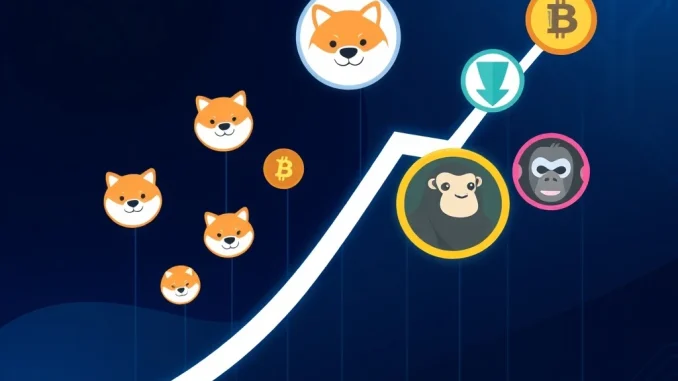
Global, May 2025: The intersection of artificial intelligence and cryptocurrency analysis continues to generate significant discussion. Recent explorations using OpenAI’s ChatGPT to model potential cryptocurrency performance have brought a specific set of digital assets into focus: meme coins. These assets, which originated from internet culture and community engagement rather than fundamental technological utility, represent a unique and volatile segment of the broader crypto market. Analysis suggests that models like ChatGPT, when prompted to evaluate market data, social sentiment, and development roadmaps, can generate ranked lists of speculative assets, including APEMARS, Dogecoin, Shiba Inu, and Bonk. It is critical to understand that such outputs are data-driven extrapolations, not financial predictions, and they highlight the evolving tools investors use to navigate a complex market.
Understanding ChatGPT’s Role in Crypto Market Analysis
The use of large language models (LLMs) for financial analysis represents a novel application of generative AI. ChatGPT does not predict the future nor access real-time data beyond its training cutoff. Instead, it synthesizes patterns from its vast training dataset, which includes historical market behaviors, news articles, forum discussions, and whitepapers. When asked to forecast “top meme coins for 2026,” the model identifies tokens with high historical social volume, recognizable branding, ongoing development activity, and sustained community presence. This process mirrors a basic screening exercise an analyst might perform, scanning for signals of continued relevance. The output, including a notable mention of APEMARS with a theoretical 9,700% return on investment figure, should be interpreted as a structured summary of existing market narratives and momentum factors, not a guarantee of performance. The inherent volatility and regulatory uncertainties surrounding all cryptocurrencies, especially meme-based assets, make any long-term projection highly speculative.
The Meme Coin Landscape: From Joke to Market Mainstay
The meme coin phenomenon began as an internet experiment but has matured into a substantial sector. The evolution of these assets provides essential context for any forward-looking analysis.
- Dogecoin (DOGE): Launched in 2013 as a satire of cryptocurrency speculation, Dogecoin leveraged the popular “Doge” meme. Its persistence is attributed to a strong, charitable community and high-profile endorsements. It functions on a proof-of-work blockchain derived from Litecoin and remains a benchmark for the entire meme coin category.
- Shiba Inu (SHIB): Created in 2020 and dubbed the “Dogecoin killer,” Shiba Inu expanded the meme coin blueprint by building an entire ecosystem, including a decentralized exchange (ShibaSwap), an NFT project, and a layer-2 blockchain solution called Shibarium. This move from a mere token to a platform illustrates one path for meme coin evolution.
- Bonk (BONK): Launched in late 2022 on the Solana blockchain, Bonk was initially airdropped to the Solana community to revitalize engagement after the FTX collapse. Its integration within the Solana DeFi and NFT ecosystem demonstrates how meme coins can serve as liquidity and cultural tokens for specific blockchain networks.
This trajectory shows a shift from pure meme value to attempted utility, a factor AI models may weigh when assessing long-term viability.
The APEMARS Presale Phenomenon and Market Context
Within AI-generated lists, newer projects like APEMARS often appear due to the heightened discussion and speculative interest surrounding their presale phases. A presale is an early funding round where tokens are sold before a public launch. ChatGPT’s training data includes countless articles and social media posts hyping presales as “early opportunities,” which the model replicates. The mention of a 9,700% ROI for APEMARS likely stems from projecting the historical performance of extreme outliers like early SHIB onto new tokens—a pattern recognized in the data but not indicative of probable future results. For any presale, investors must scrutinize the project’s stated goals, tokenomics (including vesting schedules for developers), audit reports, and the credibility of the development team. The vast majority of presale projects fail to deliver sustained value, making them high-risk ventures.
Critical Factors Beyond AI Analysis for 2026 Viability
While AI can collate information, human analysis must consider deeper, more nuanced factors that will determine which meme coins survive and thrive into 2026. These factors often exist at the edge of an LLM’s analytical capability.
- Regulatory Environment: Global regulatory clarity, particularly from bodies like the U.S. SEC regarding the classification of cryptocurrencies as securities, will profoundly impact all tokens, especially those perceived as primarily speculative.
- Ecosystem Development: Coins that successfully build or integrate into usable platforms (wallets, DeFi, gaming) may demonstrate more resilience than those relying solely on social media hype.
- Community Sustainability: The ability of a decentralized community to self-organize, fund development, and maintain positive sentiment through market cycles is a intangible yet critical asset.
- Macroeconomic Conditions: Cryptocurrency markets remain correlated with broader risk-on assets. Interest rates, inflation, and global liquidity will influence capital flows into speculative assets like meme coins.
Methodology and Limitations of AI-Driven Financial Perspectives
It is paramount to address the limitations of using ChatGPT or similar models for investment insight. The model operates statistically, predicting the next most likely word in a sequence based on its training. It has no inherent understanding of economics, no access to live market data or on-chain analytics, and cannot account for black swan events or sudden regulatory changes. Its “forecast” is a reflection of the past and present discourse it has consumed. Furthermore, the model can inadvertently amplify biases present in its training data, such as the over-representation of success stories and the under-representation of failures. Responsible reporting on such outputs must always frame them as a synthesis of existing public sentiment, not as a novel or reliable predictive tool.
Conclusion
The discussion around ChatGPT’s 2026 meme coin analysis offers a compelling glimpse into how AI tools are being applied to speculative markets. Lists featuring APEMARS, Dogecoin, Shiba Inu, and Bonk highlight assets with significant mindshare and developmental activity. However, this should serve as a starting point for education, not an endpoint for decision-making. The future of any meme coin investment hinges on factors far beyond historical social trends, including real-world utility, regulatory adaptation, and the overall health of the digital asset ecosystem. Investors are advised to conduct thorough, independent research, understand the extreme risks involved, and never allocate funds based solely on automated output or the allure of presale hype.
FAQs
Q1: Did ChatGPT actually predict these meme coins will rise in value?
No. ChatGPT does not make predictions. It generated a list based on patterns in its training data, which includes news, social media, and historical performance of similar assets. The output is an informational synthesis, not a financial forecast.
Q2: What is a meme coin presale, and why is it considered “early”?
A presale is an initial offering of tokens before they are listed on public exchanges. It is considered “early” because participants buy at a price set by the developers, often with the hope that the public listing price will be higher. However, presales are typically high-risk with no guarantee of a subsequent listing or value appreciation.
Q3: How should I evaluate a meme coin project beyond an AI-generated list?
Key evaluation points include: the project’s roadmap and tangible goals, the transparency and experience of the development team, third-party smart contract audit results, the tokenomics (supply, distribution, vesting), and the activity and maturity of its online community.
Q4: Are meme coins a safe investment?
Meme coins are widely considered among the most speculative and high-risk categories within cryptocurrency. Their value is heavily influenced by social sentiment and trends, leading to extreme volatility. They are not suitable for conservative investors or those unable to bear a total loss of capital.
Q5: What major risk factors could impact meme coins by 2026?
Primary risks include increased regulatory crackdowns classifying them as securities, a sustained downturn in the broader crypto market, loss of community interest to newer trends, and failure of projects to deliver on promised utility or ecosystem development.
Updated insights and analysis added for better clarity.
This article was produced with AI assistance and reviewed by our editorial team for accuracy and quality.